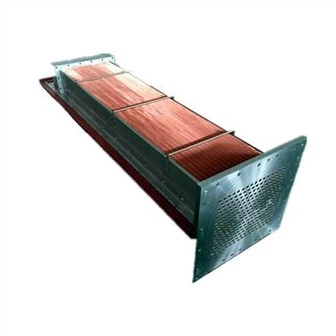
What Are The Advantages Of Using A Gas Engine HT LT Remote Radiator?
1. Independent Dual-Circuit Precise Temperature Control
Separate HT (jacket water) and LT (aftercooler) coils inside one unit, two cooling loops run without mixing coolant.
VFD fans + thermostatic bypass valves regulate HT and LT temperatures individually.
Stable jacket temperature avoids engine thermal deformation; low intake air temp boosts power and cuts NOx emissions.
Maintains full genset rated output even under high ambient up to 45–50°C.

2. Flexible Layout & Space Saving
Radiator is installed remotely on rooftops, external platforms or yards; the gas engine can be placed indoors, basements or standard containers.
Eliminates hot air recirculation trouble in closed generator rooms (a common overheating fault of engine-mounted radiators).
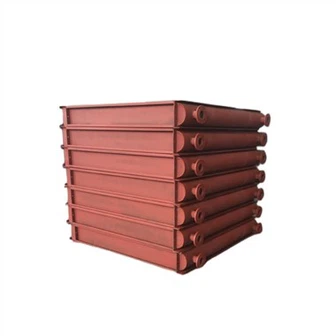
Integrated HT+LT single frame design occupies far less space than two separate single-circuit radiators.
3. Zero Water Consumption & Low Operation Cost
Fully dry sensible heat exchange, no water spray or evaporation, no cooling tower needed.
Only tiny water/glycol loss from pipeline leakage for replenishment, perfect for water-short mining, desert, mountain and remote sites.
No water treatment chemicals, no regular tower cleaning or sludge disposal work.
4. Significant Noise Reduction
High-decibel axial fans are separated from the genset room.
Indoor noise level can be reduced by 15~25 dBA, meeting noise limits for urban, hospital, hotel and residential CHP projects.
5. Strong Adaptability To Extreme Climates
System filled with propylene/ethylene glycol antifreeze mixture, reliable anti-freezing for cold northern areas and high-altitude power stations.
Custom epoxy-coated fins or stainless steel coils available for biogas/landfill gas with high H₂S corrosion, coastal humid salt fog environments.
6. Lower Long-Term Maintenance
No engine fan belts, pulleys or engine-mounted radiators to inspect and replace regularly.
Remote radiator coils are exposed outdoors for easy high-pressure washing to remove dust and debris.
Closed glycol loop prevents internal scaling, extending service life of engine heat exchangers.
7. Reduced Auxiliary Power Consumption
VFD axial fans automatically adjust rotation speed based on coolant temperature.
At low load or low ambient temperature, fans run at low speed to cut fan power consumption by 30%–50% vs fixed-speed fans.
8. Wide Compatibility With Mainstream Gas Gensets
Standardized flanged connections match Jenbacher, CAT, MWM, Perkins gas engines (500kW–3MW).
Skid-mounted modular structure enables fast delivery, simple on-site assembly and quick commissioning for containerized power plants.