What Are The Advantages Of Shell And Tube Atmospheric Condenser?
What are the Advantages of Shell and Tube Atmospheric Condenser?
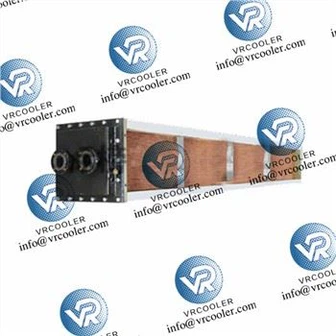
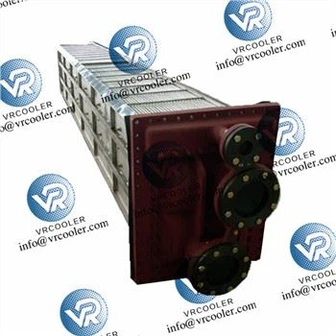
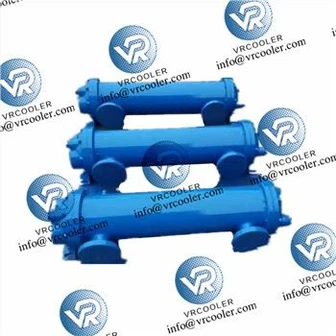
Adopting the form of cylindrical shell combined with multiple cooling tubes, the shell and tube plate are usually made of carbon steel, stainless steel and other high-strength materials, capable of withstanding certain pressure and temperature fluctuations, strong corrosion resistance and long service life.
The cooling tube is fixed on the tube plate through expansion, welding, etc. The structure is compact and stable, not easy to leak or deformation problems, suitable for long-term continuous operation.
According to different working conditions (such as medium temperature, pressure, corrosiveness, etc.) flexible choice of materials (such as stainless steel, copper alloy, etc.), suitable for a variety of industrial scenarios (such as chemical industry, electric power, food processing, etc.).
The number and arrangement of cooling tubes can be adjusted to customize the design according to the processing capacity and heat exchange demand, to meet the production requirements of different scales.
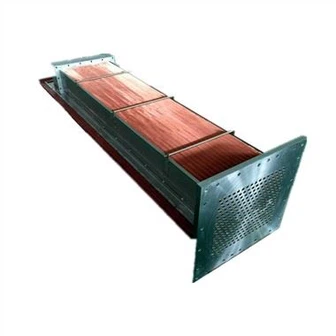
Multiple cooling tubes are arranged internally to form a dense bundle of heat exchange tubes, which significantly increases the contact area between the steam and the cooling medium and improves the heat exchange efficiency.
The setting of folding plate guides the flow path of steam and cooling water, making the fluid turbulent, reducing the thermal resistance of the boundary layer, and further improving the heat exchange effect.
The heat exchange process between the cooling water in the tube and the steam outside the tube is stable, less affected by fluid fluctuations, with a high heat transfer coefficient and a small fluctuation range, which ensures the reliability of the condensation effect.

There is no need for complex control system during operation, only need to control the cooling water flow and steam input to maintain a stable condensation effect, the operator's technical requirements are low.
Pressure and temperature are designed to be close to atmospheric environment, so the operation safety is high and it is not easy to overpressure and other dangerous situations.
The structure is designed for easy disassembly and cleaning, the cooling tube can be mechanically cleaned or chemically cleaned to remove the internal scale, and the maintenance of the shell and tube plate is relatively convenient, with a long maintenance cycle and low cost.
High degree of standardization of components, easy to find matching accessories when replacing cooling tubes or other parts, high maintenance efficiency.
Can handle a wide range of media (such as steam, corrosive gases, etc.), and can work stably in scenes such as distillation and evaporation processes in the chemical industry, turbine condensation in the power industry, and heat recovery in food processing.
It can be used in large-scale industrial production (such as large-scale power plant condensing system), and can also be adapted to small equipment (such as laboratory condenser), with strong flexibility.
Compared with other types of condensers (e.g. plate condenser), the manufacturing cost of shell and tube structure is lower, especially when dealing with large flow of steam, the cost per unit of heat exchange area is more obvious, which is suitable for scenarios with high economic requirements.
Strong shock resistance: For sudden changes in steam flow or temperature, the shell-and-tube structure can buffer the fluctuations through its own volume and material characteristics to maintain operational stability.
High heat recovery efficiency: The heat released during the condensation process can be recycled through the cooling water cycle (e.g., preheating raw materials, heating, etc.), which improves the energy utilization rate and meets the requirements for energy conservation.