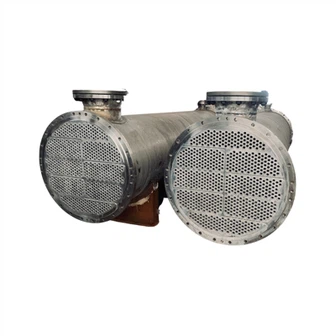
Steam Turbine Air-Cooled Condensers in Thermal Power Plants
In thermal power plants, efficient steam condensation is a critical step in the Rankine cycle. Traditionally, water-cooled condensers-using river, lake, or seawater-have been employed to condense exhaust steam from the steam turbine. However, growing water scarcity, environmental constraints, and regulatory pressures have accelerated the adoption of Air-Cooled Condensers (ACCs) as a sustainable alternative.
Steam turbine air-cooled condensers use ambient air as the cooling medium, eliminating the need for large quantities of cooling water. This makes them particularly suitable for arid regions and remote installations where water availability is limited or expensive.
2. Working Principle of Air-Cooled Condensers
The fundamental function of an ACC is to condense exhaust steam from the turbine back into condensate for reuse in the boiler. The system operates on a direct dry cooling principle, in which steam flows directly from the turbine exhaust into finned tube heat exchangers cooled by atmospheric air.
Key Process Steps:
Steam Exhaust: Low-pressure steam exits the turbine and enters the air-cooled condenser ducting system.
Condensation: Steam passes through finned tubes arranged in an A-frame structure. Large axial fans located beneath or above the tube bundles draw or force ambient air across the fins.
Condensate Collection: As steam condenses on the inner surfaces of the tubes, the condensate flows down to a condensate tank or hotwell.
Condensate Return: The condensate is then pumped back to the feedwater system to complete the Rankine cycle.

3. Design and Components
An air-cooled condenser typically consists of the following major components:
A-Frame Tube Bundles: Each bundle contains finned tubes arranged in an inclined "A" shape to maximize surface area for heat transfer.
Finned Tubes: These are often made of carbon steel or stainless steel, with aluminum or galvanized steel fins to improve thermal efficiency.
Axial Fans: Large-diameter fans (typically 6–10 meters) move vast amounts of air through the finned tubes. Fans can be either forced-draft (air pushed through) or induced-draft (air pulled through).
Steam Ducting and Distribution Headers: These channels distribute turbine exhaust steam evenly among the tube bundles.
Condensate System: Includes condensate lines, hotwell, pumps, and associated instrumentation.
4. Advantages of Air-Cooled Condensers
a. Water Conservation
The most significant advantage of ACCs is the elimination of cooling water usage. This makes them ideal for dry or desert climates where water is a scarce resource.
b. Environmental Benefits
ACCs prevent thermal pollution of natural water bodies and reduce chemical discharge associated with cooling tower blowdown.
c. Simplified Infrastructure
No need for cooling towers, circulating water pumps, or large cooling water pipelines. This reduces plant footprint and simplifies maintenance.
d. Flexibility and Modularity
ACCs can be installed in modular configurations, making them suitable for combined-cycle, cogeneration, and renewable hybrid power plants.
6. Applications in Modern Power Plants
Air-cooled condensers are widely used in:
Dry-cooled thermal power stations in water-limited areas (e.g., China, Australia, South Africa).
Combined Cycle Gas Turbine (CCGT) plants.
Waste-to-energy and biomass power stations.
Geothermal and solar thermal plants that operate in arid environments.
Leading manufacturers of ACC systems include GE, SPX Heat Transfer, Hamon, and Balcke-Dürr, among others.
Conclusion
Steam turbine air-cooled condensers are playing an increasingly vital role in modern thermal power generation. As global energy demand rises and freshwater resources become scarcer, ACC technology provides a sustainable, environmentally responsible, and flexible solution. Although they present certain thermal efficiency trade-offs in hot climates, ongoing innovations continue to improve their performance and economics-making them a key component in the future of low-water, high-efficiency power generation.