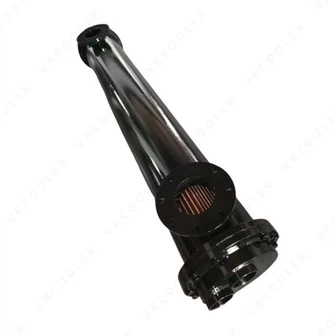
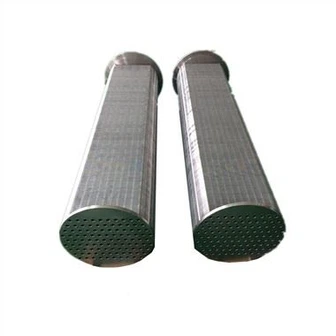
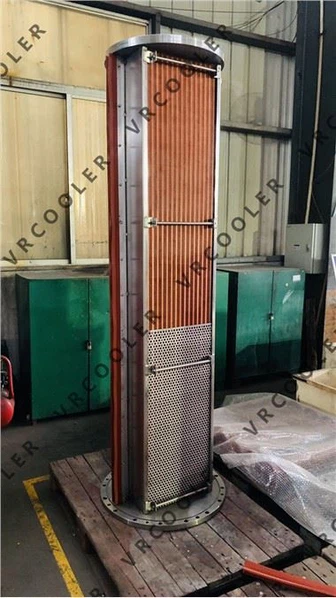
Shell Tube Type Drain Coolers
A drain cooler is a heat exchanger device used to cool the drain or waste liquid from a system. This liquid can come from various sources such as condensate from steam systems, waste water from industrial processes, or the drained fluid from a heat - transfer system. The main purpose of a drain cooler is to reduce the temperature of the drain liquid to a more manageable level before it is disposed of or further processed.
The most common types of drain coolers is shell and tube type.
They consist of a shell (a cylindrical outer casing) and a bundle of tubes. The hot drain liquid usually flows through the tubes, and the cooling medium (such as water) flows around the tubes in the shell. The tubes can be made of materials like copper, steel, or stainless steel, depending on the nature of the drain liquid and the cooling requirements. Shell - and - tube drain coolers are known for their robustness and ability to handle high - pressure and high - flow - rate applications. For example, in a power plant, they are used to cool the condensate from steam turbines.

Working Principle
Heat Transfer Process: The drain cooler operates based on the principle of heat transfer between the hot drain liquid and a cooling medium. The hot drain fluid enters the cooler and passes through tubes or channels. A cooling medium, which can be air, water, or another coolant, flows over or around these tubes. Heat is then transferred from the hot drain liquid to the cooling medium through the walls of the tubes. For example, in a water - cooled drain cooler, if the hot drain liquid enters at a temperature of around 90°C and the cooling water enters at 20°C, heat will transfer until an equilibrium temperature is reached, depending on the flow rates and the heat - transfer area of the cooler.
Flow Arrangements: There are different flow arrangements in drain coolers. In a counter - flow configuration, the drain liquid and the cooling medium flow in opposite directions. This setup is often more efficient for heat transfer as it maintains a more significant temperature difference between the two fluids along the length of the heat exchanger. In a parallel - flow arrangement, the two fluids flow in the same direction. The choice of flow arrangement depends on factors such as the specific heat - transfer requirements, the nature of the fluids, and the available space.
Applications of Drain Coolers
Power Generation: In power plants, drain coolers are used to cool the condensate from steam turbines. By cooling the condensate, it can be recycled back to the boiler more efficiently. This helps to improve the overall energy efficiency of the power - generation process. For example, a well - designed drain cooler can reduce the temperature of the condensate from around 90 - 100°C to 30 - 40°C, making it suitable for reuse in the boiler feedwater system.
Industrial Processes: Many industrial processes generate hot waste water or condensate that needs to be cooled before disposal. Drain coolers are used to reduce the temperature of these liquids to meet environmental regulations or to make the waste liquid more suitable for further treatment. For example, in a chemical - manufacturing process, the waste water from a reaction vessel may be cooled using a drain cooler before it is sent to a waste - water - treatment plant.
HVAC Systems: In heating, ventilation, and air - conditioning (HVAC) systems, drain coolers can be used to cool the condensate from air - conditioning units. This cooled condensate can then be drained more safely and efficiently. In some cases, the cooled condensate can also be reused in the HVAC system for functions such as humidification control.