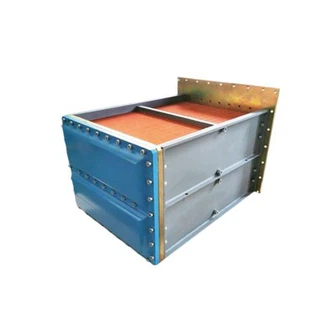
Shell-and-Tube Heat Exchanger For Naphtha Application
Shell-and-Tube Heat Exchanger for Naphtha Application

There is a cylindrical shell in the shell - and - tube heat exchanger, inside which there is a bundle of tubes. When used for naphtha, one fluid (such as naphtha) flows through the tubes, and the other fluid (such as cooling water or hot oil) flows outside the tubes in the shell. Heat is transferred from the high - temperature fluid to the low - temperature fluid through the tube wall, mainly through the way of conduction and convection on both sides of the tube wall.
Structural Composition: It is mainly composed of tubes, tube sheets, shells, baffles, heads, nozzles, etc. The tubes are the main part of heat transfer, and the tube sheets are used to fix the tubes and separate the shell - side fluid from the tube - side fluid. The shell provides a flow space for the shell - side fluid, and the baffles can improve the flow state of the fluid, increase the heat - transfer area and enhance the heat - transfer effect.
Application Scenarios in Naphtha Processing
Pre - heating and Cooling: In the naphtha cracking unit, the shell - and - tube heat exchanger can be used to pre - heat naphtha to make it reach the required reaction temperature, and can also be used to cool the cracked products to facilitate subsequent separation and processing. For example, heat the naphtha from about 25℃ to 220℃ before entering the reactor.
Heat Recovery: In naphtha hydrogenation units, a large amount of heat is released during the hydrogenation reaction. The shell - and - tube heat exchanger can recover this part of waste heat, transfer the heat of the high - temperature reaction effluent to the low - temperature gas - liquid mixed fluid, pre - heat the raw material, and improve the energy utilization rate.
Product Separation: In the distillation process of naphtha, the shell - and - tube heat exchanger is used to heat the naphtha mixture to make it vaporize, and then cool the vaporized components, so as to realize the separation of different components according to the boiling point difference.
Material Selection
Tube Material: Usually, stainless steel is selected, such as 304, 316L, etc., because naphtha may contain some corrosive substances, and stainless steel has good corrosion resistance. In some cases with lower requirements, carbon steel pipes can also be used, but anti - corrosion measures need to be taken.
Shell Material: Carbon steel is generally used, such as Q235 - B, Q345R, etc. For high - pressure and high - temperature working conditions, alloy steel or stainless steel shells can be selected to ensure the strength and corrosion resistance of the equipment.
Advantages in Naphtha Application
High Heat - transfer Efficiency: By reasonably arranging the number of tubes, the form of baffles and other structural parameters, the heat - transfer area can be increased, and the heat - transfer efficiency can be improved, which meets the requirements of large - scale heat transfer in naphtha processing.
Strong Adaptability: It can adapt to different working conditions such as high temperature, high pressure and corrosive media, and has a wide range of material selection. It can be designed and manufactured according to the specific process requirements of naphtha processing.
Convenient Maintenance: The structure is relatively simple, and the tube bundle can be cleaned or replaced separately, which is convenient for daily maintenance and repair, and can reduce the downtime of the equipment and improve the production efficiency.