SCR Removal Of Genset Exhaust Gases
SCR Removal of Genset Exhaust Gases
Overview of SCR decommissioning technology
Principle: SCR technology reduces nitrogen oxides to harmless nitrogen and water vapor by spraying a reductant (usually ammonia or urea) into the exhaust gas, under the action of a catalyst. The specific process is as follows:
NOx in the exhaust gas reacts with the reducing agent.
The catalyst facilitates the reaction and improves the reaction efficiency.
Catalyst: The catalysts used in SCR systems are usually based on titanium oxides or precious metals such as platinum and palladium, which can effectively catalyze the NOx reduction reaction at high temperatures.
Advantages of SCR decommissioning technology
High efficiency: SCR technology can reduce NOx emissions by more than 90%, significantly reducing environmental pollution.
Adaptable: Applicable to different types of fuels and generator sets with high flexibility.
Improvement of air quality: By reducing NOx emissions, it improves the surrounding air quality and meets the requirements of environmental regulations.
Application Areas
Thermal power plants: Widely used in coal-fired, gas-fired and oil-fired generating units.
Industrial boilers: Used to control NOx emissions from industrial boilers, helping companies meet environmental standards.
Transportation: SCR technology is also used in some large power generation facilities to reduce exhaust emissions.
In the generator tail gas SCR (Selective Catalytic Reduction) decommissioning system, the heat exchangers usually used mainly include the following types:
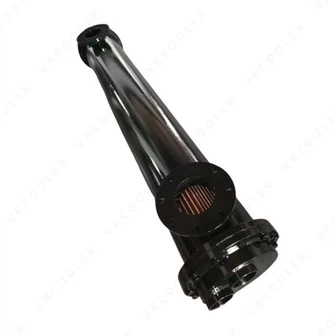
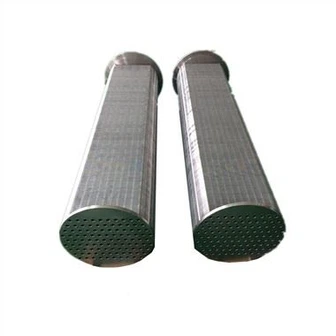
1. Shell and tube heat exchangers
Structure: Consisting of a number of tubes and a shell, the exhaust gas flows inside the shell while the cooling medium (e.g. water) flows inside the tubes.
Application: Commonly used to recover heat from the exhaust gas to preheat the reductant entering the SCR reactor and improve the reaction efficiency.
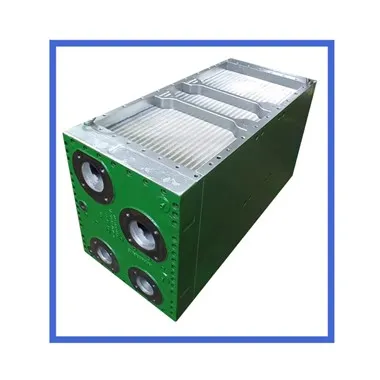
2. Plate heat exchanger
Structure: composed of several metal plates, with a large heat transfer area.
Advantage: small size, high heat transfer efficiency, suitable for installation environment with high space requirement.
Application: Suitable for liquid cooling and heating in SCR system.
3. Air cooler
Structure: Take away heat through air flow, usually used for heat dissipation.
Application: In SCR system, it can be used to reduce the temperature of exhaust gas to make it suitable for entering the catalyst bed.
4. Heat pipe heat exchanger
Structure: Utilizes the principle of heat pipe to transfer heat through phase change.
Advantage: Highly efficient and compact, suitable for applications where high heat transfer is required.
Applications: Can be used to optimize the thermal management of SCR systems and improve overall efficiency.