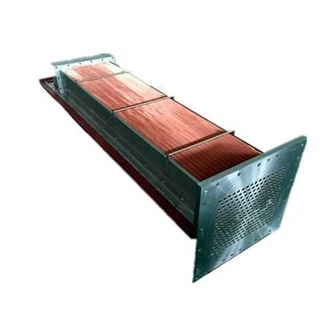
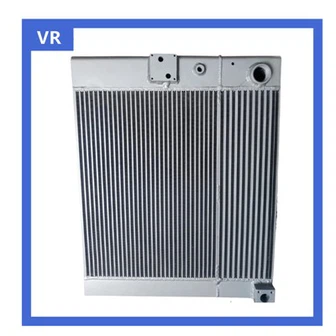
Remote Radiator For Gas Engine
A Remote Radiator for Gas Engine is a cooling system used to keep the heat generated by a gas engine away from the engine body and dissipate it to the surroundings through a radiator. The design of this radiator allows the engine body to be placed in a relatively small or specialised space, while the radiator can be mounted in another location away from the engine.
The power and efficiency produced by a gas engine depends greatly on its operating temperature. If the temperature is too high, the performance and life of the engine will be affected. Therefore, a radiator is necessary to ensure that the engine operates within a suitable temperature range.
The working principle of remote radiator is as follows:
Radiator Location: The remote radiator is usually mounted at some distance from the engine body, which may be a wall, roof or other suitable area near the engine. This arrangement allows the radiator to dissipate the heat generated by the engine without it being re-absorbed by the engine body.
Cooling medium: Typically, radiators use water or coolant as the cooling medium. These cooling media circulate and absorb the heat transferred from the engine to the radiator by contact with the cooling surfaces within the radiator.
Heat Dissipation: After absorbing heat from the engine inside the radiator, the coolant transfers the heat to the surroundings through a process of heat exchange. This can be achieved through fans or natural convection outside the radiator.
Cooling Cycle: After absorbing heat from the engine, the coolant returns to the engine body and continues to circulate, keeping the engine temperature within the normal operating range.
The advantage of a remote radiator is that it effectively keeps heat away from the engine and provides reliable cooling performance for gas engines. This arrangement also reduces noise and heat build-up during engine operation. At the same time, the remote radiator design allows for engine mounting in a limited space, which better meets the requirements of special application scenarios and space constraints.