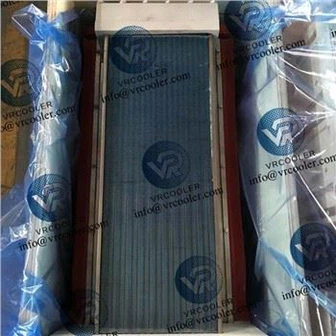
Remote Horizontal Radiator For Caterpillar G3520C Natural Gas Generator Set
A remote horizontal radiator is a dedicated heat rejection system located separately from the generator's engine enclosure. Unlike standard radiator systems that mount directly onto the generator frame, a remote radiator uses extended coolant piping to position the radiator at a distance-often in a location optimized for airflow, service access, and environmental considerations.
For the Caterpillar G3520C, this solution addresses space constraints, high ambient temperatures, and specialized site layouts common in industrial facilities, data centers, campuses, and off-shore installations.

Key Features and Benefits
1. Improved Heat Rejection
Remote radiators increase the effective surface area available for heat dissipation. A horizontal core layout promotes even heat distribution and maximizes airflow through the finned tube assembly. In high-ambient environments or continuous duty cycles, this translates to improved cooling capacity and stable engine operating temperatures.
2. Flexible Site Integration
By decoupling the radiator from the generator package:
The radiator can be sited where airflow is optimal (e.g., roof deck, fenced compound, or mechanical yard).
Noise exposure near occupied buildings can be reduced.
Clearances for maintenance and code compliance become easier to achieve.
Technical Considerations
-
Orientation and Mounting
Horizontal radiators are ideal for applications requiring:
Minimal structure height
Lower visual profile
Roof or grade-level installation where vertical clearance is limited
Mounting frames are engineered for local conditions, including seismic zones, wind loads, and vibration isolation from generator operation.
-
Core Design and Materials
High-efficiency cores incorporate:
Aluminum brazed or welded construction for superior thermal conductivity
Fin patterns optimized for natural gas engine coolant temperatures
Corrosion-resistant coatings as appropriate for coastal or industrial atmospheres
The remote radiator's horizontal orientation uniformly distributes airflow across the core and allows multiple fan modules to be installed in tandem for redundancy and staging.
-
Fan Systems and Airflow
Forced-air fans-typically heavy-duty, low-noise axial or pusher fans-are specified to match the heat rejection requirements of the G3520C under full load and high ambient. Variable-speed fans and thermostatic controls can further optimize efficiency and reduce noise during partial loads.
Integration with Caterpillar G3520C
A remote horizontal radiator is engineered to integrate seamlessly with the natural gas generator's cooling loop:
Custom fabricated coolant lines with expansion joints
Quick-connect fittings for ease of service
Automatic coolant fill and bleed systems
Engineered pressure drop within allowable limits for the G3520C's water pump
Additionally, the radiator system can interface with generator controls to provide:
Coolant temperature monitoring
Fan staging signals
Alarm and shutdown logic in extreme temperature conditions
Advantages in Real-World Operations
-
Enhanced Reliability
Effective thermal management mitigates:
Overheating
Coolant degradation
Turbocharger inlet air temperature elevations
Reduced fuel efficiency
This reliability is especially critical in applications with continuous or high-duty power demands.
-
Serviceability
Remote placement provides:
Easier access for coil cleaning and inspection
Clearances for fan, motor, and electrical service
Minimized downtime during scheduled or corrective maintenance
-
Reduced Acoustic Footprint
Remote radiators allow design flexibility to orient fans away from occupied spaces or incorporate acoustic shielding where noise restrictions apply.
Applications
Remote horizontal radiators for the Caterpillar G3520C are well suited for:
Industrial facilities (manufacturing, processing plants)
Data centers and critical IT facilities
Hospitals and healthcare campuses
District energy systems
High ambient temperature regions
Conclusion
Selecting a remote horizontal radiator for the Caterpillar G3520C natural gas generator set is a strategic investment in system reliability, serviceability, and performance optimization. By decoupling heat rejection from the generator enclosure and leveraging robust core designs, fan systems, and site-specific integration, facility managers and engineers can ensure stable cooling performance even under the most demanding operating conditions.