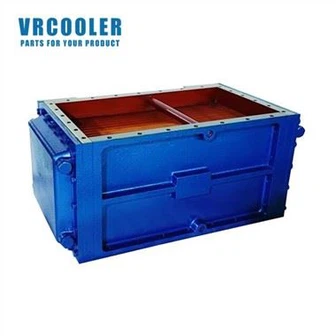
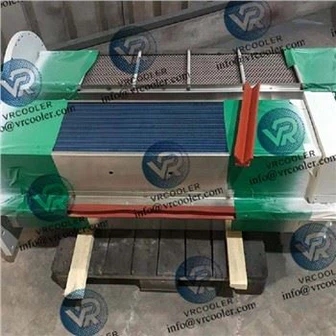
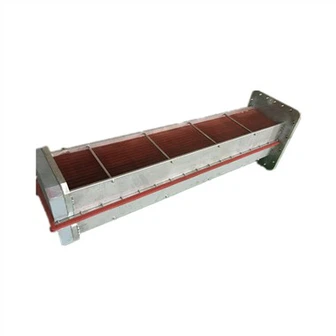
Purpose Of Diesel Enigne Charge Air Cooler
What is the function of a Diesel Enigne Charge Air Cooler?
The engine's exhaust gas is used in the turbocharger to compress fresh air and charge the engine with a positive pressure greater than ambient circumstances. This compression raises the temperature of the air, which means it cannot be fed directly into the engine because it is over working limitations. As a result, a cooler is installed on the engine to bring the air temperature back to near ambient levels. When the air is hot, its density is lower, hence the mass of air charged into the engine is lower than when the air is cold. As a result, the charge air cooler increases charge air density and temperature.
The compressed charged air at the charged air cooler's outlet will have a temperature of roughly 40 to 50 degrees Celsius, down from about 200 degrees Celsius. At cold temperatures, the reduced temperature of the air will increase the density of the charge ait. Higher charge air density improves scavenging efficiency and allows a bigger mass of air to be compressed inside the engine cylinder, allowing more fuel to be burned inside the combustion chamber, resulting in increased power. In addition, the engine is kept at a safe operating temperature. Stress on the piston, piston ring, cylinder liner, and cylinder head is reduced when the compression temperature drops. Another advantage of the charge air cooler is that it lowers the exhaust temperature. A one-degree Celsius drop in scavenging air temperature reduces exhaust temperature by about 5 to 10 degrees Celsius. This does not imply that cryogenic temperatures can be used to charge the air. If very cold air enters the cylinder liner, it may induce thermal shock and liner cracking.