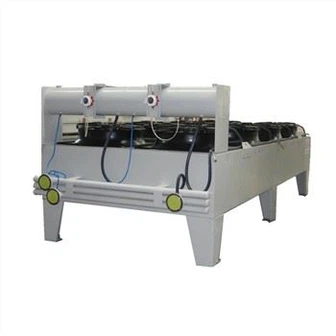
Oil Cooler For Oil-Filled Transformers
During electrical load cycles, transformers generate heat within the windings and core. This heat is absorbed by the insulating oil, which must be cooled consistently to prevent:
- Overheating of internal components
- Accelerated insulation aging
- Reduced transformer efficiency
- Risk of unexpected shutdowns or failures
An efficient oil cooler keeps the transformer within optimal temperature limits, ensuring long-term reliability.
How the Oil Cooler Works
Transformer oil coolers operate by circulating hot insulating oil through finned tubes or shell-and-tube assemblies. High-capacity fans force air across the finned surface to rapidly dissipate heat. The cooled oil then returns to the transformer tank, creating a stable thermal cycle.
Typical systems include:
- Finned-tube heat exchanger bundles
- Axial or centrifugal cooling fans
- Oil inlet and outlet manifolds
- Heavy-duty mounting frames for outdoor or substation use
The unit in the image is an example of a compact, fan-assisted air-cooled transformer oil cooler designed for industrial installation on pallets or transformer platforms.

Key Features
High Thermal Performance: Efficient finned-coil design maximizes heat dissipation for large transformers.
Robust Steel Construction: Engineered for harsh environments, including power plants, substations, and offshore facilities.
Continuous-Duty Fans: Ensures consistent airflow and cooling even under high-load operation.
Leak-Proof Oil Circuits: Heavy-duty welded manifolds and flanges prevent leaks during long-term operation.
Low Maintenance: Easy access to fans, filters, and coils for cleaning and inspection.
Custom Configurations: Available in single or multi-fan arrangements depending on transformer capacity and ambient conditions.
Applications
Power distribution transformers
Large industrial transformers
Substation transformers
Renewable energy transformer stations (wind, solar)
Oil-filled rectifier and converter transformers