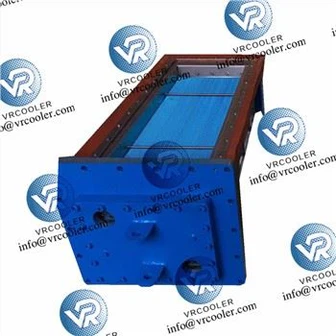
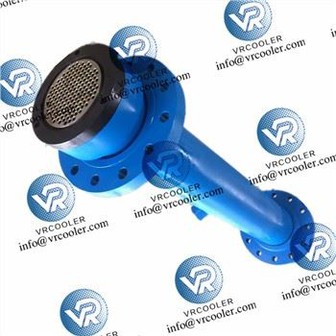
Marine-Grade Fuel Oil Cooling Customized For MAN, Wärtsilä, CAT, MTU, Cummins, And Yanmar Engines
Shell-and-tube fuel oil coolers are widely specified by engine OEMs and shipyards because they offer:
High mechanical strength for marine vibration and pressure fluctuations
Stable fuel temperature control for injection systems
Easy tube bundle removal and onboard maintenance
Long service life in continuous-duty marine environments
Compatibility with marine class approvals (DNV, ABS, LR, BV, CCS, RINA, NK)
This design is particularly suitable for MDO, MGO, LSFO, and ULSFO cooling applications.

Typical Technical Design Parameters
While final specifications are engine-model dependent, common design ranges include:
Fuel oil inlet temperature: 60–120 °C
Fuel oil outlet temperature: 40–60 °C
Cooling medium: Freshwater (jacket water or central cooling)
Design pressure: 10–16 bar (or per class rules)
Test pressure: 1.3–1.5 × design pressure
All parameters are aligned with engine maker datasheets and class society requirements.
Materials and Construction
To ensure marine durability and class compliance, customized fuel oil coolers typically use:
Tubes: Cu-Ni 90/10, stainless steel 316L, or admiralty brass
Shell: Carbon steel with marine epoxy coating or stainless steel
Tube sheets: Naval brass or stainless steel
Gaskets: NBR or Viton (fuel oil resistant)
Optional upgrades include full stainless steel construction for offshore or high-corrosion environments.
OEM Replacement and Retrofit Solutions
These customized fuel oil coolers are suitable for:
Direct replacement of MAN, Wärtsilä, CAT, MTU, Cummins, and Yanmar OEM units
Newbuild vessels
Retrofit and life-extension projects
Ship repair yards and service fleets
Dimensional compatibility, nozzle orientation, and performance equivalence can be ensured to minimize onboard modification.
Conclusion
Shell-and-tube fuel oil coolers customized for MAN, Wärtsilä, CAT, MTU, Cummins, and Yanmar engines provide a reliable, class-approved solution for precise fuel temperature control in marine applications. By combining engine-specific thermal design, marine-grade materials, and robust construction, these coolers ensure safe operation, long service life, and full regulatory compliance for modern ships and offshore installations.