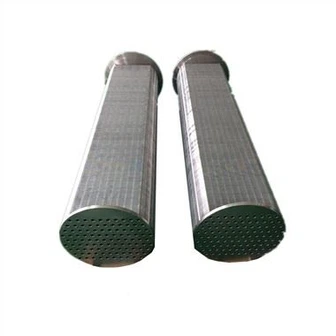
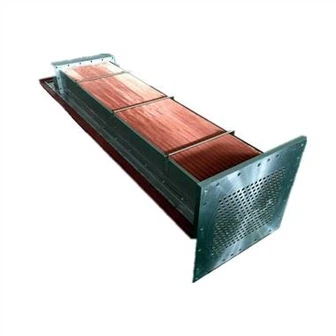
LT-HT remote radiator: a key equipment for increasing efficiency and reducing costs in biogas power plants
Pain points of heat dissipation in biogas power generation
Unit overheating power limit: Traditional integrated radiators have insufficient heat dissipation capacity, forcing the unit to reduce load in high temperature environments, resulting in significant loss of power generation.
Serious waste of waste heat: The engine cooling water and exhaust waste heat are directly discharged, and the comprehensive energy utilization rate is only 35% -45%.
Layout limitations: The computer room space is compact, conventional radiators are inconvenient to install and maintain, and ventilation differences exacerbate temperature rise.
Corrosion and scaling: Impurities such as sulfur and siloxane in biogas can easily cause blockage and corrosion of the heat exchange surface, leading to a continuous decline in heat transfer efficiency.
The Efficiency Enhancement Principle of LT-HT Remote Heat Sink
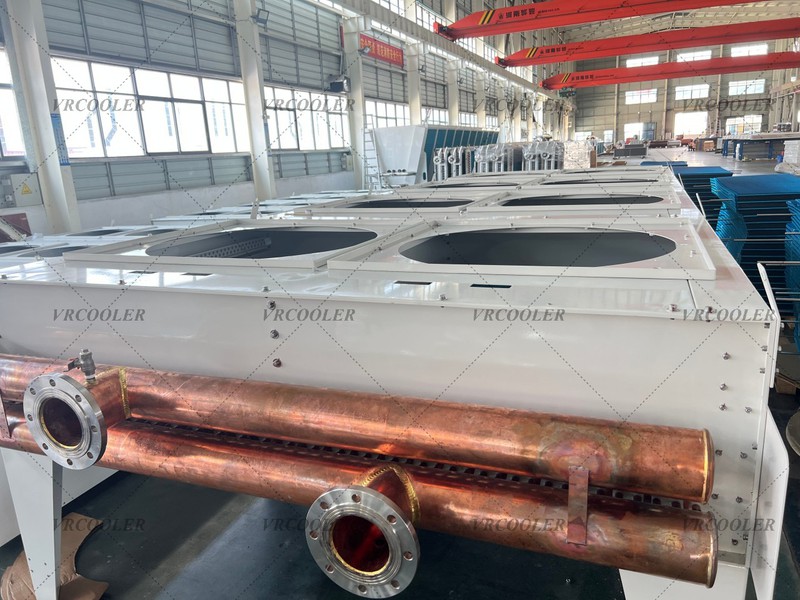
The LT-HT remote radiator adopts independent design of high temperature circuit (HT) and low temperature circuit (LT), which is suitable for the multi heat source heat dissipation requirements of biogas units:
High temperature circuit (HT): It takes over the high-temperature waste heat of the cylinder liner water, uses forced air cooling for rapid cooling, stabilizes the operating temperature of the unit, avoids thermal decay, and ensures full operation.
Low temperature circuit (LT): processes the heat from the intercooler and lubricating oil, maintains the optimal temperature of the intake and lubrication system, and improves combustion efficiency and mechanical reliability.
Remote deployment: It can be installed in open outdoor areas, optimizing ventilation and heat exchange, without occupying space in the computer room, and improving heat dissipation efficiency by more than 20%.
Waste heat recovery: High temperature loop return water can be used for fermentation tank insulation, plant heating, or hot water supply, converting waste heat into usable energy.
Core Efficiency Value
Significant improvement in power generation efficiency
Stabilize cylinder temperature and intake temperature, the unit can operate at full load for a long time, increase power generation efficiency by 5% -10%, and significantly increase annual power generation.
Double the comprehensive energy utilization rate
Waste heat is used for constant temperature heating of anaerobic fermentation tanks to reduce external heat consumption; Simultaneously meeting the heating and hot water needs of the factory area, the comprehensive energy efficiency has been increased from 40% to over 65%.
Optimization of equipment lifespan and maintenance costs
Precise temperature control reduces thermal fatigue, lowers carbon deposition and scaling; The anti-corrosion heat exchange core is adapted to biogas working conditions, reducing downtime for cleaning and lowering operation and maintenance costs by 15% -25%.
Stronger adaptability and energy efficiency
Modular design can flexibly match different power units; Variable frequency fan and intelligent temperature control can be adjusted according to demand, reducing energy consumption of auxiliary equipment and adapting to all-weather operation.
Actual application scenarios
Livestock and poultry manure biogas power station: recovers waste heat to heat fermentation tanks, improves gas production rate, and ensures stable power generation of the unit.
Kitchen waste biogas project: to deal with high humidity and high corrosion flue gas, achieve long-term stable heat dissipation, and reduce heat exchange surface blockage.
Industrial park combined heat and power supply: high and low temperature graded heat dissipation+waste heat grid connected heating, realizing the three generation of electricity, heat, and gas.
Summary
The LT-HT remote radiator has the core advantages of graded heat dissipation, waste heat recovery, and flexible remote layout, accurately solving the heat dissipation bottleneck and energy waste problems of biogas power generation. Under the dual carbon target, the combination of this equipment can enable biogas power plants to achieve more stable power generation, higher energy efficiency, and more cost-effective operation and maintenance, making it the preferred solution for improving the quality and efficiency of distributed renewable energy projects.