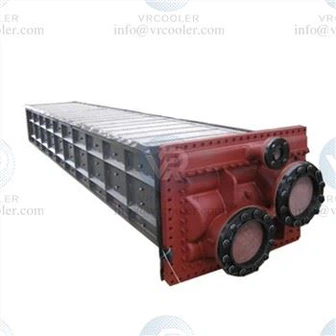
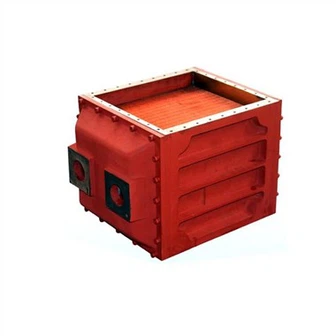
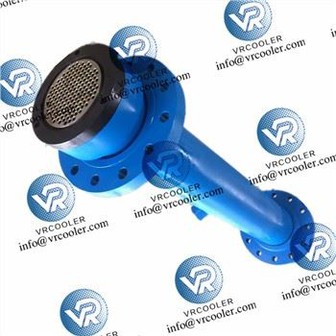
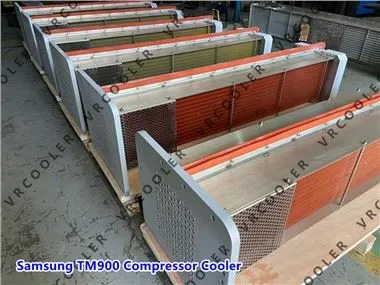
JMC 316 Gas Engine Remote Cooler Landfill Gas Power Generation
1, Pain points and core requirements for heat dissipation in landfill gas power generation scenarios
The special environment of the landfill site and the operational characteristics of JMC 316 pose three core demands for the cooling system:
Corrosion protection requirements: The concentration of H ₂ S in landfill gas often reaches hundreds or even thousands of ppm. When combined with water vapor, it forms acidic condensate, which quickly corrodes metal parts, causing corrosion of ordinary cooler fins, pipeline leakage, and shortening equipment life by 30% -50%. As a 16 cylinder high-power engine (with a total displacement of 2376 cubic inches), JMC 316 has a thermal load of up to 991kW. If the cooling system fails, it will directly cause the unit to reduce load or shut down.
Anti clogging and efficient heat dissipation requirements: Impurities such as dust, garbage debris, and plant fluff from landfills can easily clog the fins of the cooler, leading to a decrease in heat dissipation efficiency; At the same time, the outdoor environment in summer is hot (up to 40 ℃ or above), and traditional built-in coolers are affected by the heat island effect in the computer room, making it difficult to meet the heat dissipation threshold requirements of JMC 316. In extreme cases, the exhaust temperature can exceed 50 ℃, increasing power generation gas consumption by more than 10%.
Space and environmental adaptation requirements: Landfill gas power plants often adopt containerized modular design, with compact machine room space and valuable installation space occupied by built-in coolers; Moreover, the noise from the fan and the engine are combined, which can easily exceed environmental standards (≤ 65dB during the day and ≤ 55dB at night), affecting the surrounding environment and maintenance safety.

To address these pain points, the cooling system needs to have four core capabilities: corrosion resistance, anti clogging, efficient heat dissipation, and flexible space, in order to adapt to the 24/7 continuous operation requirements of JMC 316 in landfill gas scenarios.
The application of JMC 316 remote cooler in landfill gas power generation projects has achieved a deep unity of technical adaptation and value implementation:
(1) Ensure stable operation of the unit and improve power generation efficiency
The remote cooler is far away from corrosion and heat sources in the computer room, and its heat dissipation efficiency is improved by 20% -30% compared to the built-in type. It can reduce the temperature of JMC 316 coolant by 5-10 ℃, control the exhaust temperature below the design threshold of 39 ℃, and reduce power generation gas consumption by 1% -1.8%. According to data from a 1696kW landfill gas power generation project (2 JMC 316 units), the use of remote coolers has reduced the annual shutdown time from 80 hours to 15 hours, increased the annual power generation by over 300000 kWh, and directly improved the economic benefits by more than 200000 yuan.
(2) Extend equipment lifespan and reduce full lifecycle costs
Corrosion protection cost reduction: The combination of 316L stainless steel and anti-corrosion coating extends the service life of the cooler from 3-5 years to 8-10 years, avoiding equipment costs and downtime losses caused by frequent replacement; At the same time, it reduces internal component wear caused by cooling failure of the engine, extends the oil change cycle and the overall life of the unit.
• Improved operation and maintenance efficiency: The automatic blowback system and external installation design reduce the cleaning time of the cooler by 70%, and maintenance personnel can complete inspections without entering a small computer room, reducing labor costs and safety risks.
(3) Optimize spatial layout to meet environmental standards
Efficient use of space: After the remote cooler is installed externally, the area of the container room can be reduced by 15% -20%, or installation space can be reserved for landfill gas pretreatment equipment (such as desulfurization and dehydration devices) to facilitate modular integration of the project.
Noise and environmental standards: After the fan noise source is removed from the machine room, the indoor noise is reduced by 15-25dB, and the operation and maintenance environment is significantly improved. At the same time, it meets the environmental noise requirements around the landfill site and avoids the risk of complaints.
(4) Assist in carbon reduction and enhance environmental value
The stable operation of JMC 316 unit can maximize the utilization rate of landfill gas resources - a 1500kW project can process 1.8 million cubic meters of landfill gas annually and reduce carbon dioxide equivalent emissions by 30000 tons. The remote cooler indirectly improves carbon reduction efficiency by ensuring continuous operation of the unit, helping the project achieve the dual goals of "energy utilization+environmental protection and emission reduction".