Bearing Oil Cooler Efficient Temperature Regulation For Enhanced Performance And Longevity
一. Core Principle: Precise Temperature Control Through Heat Exchange Technology
The working logic of a bearing oil cooler is essentially a synergistic operation of efficient heat exchange and circulating temperature control. Its core workflow can be broken down into three main stages:
Heat Collection:During operation, the lubricating oil in the bearing lubrication system continuously flows across the bearing contact surfaces, absorbing heat generated by friction and becoming a "high-temperature heat carrier."
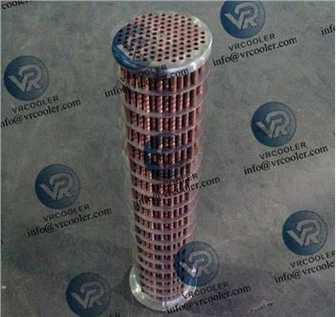
Heat Exchange: The high-temperature lubricating oil is transported to the heat exchange chamber of the oil cooler, where it undergoes thorough heat exchange with the cooling medium (usually cooling water, chilled water, or air)-rapidly transferring heat from the lubricating oil to the cooling medium through heat exchange surfaces of different structures such as plate, tube, and shell types.
Circulation: The cooled lubricating oil returns to the bearing lubrication system, continuously providing low-temperature, stable lubrication for the bearing. Simultaneously, the cooling medium absorbs heat and is discharged through the circulation system, completing one temperature control cycle.
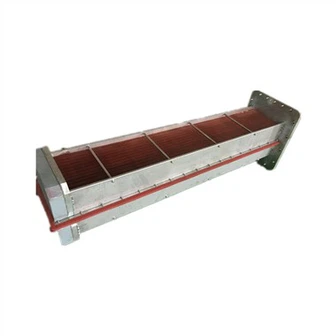
Based on the different cooling media, bearing oil coolers are mainly divided into three types to suit different application scenarios: Water-cooled oil coolers: Using cooling water as the cooling medium, they offer high heat exchange efficiency and precise temperature control. This type is the most widely used in industrial applications and is suitable for large generator sets, heavy engineering machinery, chemical equipment, and other scenarios requiring high temperature control accuracy.
Air-cooled oil coolers: Using air as the cooling medium, they do not require an external cooling water system. They have a simple structure and are easy to maintain. They are mainly used in mobile equipment (such as excavators and cranes), small outdoor refrigeration units, and equipment in remote areas without water sources.
Evaporative oil coolers: Combining the advantages of water cooling and air cooling, they remove heat through water evaporation. Their heat exchange efficiency far exceeds that of traditional air cooling, and their energy consumption is only 1/3 that of water cooling. They are suitable for arid regions with scarce water resources (such as oil and gas fields in Northwest my country and energy bases in Central Asia) and large-scale industrial cooling systems.

二, Core value: Not only cooling, but also dual empowerment of performance and lifespan
For industrial equipment, the operating status of bearings directly determines the comprehensive efficiency and service life of the equipment, and the value of bearing oil coolers is far more than just the basic function of "reducing temperature", but also reflected in the enhancement of the full life cycle value of the equipment:
(1) Ensure stable operation of bearings and avoid equipment failure risks
The bearing temperature is the core indicator for measuring its operating status - when the temperature exceeds the design threshold of 5 ℃, the bearing wear rate will double; When the temperature exceeds 15 ℃, the strength of the bearing material will significantly decrease and the probability of failure will increase significantly. The bearing oil cooler can achieve three major protective effects by precisely controlling the bearing temperature within the optimal design range (usually 40 ℃ -60 ℃):
Maintain the optimal viscosity of lubricating oil, ensure uniform thickness of lubricating film, avoid dry friction and semi dry friction, and significantly reduce bearing wear rate;
Prevent thermal deformation of bearing materials, avoid abnormal fit clearance caused by thermal expansion, ensure rotation accuracy, and reduce vibration and noise;
Inhibit the oxidation and deterioration of lubricating oil, extend the service life of lubricating oil, reduce the production of impurities such as carbon deposits and gum, and avoid oil circuit blockage.
(2) Improve the overall efficiency of equipment and reduce operating energy consumption
Accurate temperature regulation can keep the equipment in its "optimal working condition", thereby achieving maximum performance and minimum energy consumption:
For refrigeration and HVAC equipment, stable operation of bearings can ensure stable speed of compressors and pump bodies, increase refrigeration capacity and heat transfer efficiency by 10% -15%, and reduce energy waste caused by equipment fluctuations;
For energy and power equipment such as gas turbines and generators, stable bearing temperature can avoid power loss and improve overall equipment efficiency by 5% -8%;
For construction machinery, reducing bearing wear can reduce equipment maintenance frequency, increase effective operating time, and reduce overall operating costs by about 20%.
(3) Extend the entire lifecycle of equipment and reduce comprehensive operation and maintenance costs
The service life of a device depends on the lifespan of its core components, such as bearings. By continuously optimizing the operating environment of bearings, bearing oil coolers can not only extend the life of bearings themselves, but also reduce the associated damage to peripheral components such as gears, shafts, and shells caused by bearing failures, thereby reducing equipment overhaul costs.
According to industry data statistics, industrial equipment equipped with high-efficiency bearing oil coolers can extend the lifespan of core components by 30% -50% and reduce the overall maintenance cost of the equipment lifecycle by 25% -40%. Especially for large-scale energy equipment and precision high-end equipment worth millions, the investment in bearing oil coolers can bring long-term benefits several times the cost.