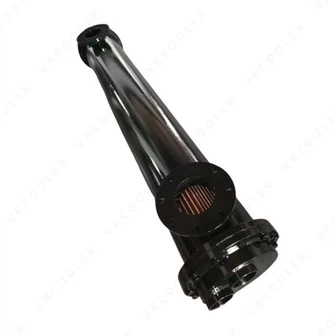
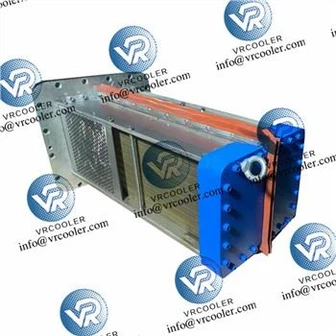
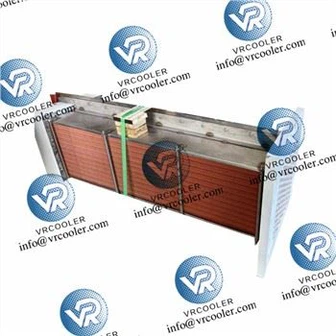
Industrial Dry Cooler - Liquid Cooled Dry Cooler
process
High temperature coolant is pumped into the finned coil of the dry cooler;
The variable frequency EC fan drives the air to sweep over the fins, taking away the heat from the pipe wall;
The cooled liquid returns to the process end/liquid cooled CDU for circulation and heat absorption;
In winter, natural cold sources can be used to achieve "free cooling", and in summer, spraying/wet film can be added to assist in cooling if necessary.
2, Key structural components
Fin coil (heat exchange core): copper/stainless steel tube+aluminum fins (or microchannel heat exchanger), increasing the heat exchange area;
Variable frequency fan (mainly EC fan): Adjust the speed according to the ambient temperature/temperature difference to save energy and reduce noise;
Frame and shell: galvanized steel+epoxy coating, outdoor anti-corrosion;
Circulating pump+constant pressure/replenishment system: maintain stable closed circuit pressure and flow rate;
Control system: temperature/pressure sensors PLC, Remote monitoring module
3. Typical application scenarios
Industrial manufacturing: air compressors, injection molding machines, hydraulic stations, metallurgical/chemical process cooling;
Data center/energy storage: secondary side heat dissipation with cold plate liquid cooling and immersion liquid cooling, PUE optimized to 1.1-1.2;

4.Waste heat recovery system: in conjunction with plate heat exchangers, it recovers process waste heat for heating purposes;
Regional cooling/freezing station: Replace some water cooling towers to reduce water resource consumption.
Selection and Operation Points
Selection parameters: heat load (kW), inlet and outlet water temperature, ambient dry wet bulb temperature, fan static pressure, noise requirements;
Antifreeze measures: configure the concentration of ethylene glycol according to the minimum ambient temperature (e.g. around 40% ethylene glycol is required for -20 ℃);
Control strategy: Temperature difference linkage fan frequency conversion+pump frequency conversion, prioritizing natural cooling during transition seasons;
Maintenance: Regularly clean the dust on the fins, inspect the fan bearings, and monitor the concentration and leakage of refrigerant.
Difference from related equipment
Dry cooler vs open cooling tower: dry cooling without contact/evaporation, cooling tower water in direct contact with air, evaporative cooling;
Dry cooler vs air-cooled chiller: The chiller comes with a compressor (active cooling), while the dry cooler relies solely on air heat exchange (passive/natural cooling), often combined with the chiller to form a composite cooling source.