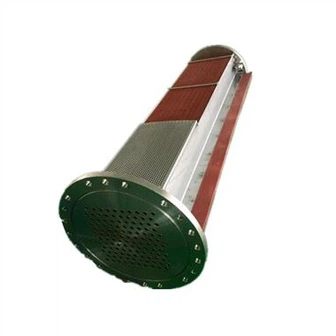
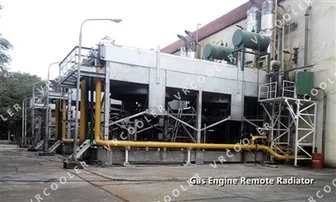
How To Detect Leaks in A Tube And Plate Construction Generator Cooler?
How to Detect Leaks in a Tube and Plate Construction Generator Cooler?
Visual inspection:
METHOD: Periodically inspect the exterior of the cooler and connections, looking for obvious signs of leakage, such as wet spots, water stains or corrosion.
Advantages: simple and intuitive, no special equipment required.
Pressure test:
METHOD: Pressurize the cooler, usually using water or gas as the medium, and watch for a drop in pressure.
Steps:
Close the inlet and outlet valves of the cooler.
Fill the cooler with pressurized medium.
Monitor the pressure gauge and observe whether the pressure remains stable.
Advantage: Effective in detecting small leaks.
Gas Bubble Test:
Method: Inject gas (e.g. air) into the cooler, apply soapy water to the outer surface and observe whether bubbles are generated.
Advantages: simple and easy to use, suitable for localized leak detection.
Ultrasonic testing:
Method: Use ultrasonic detector to capture the high frequency sound waves generated by the leak.
Advantages: non-invasive, can accurately locate the leak.
Dye penetration detection:
Method: Add fluorescent dye to the cooling medium, irradiate the exterior of the cooler with a UV lamp, and observe whether the dye seeps out.
Advantages: high sensitivity, suitable for small leakage detection.
Thermal imaging detection:
Method: Using a thermal imager to detect the temperature distribution on the surface of the cooler, areas of abnormal temperature may indicate leaks.
Advantage: non-contact, can quickly scan large areas.
Preventive and maintenance measures
Periodic Inspection: Establish an inspection program and perform regular leak detection.
Maintenance: Regular cleaning and replacement of wear parts to prevent corrosion and clogging.
Monitoring system: Install a temperature and pressure monitoring system to monitor operating conditions in real time.