How Marine Engine Heat Exchanger Box Cooler Works?
How Marine Engine Heat Exchanger Box Cooler Works?
Marine engine heat exchanger box cooler works by using the principle of heat exchange to transfer the heat generated during engine operation to the cooling medium (usually seawater or freshwater), thus reducing the temperature of the engine and ensuring its normal operation .
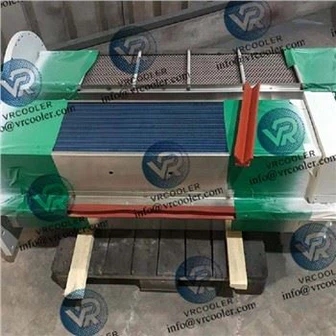
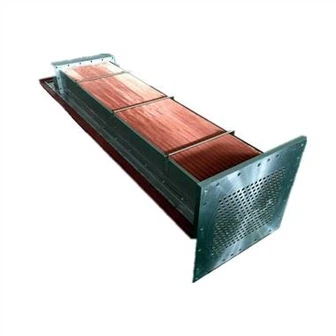
Specifically, the box cooler consists of a water tank, spacer gasket, tube plate, mounting gasket, mounting flange and tube bundle. The integrated U-shaped tube bundle is expanded to the tube plate, which is then bolted to the top plate of the seawater tank to form a sealed cooling space.
When the engine is working, the coolant circulates under the action of the water pump, and after absorbing heat inside the engine, it enters the heat exchanger box cooler. Inside the cooler, the coolant exchanges heat with the seawater passing through the seawater tank, transferring the heat to the seawater and thus lowering the temperature of the coolant. The cooled coolant is then recycled back into the engine to continue to absorb heat, and so on, to achieve continuous cooling of the engine.
In order to ensure the cooling effect, the box cooler usually adopts some special designs, such as increasing the heat exchange area, optimising the water flow channels, etc. In addition, some temperature sensors will be installed. In addition, some temperature sensors and pressure sensors will be set up to monitor the temperature and pressure of the coolant in real time, so as to adjust the working condition of the cooling system in time.