How Does The Hydrogen Cooling System in A Thermal Power Plant Work?
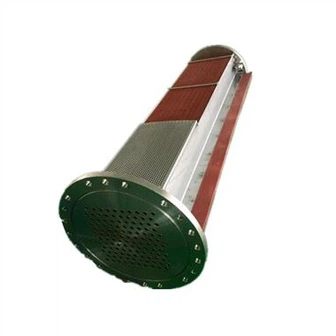
Large turbo‑generators in thermal power plants generate huge heat loss from stator windings, rotor windings and iron cores during power generation. The hydrogen cooling system uses hydrogen gas as circulating cooling medium to absorb heat inside the generator, then transfers heat to cooling water via hydrogen coolers (finned‑tube gas‑to‑water heat exchangers), forming a closed circulating loop.
Step‑by‑step working process
Heat absorption inside generator High‑speed rotating rotor and static stator produce massive heat. Hydrogen gas fills the sealed generator casing, flows over hot windings and core, absorbs waste heat and becomes hot hydrogen.
Forced gas circulation Built‑in circulating blowers drive hot hydrogen to flow toward the hydrogen coolers installed inside generator housing.
Heat exchange in hydrogen cooler Hot hydrogen passes across the outer surface of finned‑tube bundle. Cooling water flows inside the tubes. Heat transfers from hot hydrogen to cooling water. Hydrogen temperature drops sharply after heat dissipation.
Cooled hydrogen recirculation Cool hydrogen flows back into the generator cavity, absorbs heat again from electrical components, and repeats the closed cycle.
Heat taken away by plant water circuit The cooling water that absorbed generator heat flows out of hydrogen coolers, and is sent to the plant circulating‑water system for heat dissipation in cooling towers.
Auxiliary safety & conditioning loop (critical for stable operation)
Shaft oil‑seal system: Maintains sealing on rotating shaft ends, prevents hydrogen gas leakage. Generator casing always runs under slight positive pressure to stop air from entering.
Hydrogen dryer: Removes moisture inside hydrogen loop, controls dew‑point to avoid condensation that damages winding insulation.
Gas purging workflow: Before filling or venting hydrogen, CO₂ serves as intermediate gas to displace air / hydrogen, to avoid dangerous hydrogen‑air explosive mixture.
Online monitoring: Sensors continuously track hydrogen pressure, purity, dew‑point and temperature, trigger alarm for abnormal conditions.
Why hydrogen instead of air
Hydrogen thermal conductivity is ~7 times higher than air.
Much lower wind‑age friction loss, improves generator overall efficiency.
Dry hydrogen is non‑corrosive to winding insulation and metal parts.