How Does A Marine Charge Air Cooler Work?
How does a marine charge air cooler work?
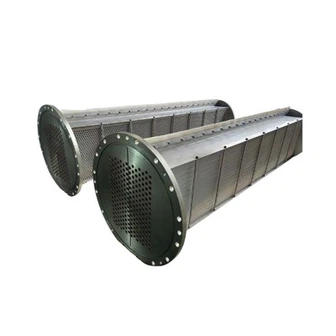
A marine charge air cooler works by using a heat exchanger to cool the compressed air before it enters the engine's combustion chambers.
Here's how it works:
Compressed air enters the charge air cooler: The compressed air, which is generated by the engine's turbocharger, enters the charge air cooler through an inlet port.
Heat exchange: The compressed air passes through the charge air cooler's tubes, which are surrounded by a coolant, typically seawater or freshwater. Heat from the compressed air is transferred to the coolant, which carries the heat away from the engine.
Cooled air exits the charge air cooler: The cooled air exits the charge air cooler through an outlet port and is delivered to the engine's combustion chambers.
The charge air cooler reduces the temperature of the compressed air, which increases its density. This allows for more air to be delivered to the engine's combustion chambers, which can result in increased engine efficiency and performance. Additionally, by reducing the temperature of the compressed air, the charge air cooler helps to reduce the stress on the engine's combustion chambers, which can result in improved reliability and reduced maintenance costs.
The charge air cooler can be designed to use either seawater or freshwater as a coolant. Seawater is typically used in marine applications, but freshwater can be used in some cases. The choice of coolant depends on several factors, including the availability of a suitable water source, the required cooling capacity, and the potential for corrosion or scaling.
In summary, a marine charge air cooler works by using a heat exchanger to cool the compressed air before it enters the engine's combustion chambers, which improves engine efficiency, performance, and reliability.