How Does A Dry Cooler Work in The Cooling System Of A Power Plant?
How does a dry cooler work in the cooling system of a power plant?
Dry cooler is a commonly used cooling equipment in power plants. It is mainly used in energy systems such as coal, gas or nuclear reactors to transfer waste heat to the atmosphere to realize heat dissipation of power generation equipment. Here's how a dry cooler works in a power plant cooling system:
The basic structure of a dry cooler: a dry cooler usually consists of one or more cooling towers, and each cooling tower consists of a series of water pipes and fans. The outer shell of a cooling tower is usually made of reinforced concrete, metal or fiber-reinforced plastic to withstand wind, rain and heat.
Cooling process: When high temperature water or steam flows through the dry cooler through the water pipe, the water pipe transfers the waste heat to the air. At the same time, the fan will draw air into the cooling tower and remove the residual heat, causing the temperature inside the cooling tower to drop. The cooled water or steam eventually flows back to the generator set or boiler for further circulation.
Advantages of dry coolers: The main advantage of dry coolers over wet coolers is that they do not require the use of water, so they do not cause water pollution and do not need to deal with large volumes of cooling water. At the same time, the maintenance cost of the dry cooler is low and the service life is long.
Limitations of dry coolers: Dry coolers consume a lot of energy to operate because heat is transferred to the air by fans. In addition, the efficiency of dry coolers may decrease in high ambient temperatures because the cooling capacity of the air is limited.
The working principle of the dry cooler in the cooling system of the power plant is mainly to use the water pipes and fans in the cooling tower to transfer the waste heat to the air, and dissipate the heat to the atmosphere through the air to realize the heat dissipation of the power generation equipment.
Operation control of dry cooler: The operation of dry cooler needs effective control to ensure the safety and stability of the system. In the cooling system of a power plant, an automatic control system is usually equipped to monitor and regulate the operation of the dry cooler. These control systems can usually automatically adjust the fan speed and the water volume in the cooling tower according to parameters such as ambient temperature, humidity, and wind speed, so as to maintain the optimal operating state of the system.
Maintenance of dry cooler: The maintenance of dry cooler is of great significance to the normal operation and life of the system. Generally speaking, dry coolers need to be cleaned regularly to prevent the accumulation of scale, sediment or other dirt and affect the cooling effect. In addition, it is also necessary to check the operation of fans, water pipes and other critical components, and replace damaged parts in time.
Dry coolers play an important role in the cooling system of power plants. By using fans to transfer heat to the air, dry coolers can dissipate heat from large power generation equipment while avoiding the water pollution problems that wet coolers may cause. During the operation of the dry cooler, effective operation control and maintenance are required to ensure the normal operation and stability of the system.
Design parameters of dry coolers: The design parameters of dry coolers usually include cooling area, diameter of water pipes, number and speed of fans, etc. The design of these parameters needs to consider multiple factors such as the power of the power generation equipment, temperature, water volume and environmental conditions. Generally speaking, the larger the cooling area of the dry cooler, the better the cooling effect, but it will also increase the cost and floor space.
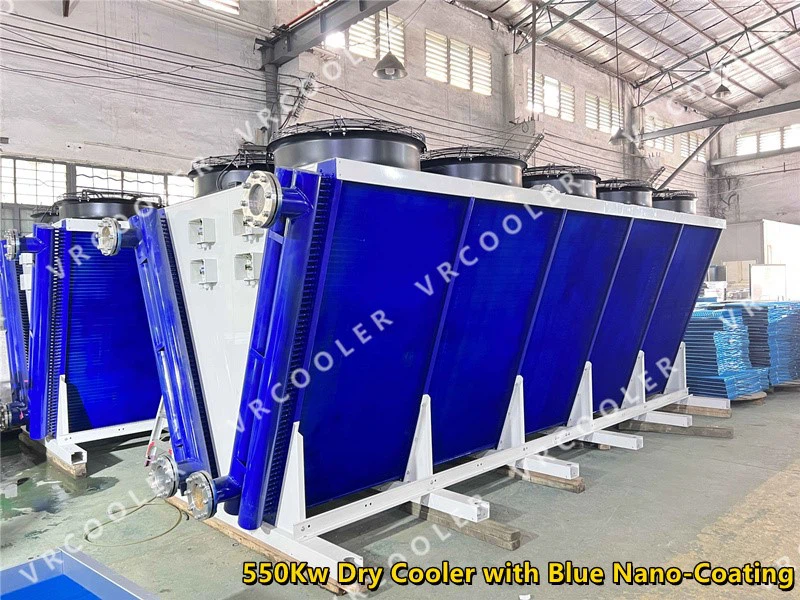
Application range of dry cooler: dry cooler is not only suitable for the cooling system of power plants, but also suitable for equipment that needs to dissipate heat in other industrial fields. For example, dry coolers can be used in air conditioning systems to cool the air and then recycle it, reducing the energy consumption and operating costs of the air conditioning system.
The development trend of dry coolers: With the increasing awareness of environmental protection and energy efficiency, the development trend of dry coolers in the future will pay more and more attention to energy saving and carbon emission reduction. For example, some new dry coolers use renewable energy sources such as solar or wind energy as a power source, reducing the energy consumption and environmental impact of the system. At the same time, the application of some new materials and technologies will also make the performance of the dry cooler more excellent, and promote its wide application in different fields.
Advantages and disadvantages of dry coolers: Dry coolers have some obvious advantages over wet coolers, such as:
Avoid water pollution problems that may be caused by wet coolers;
Areas that can adapt to dry climates and water scarcity;
No need for large amounts of water and water treatment equipment, reducing operating costs;
It will not cause water loss caused by cooling water evaporation and spray loss, avoiding environmental pollution and water waste.
But at the same time, dry coolers also have some disadvantages:
The cooling effect is slightly inferior to that of the wet cooler;
The equipment cost and floor area are relatively large, and economic and space factors need to be considered;
In a high temperature and high humidity environment, the heat dissipation effect of the dry cooler may decrease.
In short, the dry cooler plays an important role in the cooling system of the power plant, and its design, operation control, maintenance and other aspects need to be highly valued. With the continuous improvement of environmental protection and energy efficiency awareness, the application prospect of dry cooler will become more and more broad.