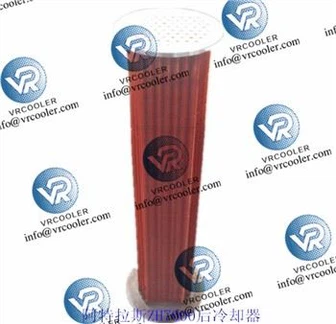
High And Low Temperature Dry Coolers For Biogas Generators
The high and low temperature dry cooler of the biogas generator is based on the principle of freezing and dehumidification, and achieves gas purification and temperature control through a dual technical path:
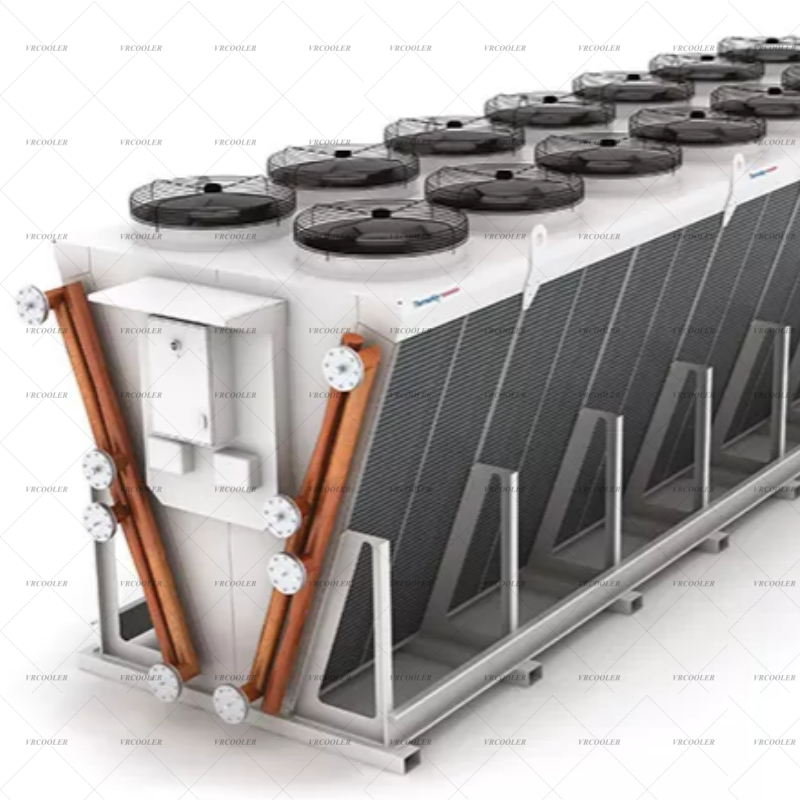
Graded cooling system: adopting a dual circuit design of high temperature circuit (processing 65-80 ℃ intake) and low temperature circuit (processing 42-45 ℃ intake), suitable for cooling needs under different working conditions. The high-temperature type dry cooler can cope with high-temperature heat sources such as engine exhaust, while the low-temperature type is designed for precise temperature control after biogas pretreatment. For example, the Kunteng V-shape VARIO dry cooler used in the Tianziling landfill in Hangzhou provides customized cooling for Caterpillar generators through two independent water cooling circuits.
Efficient dehydration mechanism: Using a fully enclosed compression refrigeration system, the temperature of biogas is reduced to the dew point temperature of 2-10 ℃, causing the saturated water vapor and oil mist to condense into liquid droplets. After dual separation by cyclone separation and stainless steel wire mesh mist capture, they are discharged by an automatic drain. This process not only reduces the moisture content of biogas to below 6g/m ³, but also increases the calorific value of biogas, avoiding corrosion damage to the generator set caused by moisture.
Multiple cooling methods: Two options are available: air cooling and water cooling. The air cooling type adopts an external rotor fan design, with high air volume and low noise; The water-cooled type uses low finned copper tubes for multi stroke heat exchange, adapting to different installation environments and resource conditions.
Core advantage: Technical characteristics adapted to complex working conditions
The reason why high and low temperature dry coolers can become the preferred equipment in the field of biogas power generation is due to their targeted technical design:
Wide range adaptation capability: The intake pressure can cover 1KPa-1.0MPa (customizable for high-pressure scenarios), the environmental temperature adaptation range is -7 ℃ to 40 ℃, and the explosion-proof level can reach up to Exde II CT4. It can cope with complex working conditions such as landfills and industrial wastewater treatment.
Efficient and energy-saving design: Using well-known brands such as Danfoss and Sporland refrigeration components, coupled with optimized heat exchanger structures, the heat transfer efficiency is increased by more than 20% compared to traditional equipment, and the refrigeration system reserves 10% -20% design margin to ensure long-term stable operation. Some equipment is equipped with electric heating automatic drains, which automatically start in low temperature environments, balancing water removal efficiency and energy-saving needs.
Compact integrated design: For example, the Kunteng Flat VARIO dry cooler adopts a V-shaped or flat structure, occupying only 60% of the traditional equipment, which is particularly suitable for the spatial layout requirements of containerized biogas power plants. The equipment has no basic installation requirements, low maintenance frequency, and a continuous operating life of over 20000 hours.
Industry Trend: Technological Upgrades Drive Green Transformation
With the development of biogas power generation towards high capacity and high efficiency, dry cooler technology is showing three major upgrading trends: firstly, intelligent control, which monitors temperature, pressure and other parameters through the Internet of Things to achieve automatic adjustment of refrigeration capacity and fault warning; The second is to replace environmentally friendly refrigerants by using fluorine free media such as R134a and R407C to reduce carbon footprint; The third is integration, which integrates cooling, drying, and waste heat recovery functions to improve the energy utilization efficiency of the system. Under the guidance of the "dual carbon" goal, high and low temperature dry coolers will continue to be optimized, providing more efficient and reliable cooling solutions for clean energy industries such as biogas power generation, and helping the global energy structure transition to low-carbon.