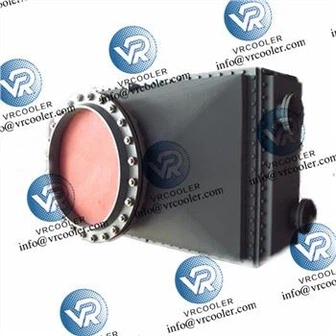
Generator Exhaust Gas Recovery Heat Exchangers
Generator Exhaust Gas Recovery Heat Exchangers
A generator exhaust gas recovery heat exchanger is a device used to recover the heat energy from generator exhaust gas and transfer it to other fluids such as water, steam, or air. The heat exchanger can be used to improve energy efficiency, reduce energy waste and in some applications provide an additional supply of thermal energy.

The following are some of the key items in designing a generator exhaust gas recovery heat exchanger:
Heat load calculation: Determine the heat load in the generator exhaust gas, including parameters such as exhaust gas temperature, exhaust gas flow rate and exhaust gas heating value. This will help to determine the design specification and capacity of the heat exchanger.
Heat exchange medium: Select a suitable heat exchange medium, usually water, steam or air, to absorb the heat from the generator exhaust gas. The choice of heat exchange medium should take into account the temperature and characteristics of the exhaust gas and the requirements of the application.
Heat exchange area: The required heat exchange area is calculated based on the heat load of the generator exhaust gas and the characteristics of the heat exchange medium. Heat exchangers are usually shell and tube, plate or other types of heat exchanger, the specific choice is made according to the actual requirements and feasibility.
Material selection: Depending on the characteristics of the waste gas and operating conditions, materials with good resistance to high temperatures and corrosion are selected to build the heat exchanger. Commonly used materials include stainless steel, alloy steel, etc.
Fluid flow and heat transfer modes: When designing a heat exchanger, the fluid flow mode of the exhaust gas and heat transfer medium needs to be considered, such as down-flow, counter-flow or cross-flow. Choose the appropriate flow method for the specific application requirements and heat transfer efficiency.
Cleaning and maintenance: Ensure that the heat exchanger is designed for easy cleaning and maintenance to maintain its good heat transfer performance and long-term reliable operation.
Safety considerations: Consider appropriate separation between the exhaust gas and heat exchange media during the design process to prevent possible cross contamination or safety risks.