Generator Cooler For Hydroelectric Power Plant
1, The core function of the cooler is to control temperature, ensure efficiency, and safeguard the lifespan of the unit
The core value of the generator cooler is to continuously transfer the heat generated by the operation of the unit to the external cooling medium, and maintain the temperature of key components such as the stator, rotor, and iron core within the design range.
Ensure insulation life: Control the winding temperature within the allowable temperature rise (usually 70-80 ℃), delay insulation aging, and extend the service life of the generator.
Improve power generation efficiency: avoid resistance increase and efficiency loss caused by high temperature, and ensure stable output of the unit under rated conditions.
Preventing operational accidents: Eliminate insulation breakdown, winding burnout and other faults caused by local overheating, and reduce the risk of unplanned shutdowns.
2, Mainstream cooling methods and cooler structures
Indirect cooling is the main cooling method for hydro generators, with coolers serving as the heat exchange core and classified into three types based on the cooling medium. Among them, air coolers are the most widely used in hydropower plants.
1. Air cooler (air cooler) - preferred for small and medium-sized units
Working principle: The fan inside the generator drives hot air to sweep over the finned tubes of the cooler, and the cooling water flowing inside the tubes absorbs heat, achieving a closed cycle of "air cooling and water carrying away heat".
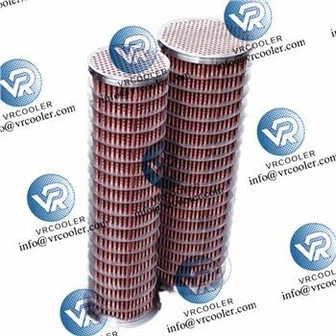
Structural features: mostly shell and tube/finned tube type, heat exchange tubes are made of corrosion-resistant materials such as copper and stainless steel, and fins are added on the outside to increase the heat exchange area; There are two types: drawer type and box type. The drawer type is easy to maintain, while the box type is suitable for large units.
Advantages: Simple system, easy maintenance, low cost, no medium leakage risk, suitable for small and medium-sized hydropower stations.
2. Water cooler (water cooler) - high-end configuration for large units
Internal cooling of stator water: Cooling water is directly introduced into the hollow conductor of the stator, taking away the heat of the winding directly, and the cooling efficiency is much higher than that of air cooling.
Oil cooler: cools the lubricating oil of thrust bearings and guide bearings to avoid lubrication failure caused by high oil temperature.
Advantages: Extremely high heat transfer efficiency, suitable for large capacity, high parameter hydroelectric generator units.
3. Evaporative cooler - a new efficient solution
By utilizing the phase change heat absorption properties of cooling media such as fluorocarbon compounds, self circulating cooling can be achieved without the need for a large amount of cooling water, resulting in significant energy-saving effects. Currently, it is gradually being promoted and applied in large-scale hydropower projects.
3, The operational logic of coolers in hydropower plants
Taking the most commonly used air cooling system as an example, the working process of the cooler is clear and closed-loop:
The generator rotor fan drives internal air circulation, which flows through the stator core and winding to absorb heat and become hot air;
Hot air enters the air cooler and exchanges heat with the cooling water inside the finned tubes, reducing the temperature to a safe range;
The cooled air flows back into the generator and participates in heat dissipation again;
The cooling water that absorbs heat is discharged to the power plant cooling tower or downstream river channel to complete the final release of heat.

Throughout the entire process, the cooler continuously completes the heat exchange cycle of "hot air cooling and cold water absorbing", which is a key node in temperature control of the unit.
4, Key Design and Operation Points of Coolers
1. Core design requirements
Heat exchange capacity: It can meet the rated load, voltage fluctuation of ± 5%, and control the outlet air temperature to ≤ 40 ℃ even when a single cooler is removed.
Material adaptation: The heat exchange tubes are made of corrosion-resistant and thermally conductive materials such as copper and stainless steel, which are suitable for the water quality environment of hydropower stations.
Reliable structure: The design water pressure is 0.8MPa, and the test water pressure is 1.0MPa, ensuring no leakage for 60 minutes.
2. Key measures for operation and maintenance
Regular cleaning: using high-pressure water jet (15-25MPa)+environmentally friendly chemical descaling to remove scale inside the pipe and dust outside the pipe, restoring heat transfer efficiency.
Leakage inspection: Focus on monitoring the expansion pipe interface and bending pipe parts to prevent cooling water from leaking into the interior of the generator.
Water quality control: Control the turbidity and conductivity of cooling water, reduce scaling and corrosion, and extend the life of the cooler.
Intelligent monitoring: Real time monitoring of inlet and outlet water temperature, air temperature, and water flow pressure, with automatic warning in case of abnormalities.
In the power generation chain of hydroelectric power plants, the generator cooler may seem like an auxiliary equipment, but it is actually the core component that determines the safety, efficiency, and lifespan of the unit. The continuous upgrading of cooling technology, from air coolers in small and medium-sized power plants to water cooling and evaporative cooling systems in large power plants, provides solid support for green, stable, and efficient power generation in hydropower plants. In the future, with the integration of new materials and intelligent technology, generator coolers will develop towards higher efficiency, reliability, and energy efficiency, continuing to safeguard the stable output of hydropower energy.