Generator Air Coolers For Standby Generators in Industrial Enterprises
Generator Air Coolers for Standby Generators in Industrial Enterprises
In an industrial organisation, a standby generator is a key piece of equipment that ensures the continuity of power supply. When the main power supply fails, the standby generator needs to start up immediately and run stably to provide power to the critical equipment and production processes of the enterprise. However, the standby generator also generates heat during operation, which is mainly due to the conversion of losses generated by electromagnetic induction and mechanical movement inside the generator. Generator air coolers can effectively control the temperature of the generator and ensure that it can work reliably in emergency situations.
Working mode and process
Heat transfer: The heat generated by the standby generator during operation is first transferred through the generator's casing and internal cooling channels around the cooling air passages. In some standby generator designs, heat may be transferred first to a cooling medium (such as air or oil), which then transfers the heat to the air cooler.
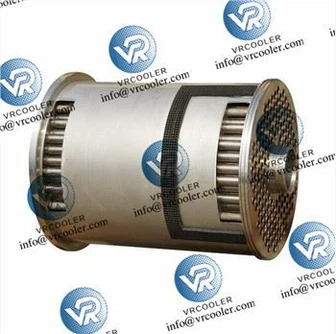
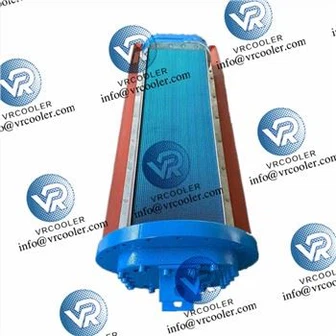
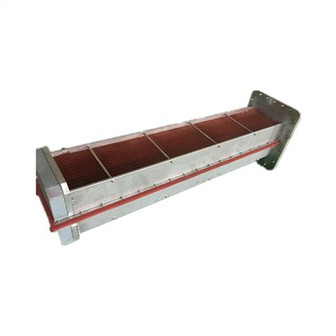
Cooling Process: Components such as finned tubes in the air cooler increase the heat exchange area. When outside air is introduced into the cooler by a fan (in the case of forced convection) or by natural convection, the air flows over the surface of the finned tubes. Heat is transferred from the finned tubes to the air, causing the cooled air to rise in temperature and exit the cooler, while new cooler air is constantly added, creating a cycle that lowers the temperature of the generator.

Advantages
Emergency protection advantages:
For standby generators in industrial enterprises, reliability is a priority. The simple structure of the air cooler enables it to be put into operation quickly when the standby generator is started up in an emergency, without the need for complicated warm-up or start-up procedures. Moreover, it can effectively control the temperature during short periods of high generator load operation (e.g. during the emergency power supply phase after a sudden interruption of the mains supply), ensuring that the generator does not fail due to overheating.
The air cooler is relatively simple to maintain and does not require the delicate maintenance and commissioning that some complex cooling systems do. This enables standby generators and coolers to be returned to working order more quickly in an emergency, reducing the length of power supply interruptions caused by cooling system problems.
Space and cost efficiency:
Space is often at a premium in industrial companies. Generator air coolers are relatively compact and take up little space, making them suitable for installation in limited spaces such as standby generator rooms. Moreover, compared with other cooling methods (such as large water-cooled systems), air coolers have lower initial investment costs and do not require a large number of pipelines, tanks and other ancillary equipment, thus reducing the enterprise's investment in standby generator cooling systems.
In terms of operating costs, an air cooler consumes relatively little electrical energy, mainly from fans (if forced convection). Moreover, it does not require the use of coolant, avoiding the purchase, replacement and disposal costs of coolant, which is in line with the cost - benefit principle of enterprises.