Generator Air Coolers For Hydro & Thermal Power Plants
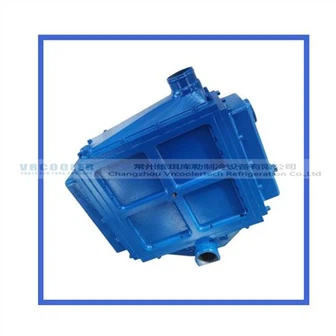
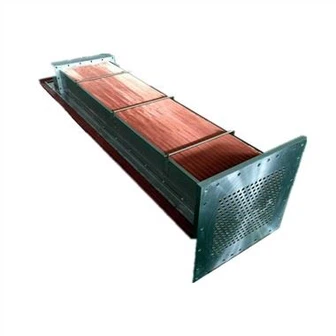
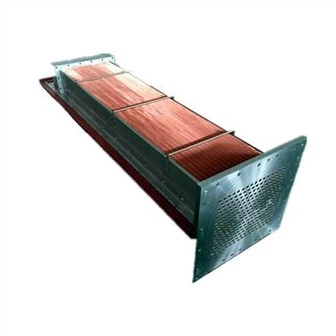
Generator Air Coolers For Hydro & Thermal Power Plants
During operation, large generators generate enormous heat due to copper loss (winding resistance heating), iron loss (core eddy current and hysteresis loss) and mechanical loss. If this heat is not dissipated in time, it will lead to insulation aging, equipment damage, and even cause serious accidents.
Air cooler is the key equipment to solve this problem.
Cooling Tubes (Tubes):
Material: copper alloy tubes or stainless steel tubes are usually used. These materials have good thermal conductivity, corrosion resistance and sufficient mechanical strength to adapt to the complex water quality of the power plant and long-term operational needs.
Internal flow: Cooling water flows inside the tubes. Power plants usually have a dedicated closed loop cooling water system to supply water to these coolers.
Fin (Fins):
Material: Usually aluminum or copper foil. To enhance heat transfer and corrosion protection, the surface of the fins is treated with a hydrophilic film (to enhance condensation heat transfer) or an anti-corrosion coating.
Function: Significantly increases the heat dissipation area of the outer surface.
External flow: Hot air from the generator is forced to blow through the finned tube bundle by the action of a fan. Heat is transferred from the hot air through the fins and tube walls to the cooling water inside the tubes, and the air is cooled and re-entered into the generator for recycling.
How it works:
The generator's cooling system is a closed air loop. An internal fan drives hot air through several air coolers mounted in the housing. Inside the coolers:
Outside the tubes: The hot air comes into contact with the walls of the cooled tubes with fins, the heat is removed and the air temperature is lowered.
Inside the tubes: the cooling water absorbs the heat, the temperature rises, and is pumped to the secondary cooling system in the plant (e.g., cool water tower, plate heat exchanger) for cooling, after which it is circulated back to the generator air cooler again.
This process is continuous, thus continuously transferring the heat generated by the generator to the final heat trap (usually the atmosphere or rivers, lakes and seas).