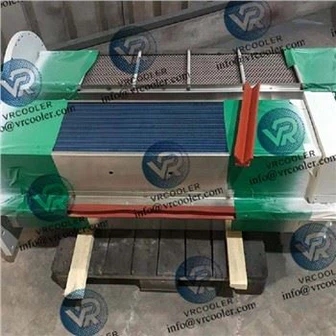
Gas Heat Recovery After Gas Engines To Produce Hot Water
Gas Heat Recovery After Gas Engines to Produce Hot Water
Gas engines (e.g., natural gas, biogas engines) generate a large amount of waste heat during operation-typically accounting for 30%–50% of the total fuel energy input. Most of this waste heat is carried by exhaust gas (temperature usually 350°C–600°C) and cylinder jacket cooling water. Recovering exhaust heat to produce hot water is a cost-effective energy-saving solution, and its core lies in matching a suitable gas heat recovery heat exchanger to the engine's operating characteristics.
The system uses a heat exchanger to transfer the sensible heat of high-temperature exhaust gas from the gas engine to low-temperature water, raising the water temperature to the required "hot water" standard (usually 50°C–90°C, depending on application needs such as heating, industrial process water, or domestic hot water). The process follows three key steps:
Step 1: Exhaust Gas and Water Flow Path Design
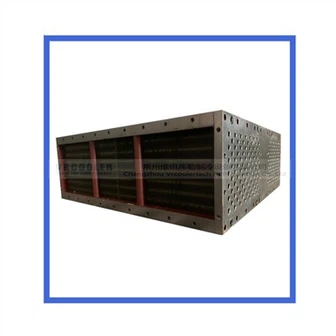
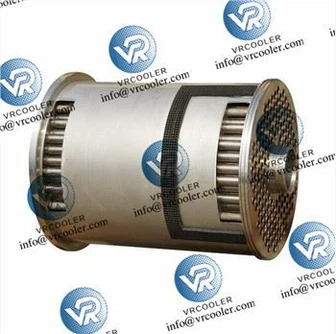
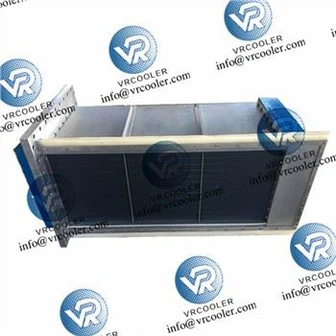
Exhaust Gas Side: High-temperature exhaust gas (350°C–600°C) from the gas engine's exhaust manifold is introduced into the heat exchanger's exhaust chamber (usually the "shell side" or "tube side," depending on the exchanger type). It flows through the heat transfer surface (e.g., finned tubes) and releases heat, with the cooled exhaust gas (temperature dropped to 120°C–200°C, to avoid dew point corrosion) finally discharged through the chimney.
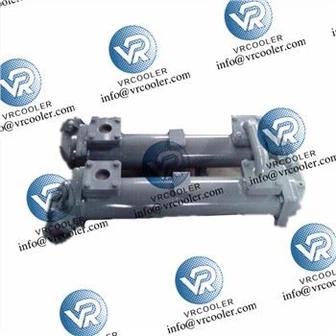
Water Side: Low-temperature make-up water (e.g., 15°C–30°C) is pumped into the heat exchanger's water chamber (the opposite flow path of exhaust gas). It absorbs heat from the exhaust gas through the heat transfer surface, and the heated water (50°C–90°C) is sent to the hot water storage tank or directly to the end user (e.g., heating systems, industrial workshops).
Step 2: Heat Transfer Mechanism
Heat transfer occurs through the heat exchanger's tube wall (or finned surface). The process has three stages:
Convection from exhaust gas to heat transfer surface: High-temperature exhaust gas flows over the surface, transferring heat to the metal wall via forced convection.
Conduction through the heat transfer surface: Heat is conducted through the metal tube/fin (e.g., carbon steel, stainless steel) to the inner side in contact with water.
Convection from heat transfer surface to water: Low-temperature water flows inside the tube, absorbing heat from the wall via forced convection and increasing in temperature.
Step 3: System Auxiliary Control
To ensure safety and efficiency, the system is equipped with key controls:
Temperature monitoring: Sensors track exhaust gas inlet/outlet temperature and hot water outlet temperature. If the exhaust gas temperature is too low (risk of dew point corrosion) or the hot water temperature is too high (risk of scalding), the system adjusts water flow or bypasses part of the exhaust gas.
Water flow control: A variable-frequency pump adjusts water flow based on the engine's load (exhaust gas temperature varies with load) to stabilize the hot water outlet temperature.
Pressure protection: A pressure relief valve and pressure gauge are installed on the water side to prevent overpressure caused by water expansion.
Dew point corrosion prevention: If the exhaust gas contains acidic components (e.g., biogas engines may produce H₂S), the heat exchanger's outlet exhaust temperature is controlled above the acid dew point (usually 120°C–150°C) to avoid condensation of acidic water on the metal surface.
Typical Application Scenarios
Cogeneration (CHP) Systems:
Gas engines generate electricity for factories, communities, or data centers, while exhaust heat is recovered to produce hot water for:
Industrial process water (e.g., food processing, textile dyeing).
Residential/commercial heating (via radiators or floor heating).
Biogas Engineering:
Biogas engines burn biogas (from livestock manure or organic waste) to generate electricity, and exhaust heat is used to:
Heat biogas digesters (maintain 35°C–40°C for mesophilic fermentation, improving biogas yield).
Provide hot water for farm cleaning or staff dormitories.
Small Distributed Energy Systems:
For hotels, hospitals, or schools: Gas engine exhaust heat produces hot water for daily use (bathing, cleaning) and auxiliary heating, reducing reliance on municipal heat supply.