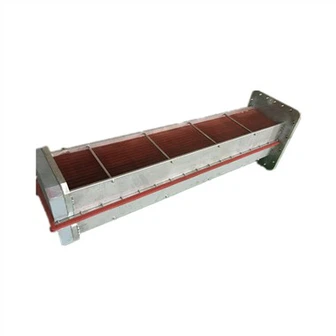
Gas Engine HT LT Remote Radiator For Power Generation Service Company
Gas Engine HT LT Remote Radiator for Power Generation Service Company
Purpose of HT and LT Remote Radiators
Remote radiators are external cooling systems used to dissipate heat from the engine. These are often placed away from the engine to reduce noise, heat, and exhaust interference in the immediate environment of the genset.
HT Radiator (High Temperature):
Designed to cool the engine block, cylinder head, and other high-temperature zones. It ensures the engine remains within its optimal operating temperature range for efficient combustion and performance.
LT Radiator (Low Temperature):
Cools subsystems such as charge air (via an intercooler or aftercooler), lubricating oil, or alternator equipment. It prevents overheating of auxiliary systems and increases their operational efficiency.
System Components
An HT-LT remote radiator system typically includes:
Heat Exchangers:
HT radiator for engine block cooling.
LT radiator for charge air or auxiliary cooling.
Fan Systems:
High-performance axial or centrifugal fans to push or pull air through the radiator cores.
Coolant Pumps:
Pumps to circulate coolant across the engine and radiator systems.
Thermostatic Valves:
Used to regulate coolant flow and maintain the desired temperatures in both HT and LT circuits.
Expansion Tanks:
Compensate for coolant volume changes due to temperature fluctuations.
Piping and Insulation:
Properly insulated piping routes coolant between the engine, heat exchangers, and radiators.
Control Systems:
Monitors and controls fan speeds, coolant flow, and temperature to optimize performance.

Benefits of Remote Radiator Systems
Heat and Noise Isolation:
Remote placement reduces heat and noise near the engine room, improving working conditions and system longevity.
Space Optimization:
Allows for flexible installation layouts, especially in compact or enclosed power plants.
Enhanced Cooling Efficiency:
Larger radiator capacity and better airflow improve heat dissipation compared to on-engine cooling systems.
Customizable Design:
Radiators can be designed to meet specific cooling requirements, environmental conditions, and engine sizes.
Applications
HT and LT remote radiator systems are widely used in the following scenarios:
Standalone Power Plants:
Supplying continuous power for industrial facilities or remote locations.
Backup Power Systems:
Used with gas gensets in hospitals, data centers, and other critical applications.
Cogeneration Plants:
Where waste heat from the HT circuit is recovered for heating or other processes.
Peaking Power Plants:
To meet short-term high power demands efficiently.