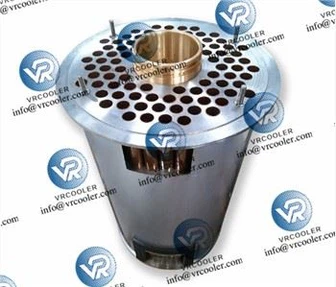
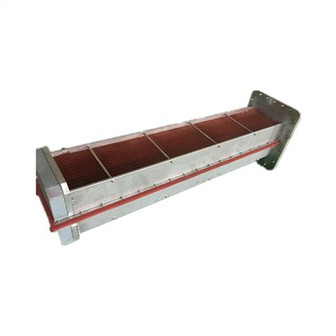
Fresh Water Marine Cooler Assembly
A Fresh Water Marine Cooler Assembly is a shell-and-tube heat exchanger used to control the temperature of marine engine fresh water circuits. It transfers heat from the closed-loop fresh water system to raw (sea) water, ensuring stable and safe engine operation under varying load conditions.

Working Principle
Hot fresh water from the engine flows through the tube side of the cooler, while raw seawater passes through the shell side. Heat is exchanged across the tube walls, cooling the fresh water before it returns to the engine, while preventing direct contact between seawater and engine components.
Key Features
Robust shell-and-tube construction
Separate fresh water and raw water circuits
High heat transfer efficiency
Compact, service-friendly design
Suitable for continuous marine operation
Materials and Construction
Marine fresh water coolers are typically manufactured with:
Copper-nickel or stainless steel tubes for corrosion resistance
Carbon steel or cast iron shells
Flanged connections for easy installation and maintenance
Material selection is based on seawater quality and operating conditions.
Applications
Main propulsion engines
Auxiliary diesel generators
Marine power packs
Offshore and workboat engines
Benefits
Protects engines from overheating
Extends engine service life
Reduces maintenance caused by seawater corrosion
Ensures stable performance in marine environments
Conclusion
The fresh water marine cooler assembly is a critical component in marine cooling systems, providing efficient, reliable, and corrosion-resistant temperature control for engines operating in harsh seawater conditions.