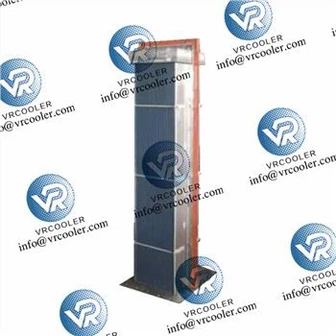
Efficient And Energy-saving Solutions For High And Low Temperature Dry Coolers in The Field Of Industrial Temperature Control
一, Core definition: Understand the essence of high and low temperature dry coolers
High and low temperature dry cooler, also known as high and low temperature dry cooler, is an integrated equipment based on the principle of dry heat exchange, combined with freezing dehumidification and precise temperature control technology. It can flexibly switch between high and low temperature extreme working conditions and room temperature range, realizing temperature regulation and drying treatment of media (air, ethylene glycol solution, etc.). Its core features are "no water evaporation loss" and "wide temperature range adaptation", which are different from traditional water cooling equipment that relies on water resources for cooling, and ordinary dry coolers that can only adapt to a single temperature range. High and low temperature dry coolers achieve temperature control through sensible heat exchange between air and the medium inside the tube, basically achieving zero water consumption. At the same time, they can adapt to a wide temperature range of -40 ℃ to 120 ℃, balancing drying effect and temperature stability, and adapting to complex temperature control requirements in multiple scenarios.
Compared with ordinary air coolers and conventional air coolers, the core advantages of high and low temperature air coolers are "full temperature coverage" and "wet dry control" - they can handle high temperature media of 65 ℃ -80 ℃ like high-temperature air coolers, and adapt to low temperature conditions below 42 ℃ like low-temperature equipment. At the same time, they integrate dehumidification function, which can effectively remove moisture and oil mist in the medium, avoid pipeline corrosion, equipment failure and product moisture, and achieve the efficient application value of "one equipment, multiple functions".
二, Working principle: Dual synergy of cold and hot exchange and drying dehumidification
The working core of high and low temperature dry coolers is "closed cycle heat exchange+freezing dehumidification". The overall process is divided into two major links: temperature control cycle and drying dehumidification. The two work together to ensure accurate temperature compliance and achieve medium drying and purification. The specific workflow is as follows:
(1). Temperature control cycle stage
1.High temperature working condition: When dealing with high-temperature media (such as high-temperature compressed air, industrial waste liquid), the media enters the interior of the finned coil of the equipment. The high-efficiency fan built into the equipment extracts ambient temperature air and forcefully blows it over the surface of the finned coil. Due to the temperature difference between the high-temperature medium inside the tube and the normal temperature air outside the tube, heat is rapidly transferred through the fins and the tube wall. The temperature of the high-temperature medium gradually decreases to the set value, and after completing the cooling process, it is discharged from the equipment and enters the subsequent production process. During this process, the fins are made of high thermal conductivity materials (aluminum or copper), greatly increasing the heat transfer area and improving thermal conductivity efficiency. The ratio of heat transfer area to medium processing capacity of some equipment is as high as 1.5, far exceeding the 1.1-1.2 times of conventional equipment, ensuring stable and reliable cooling effect.
2. Low temperature working condition: When dealing with low-temperature media or cooling the media to a low temperature range (such as 2-10 ℃), the equipment starts the refrigeration system. The refrigerant evaporates and absorbs heat in the evaporator, fully exchanges heat with the media entering the evaporator, and quickly drops the temperature of the media below the set dew point temperature. At the same time, the refrigeration system is equipped with a complete temperature adjustment device, which can automatically adjust the cooling capacity according to the fluctuation of the medium temperature, avoid temperature overshoot, ensure that the medium temperature is stable within a precise range of ± 0.3 ℃, and meet the needs of precision production.
(2) Drying and dehumidification process
This stage is mainly designed for gas media (such as compressed air), with the core of removing water vapor and oil mist from the media to prevent subsequent equipment corrosion or product moisture. When the gas medium is cooled down and the temperature drops below the dew point temperature, the water vapor in it reaches saturation and condenses into liquid water droplets and oil droplets; Subsequently, the gas containing liquid impurities enters the gas-liquid separator, where liquid water, oil droplets, and gas are separated by centrifugal force and filtration. The separated liquid impurities are discharged outside the machine through an automatic drainage valve; Finally, the dried gas enters the pre cooler again and exchanges heat with the high-temperature gas at the inlet to increase the temperature, avoiding condensation in the pipeline due to low exhaust gas temperature. At the same time, the cold capacity is recovered to improve energy utilization efficiency.
Throughout the entire working process, the equipment adopts a closed loop design, and the medium inside the pipe does not come into direct contact with the outside air, avoiding secondary pollution; At the same time, there is no need to consume water resources, and cooling is only achieved through air heat exchange. Compared with traditional water-cooled equipment, the water-saving rate can reach over 90%, which is in line with the "dual carbon" goal and green production concept. In addition, the equipment is equipped with multiple protection functions, including refrigerant high and low voltage protection, current overload protection, medium overload protection, etc., to ensure stable operation during high and low temperature switching, and a fault free operation time of more than 20000 hours.
三, Core structure and key technologies: the core support that determines equipment performance
The performance advantages of high and low temperature dry coolers stem from their scientific structural design and integrated application of core technologies. They are mainly composed of five core components, which work together to ensure efficient and stable operation of the equipment over a wide temperature range
(1) Core components
1. Fin coil: The core heat exchange component of the equipment adopts a parallel tube structure, which improves the heat transfer effect by 2.13 times compared to the conventional horizontal tube structure. The material can be selected according to the characteristics of the medium (aluminum finned copper tubes are used in ordinary scenarios, anti-corrosion coated fins or all copper structures are used in corrosive scenarios), and different media (air, ethylene glycol solution, industrial waste liquid, etc.) can be adapted inside the tube. Some equipment supports customized special coils to meet extreme working conditions.
2. Fan system: High efficiency axial flow fans or centrifugal fans are used, and some are equipped with EC DC brushless fans and frequency converters. The speed can be automatically adjusted according to the temperature and flow rate of the medium, which not only reduces energy consumption but also reduces operating noise. The noise at a distance of 1.0m from the equipment can be controlled below 50dB (A), suitable for scenarios with high noise requirements (such as pharmaceutical workshops and laboratories). The fan adopts a modular design, which is easy to install and disassemble, and convenient for later maintenance.
3. Refrigeration system: Only used for low-temperature working conditions and dehumidification processes. The core components (compressor, condenser, evaporator) are made of world-renowned brands with superior performance. The refrigerant used is environmentally friendly medium (such as R22), with high refrigeration efficiency. At the same time, it is equipped with an automatic cooling capacity adjustment device, which can be flexibly adjusted according to working conditions to avoid energy waste.
四. Control system: Adopting an intelligent PLC control system, it supports manual and automatic dual control modes, has complete parameter display functions (medium inlet and outlet pressure, temperature, refrigerant pressure, etc.), can monitor equipment operation status in real time, achieve automatic fault alarm and shutdown protection, and support remote monitoring and debugging to reduce manual operation and maintenance costs. High end components are selected for electrical components, with reasonable wiring, low failure rate, and easy maintenance.
五. (1)Shell and auxiliary components: The shell is made of galvanized steel plate powder coated or stainless steel material, with high strength, corrosion resistance, waterproof and dustproof, and can adapt to outdoor or harsh industrial environments; The auxiliary components include gas-liquid separator, automatic drainage valve, thermal balance valve group, etc. Among them, the gas-liquid separator adopts a unique sewage interception and drainage design, with high separation efficiency, reliable drainage, and avoids equipment failure caused by residual liquid impurities.
(2) Key technologies
1. Wide temperature range adaptation technology: Through a dual system stacked structure design, a dedicated low-temperature refrigerant (such as R23) is used on the low-temperature side to achieve -40 ℃ deep cooling, and a conventional refrigerant is used on the high-temperature side to construct an independent circuit that can output a high-temperature medium of 120 ℃, achieving seamless switching between high and low-temperature working conditions without the need for additional equipment, greatly saving equipment investment and land area.
2. Efficient heat transfer technology: adopting a V-shaped finned coil layout, which ensures sufficient heat transfer area and saves space; At the same time, optimize the air duct design by using CFD flow field simulation to optimize the condensation air duct, reduce airflow resistance, and improve heat transfer efficiency. In high temperature seasons, wet film spraying technology can be used to reduce the return air temperature by about 5 ℃ and increase heat transfer by nearly 60%.
3. Intelligent temperature control technology: Integrated PID Fuzzy composite algorithm, can automatically adjust the cooling capacity and fan speed according to the fluctuation of medium temperature, suppress integral saturation, avoid temperature overshoot, and ensure the accuracy of temperature control; At the same time, it has functions such as power outage restart and fault self diagnosis, improving the reliability and intelligence level of equipment operation.

4, Classification and selection: Adapt to different application scenarios as needed
The classification of high and low temperature dry coolers is mainly based on cooling methods and application scenarios. Different types of equipment have their own performance and adaptation scenarios, and enterprises can accurately select according to their own production needs to avoid resource waste:
(1) Classified by cooling method
1. Air cooled high and low temperature dry cooler: relying on external air as the cooling medium, without the need for a cooling water system, compact structure, easy installation, no need for civil engineering support, can be directly placed outdoors or in equipment rooms, suitable for use in water scarce areas, outdoor scenes, or small and medium-sized enterprises. Its core advantages are flexible deployment, low operating costs, and controllable cooling water pressure between 0.2MPa-0.4MPa, suitable for conventional industrial scenarios. The disadvantage is that the cooling effect is greatly affected by external environmental temperature, and spray technology is needed to assist in cooling in high temperature environments.
2. Water cooled high and low temperature dry cooler: Through heat exchange between cooling water and the medium inside the tube, the cooling effect is stable and not affected by external environmental temperature. It is suitable for high temperature, high humidity environments or precision production scenarios with high cooling effect requirements (such as electronic component manufacturing, pharmaceutical research and development). The cooling water temperature needs to be controlled at ≤ 32 ℃, with a pressure of 0.2MPa-0.4MPa. The inlet temperature of some low-temperature water-cooled equipment can be adapted to 32 ℃ -35 ℃, with a pressure of 0.27MPa-0.4MPa. The disadvantage is that a cooling water circulation system needs to be equipped, which requires high initial investment and regular water quality treatment to avoid pipe scaling.
5, Application scenario: Covering multiple industries, empowering green precision production
High and low temperature dry coolers, with the advantages of wide temperature range adaptation, high efficiency and energy saving, and integrated drying and dehumidification, have widely penetrated into multiple segmented scenarios in industrial production and people's livelihood, becoming the core equipment of temperature control systems in various industries. Specific applications are as follows:
(1) Industrial manufacturing field
1. Electronics and semiconductor industry: used in the production of electronic components, semiconductor packaging and testing processes, to regulate and dry compressed air and inert gases at high and low temperatures to avoid component short circuits and oxidation caused by moisture, ensuring product qualification rate; At the same time, it can provide precise temperature control for production equipment (such as lithography machines and chip testing equipment) to ensure stable operation of the equipment.
2. Automotive manufacturing industry: used in the processing and spraying of automotive parts, cooling high-temperature processed parts, drying and spraying with compressed air to avoid rusting of parts and fogging of spraying surfaces, and improve product quality; At the same time, it can simulate high and low temperature environments under different climatic conditions for temperature resistance testing of automotive components.
3. Chemical industry: used for temperature control of chemical reaction vessels and pipelines, cooling high-temperature reaction media, while drying chemical raw material gases to avoid media corrosion of pipelines and affecting reaction efficiency; Adapt to extreme working conditions such as corrosiveness and high pressure, providing guarantees for the safety and stability of chemical production.
2) Precision and livelihood fields
1. In the fields of medicine and biology: used for drug research and development, vaccine production, and clinical sample storage, providing precise high and low temperature environments to ensure drug stability and sample activity; Simultaneously dry the compressed air used in production to prevent microbial growth and meet GMP certification requirements.
2. Data center field: As the core equipment of natural cooling solutions for data centers, it can fully utilize outdoor natural cooling sources to provide cooling for servers and energy storage devices, reducing the PUE value of data centers; At the same time, it can adapt to high temperature environments and use spray technology to enhance heat transfer, ensuring stable temperature and significant energy-saving effects of the equipment under high computing power operation.
3. In the field of new energy: used in the production of photovoltaic slurry and the preparation of lithium battery electrolyte, providing precise temperature control and drying environment to improve product performance; It can also be used for cooling solar photovoltaic power plants and energy storage systems, ensuring that equipment operates at suitable temperatures and extending equipment life.
(3) Special scenario domain
Suitable for industrial production in water scarce areas, high-altitude extremely cold areas, explosion-proof scenarios, such as mountainous and high-altitude areas, air-cooled equipment can be used without consuming water resources; Explosion proof scenarios can be customized with explosion-proof structures to adapt to flammable and explosive environments, ensuring production safety.