Dry Coolers in Thermal Power Plants
Dry Coolers in Thermal Power Plants
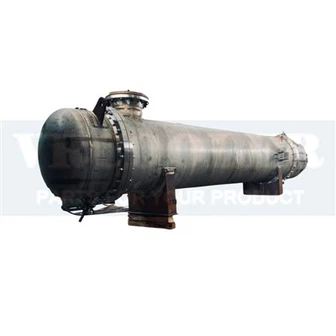
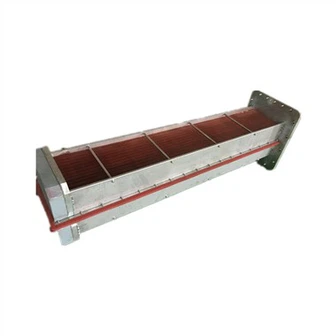
Dry cooler in thermal power plant works mainly based on the air cooling principle. It utilizes air as the cooling medium, and transfers the heat from the spent steam discharged from the turbine or other hot media that need to be cooled to the air through a heat exchanger, so as to cool and condense the hot media. Specifically, the hot medium flows inside the tube of the dry cooler and the air flows outside the tube through forced ventilation or natural ventilation, and the heat is transferred from the hot medium to the air through the tube wall, thus realizing the cooling effect. Compared with traditional wet cooling systems, dry coolers do not require large amounts of water for cooling, but rely on the temperature difference and heat exchange between the air and the hot medium to complete the cooling process.
Main Functions
Water saving: In areas where water resources are scarce, the application of dry coolers can greatly reduce the demand for water in thermal power plants. The traditional wet cooling system requires a large amount of circulating water to cool the turbine spent steam, while the dry cooler adopts air cooling, which avoids a large amount of water evaporation loss and effectively saves water resources, which is of great significance to alleviate the tension of local water resources.
Improvement of thermal efficiency: By cooling the spent steam discharged from the turbine and condensing it into water, the steam can fully expand and do work in the turbine, which improves the efficiency of the turbine and thus the thermal efficiency of the whole thermal power generation system. At the same time, the dry cooler is able to control the condensate temperature within a suitable range and provide high-quality condensate for the heat recovery system, further improving the thermal economy of the unit.
Reduced Environmental Pollution: Dry coolers help reduce the environmental impact of thermal power plants due to reduced consumption and discharge of water resources. Compared with the wet cooling system, the dry cooler does not have the problem of thermal and water pollution due to cooling water discharge, nor does it produce the large amount of water vapor emission brought about by the evaporation of the cooling tower, which has less impact on the surrounding environment.
Application Scenario
Direct air-cooling system: the dry cooler is directly used to cool the spent vapor discharged from the turbine, which is transported to the tube bundle of the dry cooler through pipelines, cooled and condensed into water in the tube bundle, and then returned to the heat system. This kind of system is suitable for large-scale thermal power generating units in water-scarce areas, such as some coal-fired power plants in Northwest China, North China and other regions have adopted direct air-cooling technology, which greatly reduces the consumption of water resources.
Indirect air cooling system: it is divided into indirect air cooling system with surface condenser and indirect air cooling system with jet condenser. In the indirect air-cooling system with surface condenser, the spent steam of the turbine is cooled and condensed by the circulating water in the surface condenser, and the circulating water is then cooled by the dry cooler to realize the transfer and distribution of heat. In the indirect air cooling system with jet condenser, jet pumps are used to mix the turbine spent steam with circulating water, and then the circulating water is cooled by the dry cooler. Indirect air-cooling system is suitable for applications with higher requirements on water quality or better control of cooling water temperature.