Dry Coolers For Auxiliary Cooling Circuits in Gas Turbine Power Plants
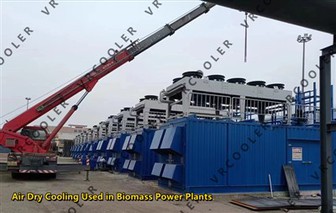
Dry coolers are used to reject heat from closed-loop water or water–glycol circuits connected to gas turbine auxiliaries. Heat absorbed from equipment is transferred to ambient air through finned coils and axial fans, ensuring stable operating temperatures without evaporative water losses.
Typical auxiliary circuits cooled by dry coolers include:
- Lube oil cooling systems
- Generator cooling water circuits
- Hydraulic oil coolers (via secondary loop)
- Seal oil systems
- Control and auxiliary equipment cooling

Typical Dry Cooler Configuration for Gas Turbine Auxiliaries
Cooling medium: Water or water–glycol mixture
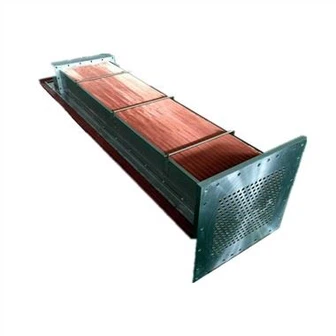
Heat exchanger type: Finned tube air cooler
Fans: High-efficiency axial or EC fans
Control: Variable speed fan control for load matching
Installation: Ground-mounted, roof-mounted, or elevated steel structure
Redundancy: N+1 fan or modular redundancy
Design Considerations for Auxiliary Cooling Circuits
Proper design ensures stable turbine operation under all conditions:
Maximum ambient air temperature
Required supply and return coolant temperatures
Total auxiliary heat load
Flow rate and allowable pressure drop
Noise limits and site layout constraints
Systems can be optimized for peak summer operation by increasing coil surface or fan capacity.
Materials & Construction
Dry coolers for gas turbine auxiliary cooling are typically constructed with:
Copper or stainless steel tubes
Aluminum fins for high heat transfer
Galvanized or epoxy-coated steel frames
Optional corrosion protection for coastal or industrial sites
Conclusion
Dry coolers for auxiliary cooling circuits in gas turbine systems offer a proven, efficient, and environmentally responsible solution for managing critical heat loads. By delivering reliable water-free cooling for lube oil, generator, and auxiliary systems, dry coolers help ensure stable turbine operation, reduced maintenance, and long-term plant performance.