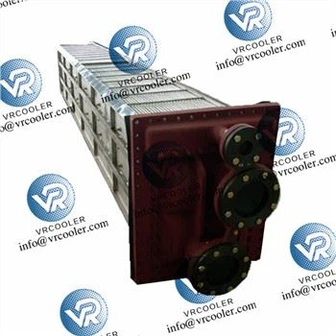
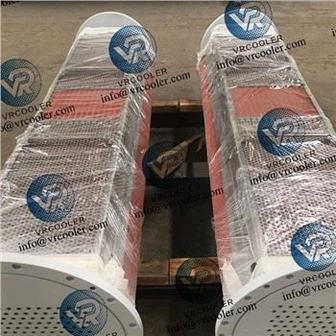
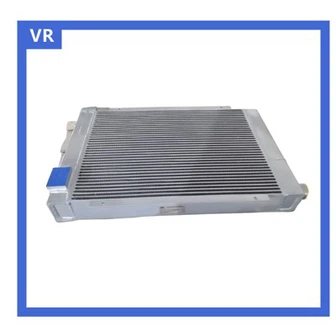
Dry Cooler For Power Plant
A dry cooler is a type of heat exchanger that is commonly used in power plants for cooling purposes. It is particularly suitable for power generation facilities where water scarcity or water quality concerns make using wet cooling systems, such as cooling towers impractical.
In a power plant, a dry cooler is typically used to dissipate the waste heat generated by the condenser in a steam cycle or a gas turbine system. Instead of water as a cooling medium, a dry cooler uses ambient air to remove heat from the condenser. The condenser's hot refrigerant or working fluid flows through finned tubes, while the ambient air is driven over these tubes by fans.
The heat exchange process in a dry cooler involves transferring heat from the hot working fluid to the cooler air, causing the fluid to condense or cool down. The cooled fluid is then circulated back into the power generation cycle for reuse, while the heated air is expelled into the atmosphere.

Dry coolers offer several advantages in power plant applications:
Water Conservation: Dry coolers do not require a continuous water supply, making them suitable for regions where water resources are limited or where strict water usage regulations are in place.
Reduced Environmental Impact: Dry coolers eliminate the need for large cooling towers and associated water treatment processes, reducing the environmental impact and potential for water contamination.
Lower Operating Costs: Dry coolers typically have lower operating costs compared to wet cooling systems since they do not require water treatment, pumping systems, or make-up water supply.
Simplified Maintenance: Dry coolers are generally easier to maintain and require less routine maintenance compared to wet cooling systems.