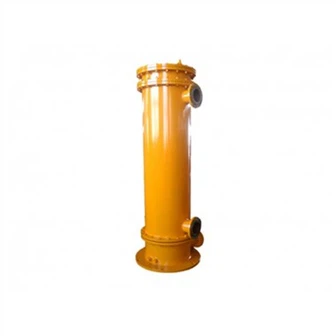
Double Tube Air Cooler: A Hygiene Isolation Solution For Preventing Cross Contamination in The Pharmaceutical Industry
Core understanding: The underlying logic of preventing cross contamination and double pipe isolation
1. Core risks of pharmaceutical cross contamination
In pharmaceutical production, the flow of different batches of products, materials, and utility media (such as cooling water and steam) is the main cause of cross contamination. Especially in high activity drugs, sterile formulations, and biopharmaceutical scenarios, trace contamination can lead to the scrapping of entire batches of products and even cause safety accidents. At the regulatory level, Article 197 of China's GMP (revised in 2010) explicitly requires that measures should be taken as much as possible to prevent pollution and cross contamination during the production process, including production in separate areas, pressure difference control, specialized equipment, and other measures implemented by the Chinese government; The Pharmacopoeia Committee's "Guidelines for Validation and Application of Isolation Systems for Aseptic Inspection" (9206) further elaborates on the requirements for sealing, sterilization, and monitoring of isolation systems.
2.The essence of dual tube isolation: dual barrier+leakage warning
Double tube isolation (with double tube plate heat exchanger as the core carrier) is the core technical solution for pharmaceutical hygiene isolation, and its anti pollution mechanism lies in the synergistic effect of dual sealing barriers and leakage warning channels:
Structural design: Two independent tube plates are installed at each end of the heat exchange tube bundle, connecting the tube side (product/process medium) and the shell side (utility medium) respectively, forming an intermediate isolation chamber between the two tube plates; The heat exchange tubes pass through two tube sheets simultaneously and are fixed by expansion/welding, forming two independent sealing lines.
Anti pollution principle: If a single heat exchange tube or tube plate connection leaks, the medium will not directly mix into the other side of the flow channel, but will be guided to the intermediate isolation chamber and discharged through the discharge port/monitoring port, achieving passive intrinsic safety protection of "controllable leakage → early warning → avoiding pollution".
Compliance value: The FDA inspection has listed dual tube plate design as the preferred solution for pharmaceutical water systems (purified water, injection water). Single plate design requires additional monitoring measures, otherwise it may be included in the 483 observation item rectification list.
Compliance verification: full cycle control from design to operation
The effectiveness of the dual tube isolation system needs to be verified through DQ/IQ/OQ/PQ full cycle verification to ensure compliance with regulatory requirements. The specific process is as follows:
1.Design Confirmation (DQ)
Core content: Compare the URS (User Requirements Specification) to confirm that the structure, material, flow channel design, and leakage monitoring plan of the double tube plate comply with the results of the cross contamination risk assessment; Clearly define the cleanliness level, pressure differential range, and sterilization method (such as vaporized hydrogen peroxide VHP) of the isolator and RABS (restricted access barrier system).
Output files: design drawings, risk assessment report (FMEA), material certification, URS compliance confirmation form.
2. Installation Confirmation (IQ)
Core content: Verify equipment material certificates, welding inspection reports (penetration/radiographic testing), and double tube plate hydrostatic test reports; Confirm that the cleanliness of the installation environment is not lower than level D, and use special flanges and sealant to seal the through wall areas to avoid leakage of gaps.
Key inspections: integrity of leak detection chamber sealing, absence of dead corners/blind pipes in pipelines, flexible valve opening and closing, and calibration of pressure differential monitoring devices.
3.Operational Qualification (OQ)
Core content: Testing heat transfer efficiency, pressure drop, and temperature control accuracy; Verify the leakage monitoring function (simulate leakage, confirm that the isolation chamber can quickly detect and alarm); Confirm that the CIP (online cleaning)/SIP (online sterilization) process can cover all flow channels, and the cleaning effect meets the standard (residue ≤ 10ppm).
Output files: Run test records, alarm function verification report, CIP/SIP process confirmation report.
4. Performance Qualification (PQ)
Core content: The system runs continuously for 21 days, monitoring the microbial and endotoxin indicators on the product side without any abnormalities; The internal environment of the isolator reaches Class A (one-way flow verification); The leakage rate continues to meet the standards and there have been no incidents of cross contamination.
Output files: Performance Confirmation Report, Environmental Monitoring Data, Deviation Handling Record.

Scenario application: Dual tube isolation scheme for different pharmaceutical scenarios
1. Production of sterile preparations (injections, eye drops)
Core requirement: Eliminate media streaming, maintain a Class A clean operating environment, and avoid microbial contamination.
Key points of the plan: The injection water system adopts a double tube plate heat exchanger (Sub Loop secondary circulation design) to achieve rapid cooling of injection water from 80 ℃ to 25 ℃ (under a flow rate of 6T/h, a single 1-meter-long double tube plate can meet the requirements, and installation is convenient); The key operation area adopts isolators/RABS, with unidirectional flow blowing inside. Materials enter and exit through the double door interlock transfer window, and the door interlock prevents simultaneous opening.
2. Biopharmaceuticals (monoclonal antibodies, vaccines, peptide drugs)
Core requirement: To prevent cross contamination of highly active proteins/viruses and avoid excessive biological load.
Key points of the plan: The double tube plate heat exchanger is used for temperature control of the culture medium and transmission of virus inactivation solution; Establish independent production workshops for high-risk peptide drugs, equipped with independent changing, material transfer, and waste disposal facilities; The through wall system uses disposable components (sleeves, blind plates) to avoid cross contamination.
3. Pharmaceutical utility system (purified water, pure steam)
Core requirement: Ensure the purity of public media and avoid contaminating process water.
Key points of the plan: The purified water/injection water preparation process adopts a double tube plate heat exchanger, which is completely isolated from the heat medium water heated by the boiler; The pure steam generator is equipped with a double tube plate structure, and the raw water and steam sides are sealed and isolated to prevent endotoxin contamination.
Summary and Prospect
The core of preventing cross contamination lies in source isolation, and dual tube isolation technology provides an inherently safe solution for pharmaceutical hygiene isolation through "dual barriers+leak warning". In practical applications, it is necessary to deeply integrate dual tube equipment with spatial isolation, process control, and verification systems in order to build a complete hygiene isolation defense line.
In the future, as the pharmaceutical industry upgrades towards automation and intelligence, dual tube isolation technology will be further combined with online monitoring (such as real-time leak sensors and microbial online monitoring) and intelligent control (automatic pressure difference adjustment, CIP/SIP intelligent circulation) to achieve "real-time risk sensing and automatic abnormal disposal", providing more efficient guarantees for drug quality and safety. Enterprises need to continue to pay attention to regulatory dynamics and technological innovation, continuously optimize the dual pipe isolation plan, and ensure the dual improvement of compliance and production efficiency.