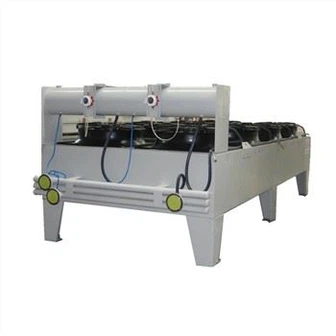
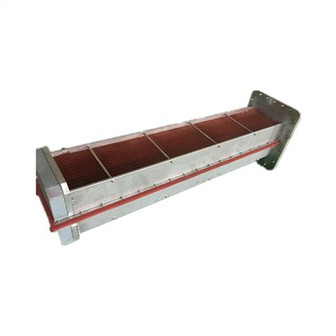
Diesel Engine Bergen B32:40 Remote Radiator
1, Core design of high and low temperature adaptation for remote radiators
As the "temperature regulation center" of the B32:40 diesel engine, the remote radiator adopts differentiated structural optimization and technical configuration for high and low temperature scenarios to ensure efficient heat transfer efficiency even in extreme environments
(1) Frost prevention, antifreeze and preheating synergy in extremely cold environments
The core challenge of low-temperature environment for radiators lies in the frosting of fins, cracking of pipelines, and the decline of heat transfer efficiency. The remote heat sink equipped with B32:40 achieves extreme cold adaptation through a triple technical solution:
Structural optimization and frost prevention are fundamental guarantees. The radiator adopts a wide spacing fin design (with a 30% increase in fin spacing compared to conventional products), combined with hydrophobic coating treatment, which not only reduces the adhesion area of the frost layer, but also makes the frost crystal structure loose and easy to fall off, avoiding rapid blockage of the air duct. For the cross flow type radiator in extremely cold scenarios, the airflow guidance angle is further optimized to create turbulence when the cold air and coolant intersect vertically, reducing local frost accumulation and ensuring a heat transfer efficiency of over 85% in an environment of -30 ℃.
Anti freezing protection covers the entire chain to eliminate the risk of frost cracking. The radiator pipeline is made of titanium ceramic coating material, combined with 50mm high-density polyurethane insulation layer and aluminum foil reflective film, which reduces heat loss to less than 5% at low temperatures and avoids thermal stress cracking of the pipeline due to sudden temperature changes. The coolant is selected from a special formula based on ethylene glycol with a freezing point of -55 ℃, and anti-corrosion and anti foaming agents are added to prevent ice expansion and corrosion of metal parts. Combined with the liquid level compensation design of the low-level storage tank, it ensures that the circulation stability can be maintained even when the ship tilts laterally and longitudinally.
The remote preheating system is linked to ensure low-temperature start-up. Drawing on the remote control technology of engine preheating, the radiator integrates an electric heating preheating unit and an auxiliary circulation pump, which can be remotely started through wireless signals. When the ambient temperature is below -10 ℃, the electric heater preheats the coolant to above 15 ℃, and the auxiliary circulation pump drives the coolant to form a small circulation between the radiator and the engine. This not only avoids pipeline freezing and blockage during start-up, but also shortens the engine warm-up time, increasing the success rate of B32:40 in extremely cold environments of -40 ℃ to 100%.
(2) Heat dissipation enhancement and intelligent control in high-temperature environments
In high temperature environments, radiators need to deal with the problem of decreased heat transfer efficiency caused by a surge in heat load and an increase in airflow temperature. B32:40's remote radiator achieves high temperature adaptation through "structural expansion+intelligent speed regulation+waste heat optimization":
Efficient heat exchange structure enhances heat dissipation capacity. The radiator adopts a dual deck core design, which increases the heat transfer area to twice that of a single core product. Combined with threaded counterflow heat exchange tubes, the heat exchange time between the coolant and air is extended by 40%, and the heat transfer coefficient is increased by 35% compared to conventional products. For extreme high temperature scenarios such as tropical waters, downstream remote radiators can be used to optimize airflow utilization by utilizing the top-down flow path of the coolant. The heat dissipation efficiency is further improved by 15% compared to the cross flow type, ensuring that the cooling water temperature of the B32:40 cylinder liner remains stable in the optimal range of 85-90 ℃.
The intelligent speed regulation system dynamically adapts to thermal loads. The radiator is equipped with a variable frequency cooling fan, which is linked to the engine ECU through PID algorithm to monitor the coolant temperature and ambient temperature in real time. When the ambient temperature exceeds 35 ℃ or the coolant temperature exceeds 90 ℃, the fan automatically switches to high-speed operation, increasing the heat dissipation power by 50%; When the heat load decreases, the fan runs at a reduced speed, balancing heat dissipation efficiency and energy consumption optimization. For a high temperature and high humidity environment of 45 ℃, the system automatically activates the spray auxiliary heat dissipation device, which reduces the intake temperature by absorbing heat through atomized water evaporation, further improving the heat transfer efficiency by 20%, and ensuring that the inlet temperature of low-temperature fresh water for the pressurized air does not exceed 50 ℃.

2, Collaborative operation mechanism with B32:40 diesel engine
The remote radiator does not work independently, but works in deep collaboration with B32:40's temperature resistant technology to form a closed-loop control of "power output temperature monitoring heat dissipation regulation", ensuring performance balance at all temperatures:
(1) Temperature signal linkage control
The ECU system of B32:40 communicates in real-time with the control module of the remote radiator, sharing core data such as ambient temperature, coolant temperature, and boost air temperature. When the engine is in the extremely cold starting stage, the ECU triggers the radiator preheating unit to start. After the coolant temperature reaches the standard, the engine is allowed to ignite to avoid thermal shock damage during cold starting; When the engine is running at full load in a high-temperature environment, the ECU predicts the peak heat load in advance based on the combustion temperature data in the cylinder, sends a pre adjustment command to the radiator, and accelerates the fan in advance to avoid power attenuation caused by sudden temperature rise. This "predictive collaborative control" increases the temperature regulation response speed to 0.5 seconds and achieves a control accuracy of ± 1 ℃.
(2) Power matching and energy consumption optimization
The power configuration of the remote radiator is precisely matched with the output characteristics of B32:40- for models with different power ranges of 3000kW-8000kW, the heat dissipation capacity of the matching radiator is designed in stages from 400kW to 1000kW to ensure that the heat dissipation capacity is fully matched with the engine's thermal load requirements. The driving power supply of the radiator is taken from the engine auxiliary generator set, and its power consumption has been included in the total power accounting. Through frequency conversion control and intelligent start stop, the comprehensive energy consumption of the system is reduced by 25%. Combined with the low fuel consumption rate of 184g/kWh of B32:40, the dual optimization of power output and energy consumption control is achieved.
The combination of Bergen B32:40 diesel engine and high and low temperature remote radiator, through the collaborative design of "power core temperature resistance enhancement+intelligent adaptation of cooling system", successfully breaks through the limitations of extreme temperature on heavy-duty power equipment. The high and low temperature optimization of remote radiators complements the global temperature resistance technology of B32:40, which not only solves the problems of frost and cold prevention and low-temperature start-up in extremely cold environments, but also solves the heat dissipation bottleneck in high-temperature scenarios. It also optimizes space utilization and noise control through separate deployment. In the trend of global ocean engineering expanding to extreme regions such as polar, deep-sea, and tropical areas, this combination will continue to provide reliable power support for cross temperature operations with technological synergy advantages. Its innovative concept will also promote the continuous upgrading of integrated extreme environment adaptation technology for power equipment and cooling systems.