Design And Manufacture Of Air-Water Inter/Aftercoolers For Turbo Compressors
Design and Manufacture of Air-Water Inter/Aftercoolers for Turbo Compressors
Customer Enquiry from South Korea:
We are developing turbo compressors from 100 HP to 600 HP.
I would like to know if you can supply us with shell and tube coolers for 100 HP to 600 HP turbo compressors.
Vrcooler can design and manufacture air-water intercoolers/aftercoolers for turbo compressors.
The purpose of a turbo compressor air-water intercooler/aftercooler is to reduce the outlet temperature of the turbo compressor and improve the efficiency and performance of the system.
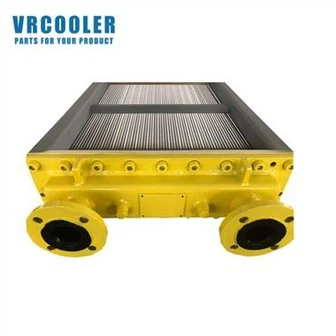
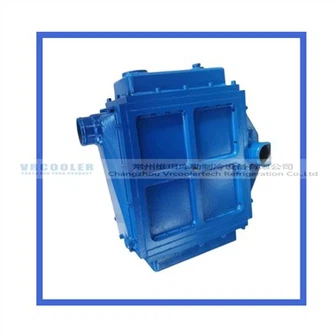
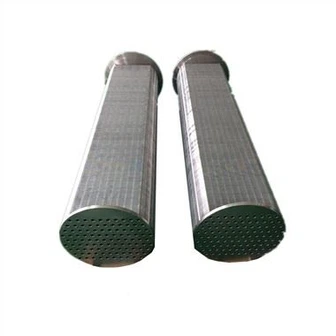
Below is the first draft of the design (cooling core) that we provided to our customer:


The following are the general steps and key considerations for designing and fabricating a turbo compressor air-water intercooler/aftercooler:
1. Determine Design Parameters:
- Determine the operating conditions of the cooler, including the flow rate and temperature of the cooling water, and the flow rate and temperature of the air to be cooled.
- Determine turbocompressor specifications, including discharge temperature, flow rate, and operating pressure.
2. Cooler type selection:
- Select the appropriate type of cooler, usually there are two options: intercooler and aftercooler. Intercoolers are used to cool between different stages of the turbine, while aftercoolers are used after the last stage.
3. Thermodynamic analysis:
- Thermodynamic analyses are performed to determine the desired cooling effect. This includes calculating the temperature and pressure before and after cooling.
4. Cooler design:
- Based on the thermodynamic requirements, design the internal structure of the cooler, including the cooling water pipework and cooling air ducts.
- Consider the choice of material for the cooler, which usually needs to be corrosion resistant and high temperature tolerant.
- Design the size and shape of the cooler to ensure that it fits the layout and installation needs of the system.
5. Hydrodynamic and thermodynamic simulations:
- Perform hydrodynamic and thermodynamic simulations to verify the design and performance of the cooler. This can be done using Computational Fluid Dynamics (CFD) software.
6. Fabrication:
- Manufacture the components of the cooler, including piping, fins, and connections.
- Assembly and quality control are performed to ensure that the manufactured cooler meets the design specifications.
7. Installation and Testing:
- Install the cooler into the turbo-compressor system and ensure that the cooling water and air flows match the design requirements.
- Perform system tests and performance evaluations to ensure that the cooler effectively reduces air temperatures and improves system efficiency.