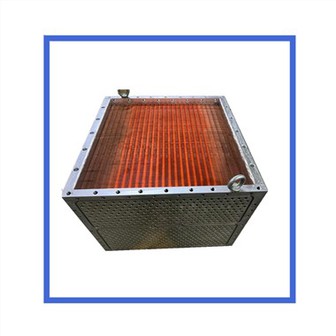
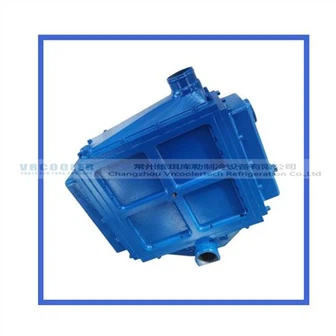
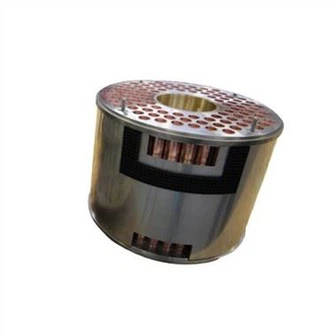
Description Of Shell And Tube Heat Exchanger
A Shell and Tube Heat Exchanger is a common type of heat exchanger used to transfer heat between two fluids. It consists of a shell and tubes. One of the fluids flows inside the tube while the other flows in the shell. The heat is transferred through the walls of the tubes, thus achieving heat transfer between the two fluids.
The working principle of shell and tube heat exchanger is as follows:
1. **Fluid flow:** One fluid (known as the "tube-side fluid") enters the tubes of a shell-and-tube heat exchanger, while the other fluid (known as the "shell-side fluid") enters the shell. The flow between the two fluids is usually reversed, which helps to maximise heat transfer. 2.
2. **Heat Transfer Process:** As the tube-side fluid flows through the tube, its heat is transferred to the tube wall. This heat is then transferred to the shell-side fluid through the pipe walls, causing the temperature of the shell-side fluid to rise.
3. **Heat exchange:** Through heat transfer through multiple pipe walls, the temperature difference between the pipe-side fluid and the shell-side fluid gradually decreases until they reach thermal equilibrium, where the temperatures of the two fluids are equal.
4. **Exit Fluid:** After the heat exchange is complete, the tube-side fluid and shell-side fluid leave the heat exchanger at the exit, respectively, and continue to flow to other equipment or processes.

Advantages of shell and tube heat exchangers include:
1. **High Heat Transfer Efficiency:** Because multiple tubes provide a large heat transfer area, shell and tube heat exchangers are able to achieve efficient heat transfer, making heat transfer more rapid and effective.
2. **Wide range of application:** Shell and tube heat exchanger is suitable for heat transfer between various fluids, including liquids and gases.
3. **High-pressure resistance:** The structure of shell and tube heat exchanger makes it able to withstand high pressure, which is suitable for high-pressure heat exchange process.
4. **Easy to maintain:** Shell and tube heat exchangers are generally easier to maintain and clean due to their relatively simple construction.
Shell and tube heat exchangers are widely used in many fields, including industrial production, chemicals, oil and gas processing, and power stations. When selecting a shell and tube heat exchanger, fluid properties, flow rate, pressure, temperature, and heat transfer requirements need to be considered to ensure that the appropriate model and size are selected to meet the needs of the specific application.