Custom Design High And Low Temperature Dry Cooler Of The Gas Engine
Custom Design High And Low Temperature Dry Cooler Of The Gas Engine

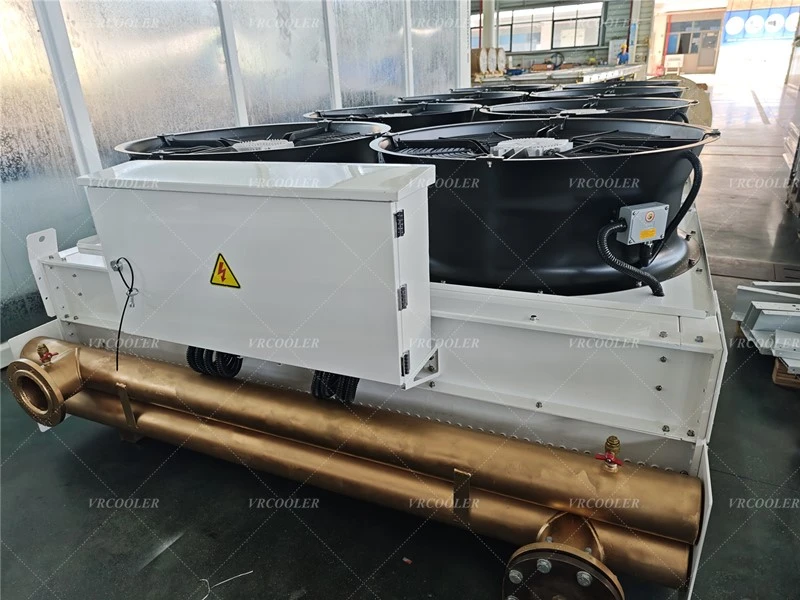
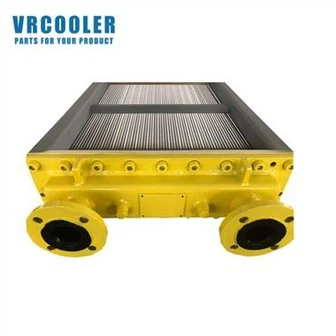
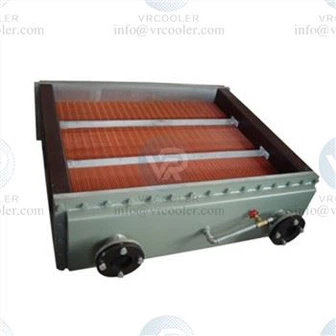
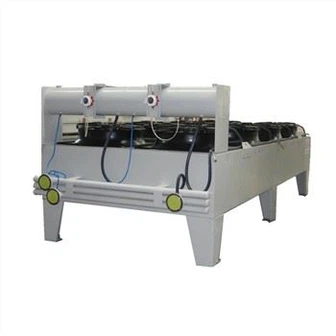
During gas engine operation, high-temperature components (such as the cylinder head and exhaust pipe) and low-temperature components (such as the intercooler) generate significant heat. The cooling coils of the high-temperature cooling circuit absorb heat from the high-temperature components, raising the temperature of the high-temperature coolant. This coolant then flows into the high-temperature circuit coils of the integrated high- and low-temperature dry cooler. Simultaneously, the cooling coils of the low-temperature cooling circuit absorb heat from the low-temperature components, raising the temperature of the low-temperature coolant before flowing into the low-temperature circuit coils of the dry cooler. When the fan is activated, air is forced through the cooling coils. Through heat conduction and convection, the heat from the high- and low-temperature coolants in the cooling coils is transferred to the air, lowering the coolant temperature. The cooled coolant then flows back to the corresponding engine components for further cooling. This cycle repeats, effectively cooling the high- and low-temperature components of the gas engine.

Advantages
Efficient Cooling: The integrated high and low-temperature cooling systems precisely allocate cooling capacity according to the temperature requirements of different engine components, improving cooling efficiency and avoiding the situation where traditional separate cooling systems often provide excessive high-temperature cooling and insufficient low-temperature cooling. Space Saving: Compared to traditional separate high- and low-temperature dry coolers, the integrated high- and low-temperature dry cooler is compact and takes up little space, making it easy to deploy within a gas engine compartment and particularly suitable for space-constrained applications.
Cost Reduction: Reducing the number of cooling system components and piping reduces equipment procurement and installation costs. Furthermore, the improved cooling efficiency reduces energy costs during operation.
Easy Maintenance: The integrated design simplifies maintenance, reducing the number of components requiring inspection and maintenance, reducing both the difficulty and workload, and improving the maintainability of the equipment.