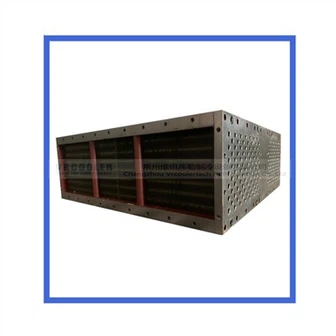
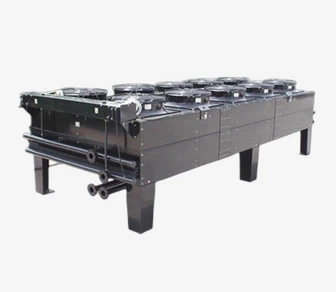
Custom Air Compressor Cooler
Vrcooler helps clients design air compressor coolers.


If you're looking to design a custom air compressor cooler, here are some general steps and considerations to help you get started:
Determine cooling requirements: Understand the specific cooling requirements of your air compressor system. Consider factors such as the maximum operating temperature, desired temperature reduction, and airflow requirements.
Select cooling method: Decide on the cooling method that best suits your needs. There are various options available, including air cooling, water cooling, or a combination of both. Air cooling is simpler and more common, while water cooling offers higher cooling efficiency but requires additional plumbing.
Calculate heat dissipation: Determine the amount of heat that needs to be dissipated by the cooler. This can be calculated based on the compressor's power rating and efficiency, as well as the temperature rise during operation.
Determine the cooler type: Choose the type of cooler that matches your cooling requirements. Some common options include finned tube heat exchangers, plate heat exchangers, or shell and tube heat exchangers. Each type has its own advantages and considerations.
Design the cooler: Based on the selected cooler type, design the cooler to meet the calculated heat dissipation requirements. Consider factors such as the surface area of the cooler, the type and size of fins or tubes, and the overall dimensions of the cooler.
Select materials: Choose materials that are suitable for the operating conditions of your air compressor system. The materials should have good thermal conductivity, corrosion resistance, and mechanical strength. Common choices include aluminum, copper, or stainless steel.
Consider airflow: If you're using air cooling, ensure that there is sufficient airflow across the cooler to dissipate heat effectively. Consider the placement of fans, the size and number of cooling fins, and any necessary ducting or airflow management.
Incorporate safety features: Ensure that the cooler design includes safety features such as temperature sensors, pressure relief valves, and proper insulation to protect against overheating or pressure build-up.
Prototype and test: Once you have the design, build a prototype of the cooler and test it under operating conditions. Monitor the temperature and pressure of the air compressor system to verify that the cooler is performing as expected.
Optimize and refine: Based on the test results, make any necessary adjustments or optimizations to improve the cooling performance of the system. This may involve modifying the cooler design, adjusting airflow, or fine-tuning other parameters.
Remember, designing a custom air compressor cooler can be complex, and it's important to have a good understanding of thermodynamics, heat transfer, and engineering principles. If you're not experienced in this field, it may be beneficial to consult with a professional engineer or seek expert advice to ensure a safe and