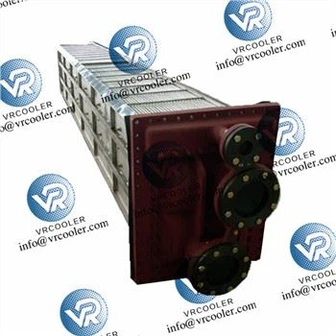
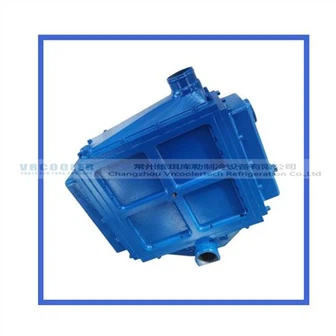
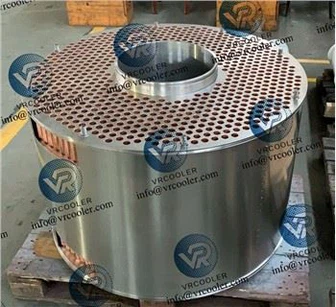
Core Intercooler For Locomotive
The exhaust gas from the locomotive diesel engine drives the turbine of the exhaust gas turbocharger to rotate at high speed, and the compressor impeller coaxial with the turbine compresses the inhaled air and then discharges it. The temperature of the compressed air increases, and the high temperature air into the combustion chamber will reduce the air density and oxygen content, affecting the combustion efficiency of the engine, but also may increase the risk of detonation. The role of the intercooler is to cool down the high temperature air compressed by the turbine to a reasonable range, increase the air density, so that the air quality into the cylinder increases, and accordingly increase the amount of fuel injected and fully combusted, thus improving the engine power output and fuel economy.
The tubes and fins of the intercooler are generally made of materials with good thermal conductivity, such as copper, aluminum, etc. Copper has excellent thermal conductivity. Copper has excellent thermal conductivity, but the cost is high and the weight is large; aluminum has the advantages of light weight, relatively low cost and good corrosion resistance, which can reduce the overall weight of the locomotive while ensuring the heat dissipation performance.
Due to the limited space inside the locomotive, the design of the intercooler needs to be compact to fit into the limited installation space, and at the same time to ensure that there is a good fit between it and other components without affecting the overall structure and performance of the locomotive.