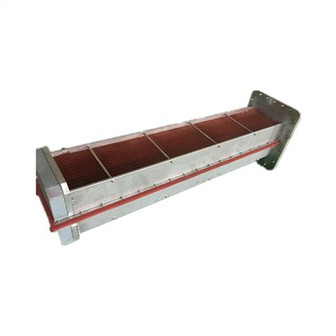
Coil And Shell And Tube Heat Exchangers For The Beverage Industry
Coil and Shell and Tube Heat Exchangers for the Beverage Industry
In the beverage industry, heat exchangers are commonly used for heating, cooling and pasteurisation processes. Both coil and shell and tube heat exchangers are widely used in these applications, and each type has its own unique advantages and application scenarios.
1. Coil and tube heat exchangers:
A coil-type heat exchanger consists of a number of coils (or tube rings) that are usually arranged in a spiral or helix within a cylinder. In the beverage industry, coil heat exchangers are commonly used for the following applications:
Pasteurization: In producing beverages, especially products such as milk and fruit juices, high temperature short duration pasteurisation is required. Coil heat exchangers provide enough heat to ensure that the product reaches a high temperature instantaneously, killing the bacteria.
Heating and cooling: During beverage production, liquids need to be heated or cooled. Coil heat exchangers provide efficient heat exchange and ensure accurate temperature control.
Cleaning processes: Hot water or steam can be used to clean equipment during the cleaning process of a production line. The coil heat exchanger heats the cleaning medium.

2. Shell and tube heat exchanger:
Shell and tube heat exchangers consist of tubes (usually tubes) placed in a housing. In the beverage industry, shell and tube heat exchangers are commonly used for the following applications:
Cooling and Heating: In beverage production, shell and tube heat exchangers can be used to heat or cool liquids to ensure that the product is produced at the proper temperature.
Pasteurisation: Shell and tube heat exchangers can also be used in the pasteurisation process, especially for larger batches.
Concentration: In some beverage production, liquids need to be concentrated. Shell and tube heat exchangers can be used in the concentration process.