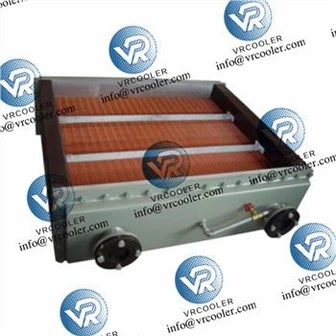
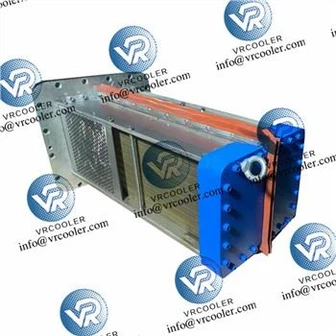
Charge Air Coolers in Engines That Burn Biogas And Other Special Gas Fuels
Role
Reduce the temperature of intake air: the temperature of the air compressed by the turbocharger rises, and the charge air cooler can reduce its temperature and increase the air density, thus improving the charging efficiency of the engine and allowing more air to enter the cylinder to participate in combustion, which helps to increase the power and torque of the engine.
Improve combustion efficiency: cooled air into the engine combustion chamber can make the combustion process closer to the ideal state, improve combustion efficiency, reduce incomplete combustion phenomenon, reduce fuel consumption and harmful gas emissions.
Protect engine parts: Excessive intake air temperature will make engine parts undergo greater thermal load, accelerating the wear and aging of the parts. The pressurized air cooler helps to reduce the intake air temperature, alleviate the thermal stress on the engine components and prolong the service life of the engine.
How it works
Generally, a charge air cooler utilizes air or coolant as the cooling medium to reduce the temperature of the charge air by means of heat exchange. In an air-cooled charge air cooler, the high-temperature charge air is cooled by heat exchange with the outside air through the heat sink or heat pipe inside the cooler; in a water-cooled charge air cooler, the high-temperature charge air is cooled by heat exchange with the coolant inside the cooler, and the coolant then removes the heat away through the engine's cooling system.

Design and selection considerations
Engine operating conditions: It is necessary to select a suitable charge air cooler according to the engine power, speed, load and other operating parameters to ensure that the cooler can meet the cooling needs of the engine under different operating conditions.
Gaseous fuel characteristics: different biogas and special gaseous fuels have different compositions and characteristics, such as calorific value, density, corrosiveness and so on. When designing and selecting, the influence of fuel characteristics on the cooler should be considered, and suitable materials and structures should be selected to ensure the performance and reliability of the cooler.
Installation space: The installation space in the engine compartment is limited, and it is necessary to select a compact and appropriately sized charge air cooler to ensure that it can be installed smoothly on the engine and maintain proper spacing with other components.
Maintenance and Care
Regular cleaning: Regularly clean the surface of the charge air cooler of dust, debris and dirt to ensure the cooling effect of the cooler. For internal clogging, the cooler can be cleaned with compressed air or special cleaning agents.
Leakage check: Check whether there is leakage in the pipelines, joints and seals of the cooler. If there is leakage, the damaged parts should be replaced in time to ensure the sealing of the cooling system.
Coolant management: For water-cooled charge air cooler, check the level and quality of coolant regularly, replenish and replace the coolant in time to ensure the normal operation of the cooling system.