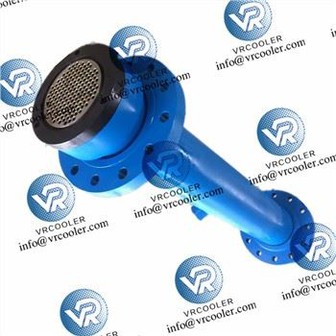
Charge Air Cooler For Gas Engine
Gas Engine Charge Air Coolers
A charge air cooler (CAC), also known as an intercooler, is a heat exchanger used in gas engines, including gas-powered marine engines, to cool compressed air before it enters the combustion chamber. Its primary purpose is to improve engine efficiency and performance by increasing intake air density.
In gas engines, the intake air is compressed by a turbocharger or mechanical supercharger before entering the combustion chamber. The compression process generates heat, resulting in a lower density of air. This hot, less dense air reduces the power output of the engine. To solve this problem, a charge air cooler is used to cool the compressed air, thereby increasing its density and allowing more oxygen to be present during the combustion process.

A gas engine's charge air cooler typically consists of the following components:
Cooling core: The cooling core is the main component of the intercooler. It is a heat exchanger that contains a network of pipes or channels through which compressed air flows. The core is usually made of aluminium or copper and has excellent heat transfer properties.
End Tanks: Cooling cores are connected to end tanks that provide inlet and outlet points for compressed air. These tanks are designed to distribute the air evenly over the cooling core and direct it back to the engine.
Coolant or Cooling Media: Coolant or cooling media, such as water or a mixture of water and glycol, is circulated through the charge air cooler to absorb heat from the compressed air. Depending on the application, the coolant can be cooled by a separate cooling system, e.g. a radiator or sea water.
Installation and connection: The charge air cooler is installed in the intake system of the engine, usually between the turbocharger or mechanical supercharger and the intake manifold. It is connected to the engine's cooling system to facilitate the transfer of heat from the compressed air to the coolant.
The effectiveness of an intercooler depends on factors such as the size and design of the cooling core, the airflow through the cooler, and the efficiency of the cooling medium. By lowering the temperature of the compressed air, the charge air cooler improves the engine's power output, fuel efficiency and overall performance.