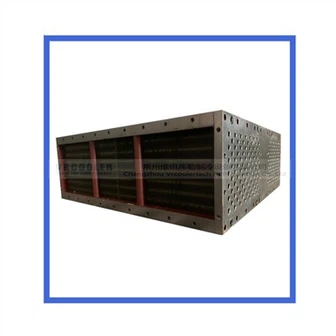
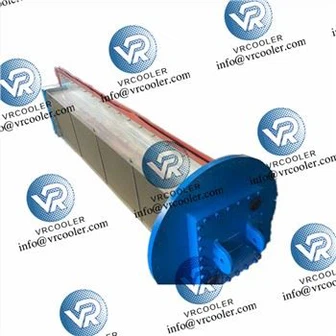
Boiler Heat Recovery Heat Exchanger Empowers Energy Conservation And Carbon Reduction in The Steel Industry
Core positioning: The core value of boiler heat recovery heat exchangers
Steel production cannot be separated from the support of various types of boilers such as blast furnace hot blast stoves, gas power generation boilers, sintering ring coolers, coke ovens, etc. These equipment generate a large amount of waste heat at different temperature levels during operation - from medium and low temperature flue gas at 100 ℃ to high temperature flue gas at 1050 ℃. If directly discharged, it not only causes serious energy waste, but also exacerbates environmental thermal pollution. The core value of boiler heat recovery heat exchangers lies in building a closed-loop system of "waste heat capture efficient heat exchange energy reuse", accurately matching the waste heat characteristics of steel plant boilers, converting lost waste heat into usable energy such as preheating combustion air, heating boiler feedwater, and generating steam, achieving "turning waste into treasure". Its performance directly determines the efficiency of boiler waste heat recovery and energy-saving and carbon reduction effects, and is a key bridge connecting boiler waste heat and energy reuse.
(1) Energy conservation and consumption reduction, improving energy utilization efficiency
In the waste heat emitted from steel plant boilers, the heat carried by high-temperature flue gas alone accounts for more than 40% of the total heat dissipation of the equipment. High quality boiler heat recovery heat exchangers can achieve a heat transfer efficiency of over 85%, greatly improving energy utilization efficiency. For example, after the flue gas from the blast furnace hot blast stove is treated by a heat exchanger, the air and gas can be preheated to 190-380 ℃, significantly reducing the fuel consumption of the hot blast stove and helping to improve the ultimate energy efficiency of the blast furnace process. The overall benefit can be increased by 2% -4%; After introducing a large rotary heat exchanger into a 2500 cubic meter blast furnace of a certain 10 million ton steel enterprise, the temperature of the combustion air increased from room temperature to 380 ℃, the fuel combustion efficiency of the blast furnace increased by 12%, and the coke ratio decreased from 550kg/t to 480kg/t, achieving significant energy savings. At the same time, the heat exchanger can reduce the exhaust temperature of the boiler to 100-130 ℃, avoiding heat loss and promoting the overall energy consumption level of the steel plant to approach the industry benchmark.
(2) Reduce costs and increase efficiency, enhance the core competitiveness of enterprises
Energy cost is an important component of the production cost of steel enterprises. Boiler heat recovery heat exchangers directly reduce operating costs for enterprises by reducing the consumption of purchased fuel and electricity, while reducing equipment operation and maintenance investment, achieving dual efficiency gains. Taking the 1800 cubic meter blast furnace of Qinggang as an example, with the support of a dedicated heat recovery heat exchanger, an additional amount of heat can be recovered each year, equivalent to saving 39.57 million standard cubic meters of gas. Combined with the reduction of air leakage and gas savings, the annual energy-saving benefits reach 9.116 million yuan. After deducting operating costs, the incremental energy-saving benefits are about 8.91 million yuan; A 120 ton converter workshop adopts a spiral finned tube heat exchanger, which can recover 12 million kcal of heat per furnace of steel, equivalent to saving 1.2 tons of standard coal. The annual power generation increases by 18 million kWh, and the equipment maintenance cycle is reduced from 4 times a year to 2 times, reducing maintenance costs by 40%. For large steel enterprises, a complete boiler heat recovery heat exchanger system can reduce costs by millions or even tens of millions of yuan annually, significantly enhancing the company's market competitiveness.
(3) Green carbon reduction, helping the industry's low-carbon transformation
Under the "dual carbon" goal, the steel industry is facing strict emission reduction requirements. Boiler heat recovery heat exchangers can effectively reduce energy consumption such as coal and natural gas by recovering waste heat instead of burning fossil fuels, thereby reducing emissions of pollutants such as carbon dioxide, sulfur dioxide, and nitrogen oxides. According to calculations, for every 1GJ of waste heat recovered, approximately 80-100kg of carbon dioxide emissions can be reduced; Taking a steel enterprise with a production capacity of 5 million tons as an example, with the support of boiler heat recovery heat exchangers, 26000 tons of carbon dioxide, 750 tons of sulfur dioxide, and 375 tons of nitrogen oxides can be reduced annually. Shiheng Special Steel recovers waste heat from raw coal gas through a coke oven riser jacket heat exchanger, achieving multiple benefits of reducing coking energy consumption and controlling pollutant emissions. Its tempered steel co production carbon reduction and fixation project reduces carbon emissions by 300000 tons annually and has been recognized as a "typical case of carbon neutrality" by the Ministry of Ecology and Environment; After deploying various heat recovery heat exchangers throughout the entire process, a leading steel enterprise reduced carbon dioxide emissions by 850000 tons annually and created economic benefits of over 230 million yuan, fully demonstrating the low-carbon value of heat exchangers.

Core Types and Technical Features: Suitable for Multiple Boiler Scenarios in Steel Plants
There are various types of boilers in steel plants, with significant differences in waste heat characteristics - temperatures ranging from 100 ° C to 1050 ° C, and complex flue gas compositions (including sulfur, chlorine, dust, etc.). The corresponding boiler heat recovery heat exchangers also exhibit differentiated types, with the core revolving around "cascade utilization, precise heat exchange", adapting to different boiler scenarios and waste heat quality, achieving the maximum utilization of waste heat resources, and solving pain points such as corrosion, ash accumulation, and performance degradation of traditional equipment.
(1) Mainstream heat exchanger types and technological advantages
1. Intelligent temperature control dual preheating heat exchanger: Using thermal oil as the heat medium, a heat exchange system of "flue gas thermal oil air/gas" is constructed, consisting of flue gas heat exchanger, air heat exchanger, gas heat exchanger and intelligent control system, mainly suitable for low-temperature flue gas waste heat recovery of blast furnace hot blast stove and gas power generation boiler. Its core advantage is to fundamentally solve the problem of low-temperature acid dew point corrosion, alleviate the phenomenon of ash accumulation, and the service life of the equipment can reach more than 10 years, far exceeding the service life of traditional plate and heat pipe heat exchangers by 3-5 years. Under normal operating conditions, the waste heat at the flue gas inlet temperature of 280 ℃ can be recovered to preheat the gas and air to a temperature of 190 ℃; When the inlet temperature of the flue gas is 330 ℃, the preheating temperature can be increased to 230 ℃, and the exhaust temperature can be reduced to below 130 ℃, with a minimum of 100 ℃.
2. High temperature sleeve heat exchanger: Designed for high temperature conditions, the upper limit of the working temperature of the hot fluid reaches 1050 ℃, breaking through the bottleneck of conventional heat exchangers in handling high temperature media. Adopting a "radiation+convection" composite heat transfer mode, the high-temperature section (>750 ℃) uses a sleeve type radiation heat transfer module to transfer heat energy through the radiation characteristics of flue gas, avoiding thermal stress damage; When the temperature drops below 750 ℃, switch to convective heat transfer mode, combined with the high-efficiency heat transfer advantage of plate heat exchangers, the heat transfer coefficient can reach 3500W/(m ² · K), and the equipment footprint is reduced by more than 40% compared to traditional solutions [2]. After the renovation of a 2000m ³ blast furnace in a certain steel plant, the efficiency of gas sensible heat recovery increased by 22%, saving 12000 tons of standard coal annually.
3. Tube heat exchanger: One of the most widely used types, the core is composed of multiple high-temperature resistant metal tubes (such as 310S stainless steel, Inconel alloy, etc.). High temperature flue gas flows outside the tube bundle, and the medium to be heated circulates inside the tube, achieving heat transfer through tube wall heat conduction. The structure is sturdy, capable of withstanding high temperatures and pressures of 800-1200 ℃, easy to clean and maintain, and suitable for flue gas environments with high dust content, such as blast furnaces and converters in steel plants. A special steel enterprise's 120 ton converter adopts a spiral finned tube heat exchanger, with a single heat exchange area of 3200 square meters. The fins are made of nickel chromium alloy material with a temperature resistance of 850 ℃, effectively resisting high-temperature corrosion and reducing the flue gas temperature from 800 ℃ to 280 ℃. The waste heat recovery effect is significant.
4. Plate heat exchanger: Using corrugated metal plates as heat exchange elements, narrow channels are formed between the plates, and high-temperature flue gas flows in reverse with the medium to be heated. The heat transfer area is large and the efficiency is high, which is 10% -30% higher than traditional tube heat exchangers. The compact volume is suitable for limited space scenarios. For the high temperature flue gas of 650 ℃ in the steel rolling heating furnace, the anti ash type plate heat exchanger adopts a special plate design and is equipped with an automatic ash cleaning system, which can use the heat of the flue gas to preheat the combustion air and the cooling water of the rolling mill, reducing the fuel consumption of the heating furnace by 10%.
5. Auxiliary heat exchangers: including economizers, air preheaters, heat pipe heat exchangers, etc., mainly used for medium and low temperature waste heat recovery (temperature<500 ℃). Economizer recovers waste heat from boiler exhaust to heat water and reduce boiler energy consumption; Preheat the combustion air with an air preheater to improve combustion efficiency; Heat pipe heat exchangers have extremely strong thermal conductivity, dozens of times that of traditional metals, and can efficiently transfer heat at small temperature differences. They are suitable for the recovery of medium and low temperature waste heat such as blast furnace gas and sintering flue gas, but need to solve the problems of traditional heat pipe overheating and bursting, and annual performance degradation of 5%.
Industry Trends and Development Prospects
With the promotion of the national "Special Action Plan for Energy Conservation and Carbon Reduction in the Steel Industry", by the end of 2025, the energy consumption per unit product of blast furnaces and converters in the steel industry will be reduced by more than 1% compared to 2023, and the comprehensive energy consumption per ton of steel will be reduced by more than 2%. Boiler heat recovery heat exchangers, as the core equipment for energy conservation and carbon reduction, will usher in broader development space. Based on industry development needs and technological innovation directions, there will be three major development trends for boiler heat recovery heat exchangers in the future.
One is the upgrading of technological intelligence, integrating new technologies such as AI, digital twins, and the Internet of Things to achieve real-time monitoring, precise regulation, and fault warning of the operation status of heat exchangers, further improving heat exchange efficiency and reducing operation and maintenance costs; At the same time, the development of adaptive heat exchangers can automatically adjust operating parameters based on fluctuations in waste heat temperature and flow rate, adapting to complex waste heat scenarios in steel plants.
The second is material and structural innovation, using more advanced high-temperature and corrosion-resistant alloy materials, such as INCONEL 625, 310S stainless steel, etc. , to improve the stability of the heat exchanger in high temperature, high corrosion, and high dust environments; Optimize the structural design of heat exchangers, develop compact and efficient heat exchangers, reduce footprint, and improve space utilization, such as reducing the footprint of high-temperature sleeve heat exchangers by more than 40% compared to traditional solutions.
The third is the development of system integration, which combines boiler heat recovery heat exchangers with gas recovery, steam cycle, and energy storage systems to build an integrated energy recycling system, enhance enterprise energy self-sufficiency, and cope with electricity price fluctuations and energy supply risks; At the same time, combining new smelting technologies such as hydrogen metallurgy, optimizing heat exchanger design, adapting to new heat source structures, and promoting the steel industry to move from "energy conservation and carbon reduction" to "zero carbon emissions".
In addition, with the continuous improvement of industry standards, such as the promotion of industry standards for the recovery of waste heat from coke oven riser gas, the application of boiler heat recovery heat exchangers will be more standardized and standardized, promoting the overall energy efficiency level of the industry. According to the national iron production capacity of 1 billion tons, if advanced boiler heat recovery heat exchangers are fully promoted, it can save about 4.8 billion yuan in costs and reduce carbon dioxide emissions by 5.2 million tons annually, with significant economic and environmental benefits.