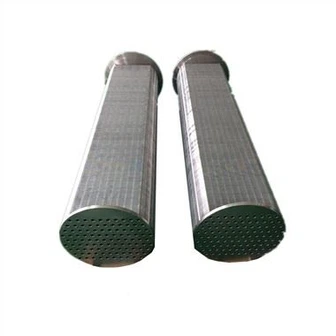
Boiler Energy Recovery Exchanger Injects Real Gold And Silver Into The Low-carbon Transformation Of Cement Plants
The energy consumption of cement plants is mainly concentrated in the clinker calcination process, and boilers, as the core thermal energy supply equipment in this process, usually have flue gas emission temperatures between 180 ℃ and 600 ℃. The exhaust gas temperature at the tail of some large rotary kilns can even reach 900 ℃ to 1000 ℃, which contains enormous potential for waste heat resources. According to statistics, the energy waste caused by insufficient utilization of waste heat in China's industrial sector reaches hundreds of millions of tons of standard coal every year. Optimizing the performance of heat exchangers can improve thermal efficiency by 15% -30%. For the cement industry, efficient recovery of waste heat from boiler flue gas is equivalent to opening up a "secondary energy" channel, which can reduce fossil fuel consumption and carbon emissions, achieving a dual improvement in economic and environmental benefits.
The core of the application of boiler heat recovery heat exchangers in cement plants is to recover the waste heat from boiler exhaust gas through efficient heat exchange technology, and then convert it into usable thermal or electrical energy according to production needs, achieving the cascade utilization of energy. Based on the production conditions of cement plants, their application scenarios mainly focus on three core links, covering the entire process of waste heat recovery and adapting to waste heat resources of different temperature levels.
In the field of high-temperature waste heat recovery, boiler heat recovery heat exchangers are mainly used for the treatment of high-temperature flue gas at the kiln tail and grate cooler outlet of rotary kilns. High-temperature waste gas discharged from the kiln tail of large cement kilns, after heat exchange in the heat exchanger, can have its temperature reduced from over 600℃ to below 200℃, meeting the operational requirements of subsequent baghouse dust collection systems while recovering a large amount of high-quality waste heat. The recovered high-temperature waste heat can be used to drive steam turbines for power generation. For example, Lucky Cement in Pakistan, by modifying its engine power plant, adopted a system consisting of 11 high-efficiency waste heat recovery boilers, recovering a total of 27 MWh of waste heat, which can generate 6 MWh of electricity, increasing the plant's power output by approximately 10% and significantly reducing fuel consumption and emissions. In China, Henan Mengdian Group has equipped its clinker production line with waste heat boilers, recovering waste heat from the kiln head and tail for power generation, and further recovering the low-temperature waste heat after power generation for residential heating projects, achieving efficient cascade utilization of waste heat.
Low- and medium-temperature waste heat recovery is another important application scenario for boiler heat recovery heat exchangers, mainly targeting the low- and medium-temperature flue gas emitted from various auxiliary equipment in cement production. For example, the 200-300℃ waste gas discharged from the low-temperature section of the kiln tail cooler can generate low-pressure steam after waste heat recovery through a heat exchanger. This steam can be used for process water replenishment, employee domestic water, or as a heat source for lithium bromide chillers to cool the production workshop and living area. The medium-temperature flue gas from the rotary kiln tail of a small cement plant can generate low-pressure steam of 0.3-0.8MPa after treatment by a heat exchanger, meeting the heat energy needs of small-scale production processes. In addition, some cement plants also use the recovered low- and medium-temperature waste heat for raw material drying. After adopting a flue gas waste heat recovery heat exchanger, one cement plant reduced the flue gas emission temperature from 220℃ to 90℃, reduced energy consumption per ton of cement by 8%, and saved more than one million yuan in costs annually, demonstrating a significant energy-saving effect.
Beyond direct heat recovery and reuse, boiler heat recovery heat exchangers can be deeply integrated with cement plants' pure low-temperature waste heat power generation systems to construct a closed-loop energy system of "waste heat recovery-power generation-production." Currently, waste heat power generation has become a core means for cement companies to save energy and reduce emissions. As a core component of the waste heat power generation system, the boiler heat recovery heat exchanger is responsible for converting flue gas waste heat into steam to drive a steam turbine for power generation. Industry data shows that Wannianqing Cement in China has already put 10 waste heat power generation units into operation, with an installed capacity of 80.30MW. Utilizing waste heat power generation can meet approximately 50% of the company's kiln system's electricity demand. In 2024, Shangfeng Cement utilized waste heat to generate 473 million kilowatt-hours of electricity, reducing carbon dioxide emissions by 389,800 tons. This not only lowered the company's electricity costs but also enhanced its green competitiveness, becoming a significant advantage for downstream companies' "green procurement" and ESG ratings. Anhui Conch Kawasaki has deployed 302 cement waste heat power generation units globally, generating 26.63 billion kWh of electricity annually. Calculated using the same standards as thermal power generation, this translates to annual savings of 9.587 million tons of standard coal and a reduction of 24.582 million tons of carbon dioxide emissions, demonstrating the immense value of waste heat recovery technology.

Compared to traditional waste heat recovery methods, boiler heat recovery heat exchangers offer significant technological advantages and adaptability in cement plants. Cement plant flue gas has a complex composition, containing large amounts of dust, SO₂, NOx, and other substances, easily causing equipment corrosion, ash accumulation, and wear. Dedicated boiler heat recovery heat exchangers, using corrosion-resistant alloy materials and composite coating technology, offer more than three times the corrosion resistance, enabling them to withstand harsh flue gas environments containing sulfur and dust, with a service life exceeding 10 years. Meanwhile, the heat exchanger adopts a high-efficiency heat transfer design. By optimizing the flow channel structure and fin parameters, the heat transfer coefficient is increased by 20%-40%, and the heat transfer coefficient of some heat pipe heat exchangers can reach 1500-3000 W/(m²·K). It also features good isothermal performance, less dust accumulation, and simple maintenance. The failure of a single heat pipe will not affect the overall operation, significantly improving the stability and reliability of the equipment. In addition, the modular design allows it to be flexibly customized according to the production scale and flue gas parameters of the cement plant, with a short delivery cycle. It is adaptable to cement production lines with different capacities, enabling precise waste heat recovery for both large clinker production lines and small cement plants.
In practical applications, the use of boiler heat recovery heat exchangers has brought significant economic, environmental, and social benefits to cement plants. Economically, waste heat recovery directly reduces energy consumption such as coal and electricity, lowering production costs. The investment payback period is typically 3-10 years, and for some optimized projects, it can be shortened to less than 1.5 years. For example, a 10-ton/hour steam boiler equipped with an economizer (a simple heat recovery heat exchanger) can save approximately 200 tons of standard coal annually, directly reducing operating costs by over 300,000 yuan. The waste heat recovery project at Lucky Cement in Pakistan not only increased electricity output but also achieved a rapid return on investment, prompting the company to further expand cooperation and install a similar waste heat recovery system at another plant. Environmentally, waste heat recovery reduces the combustion of fossil fuels, thereby reducing emissions of pollutants such as carbon dioxide and sulfur dioxide, helping cement companies achieve ultra-low emission retrofits, aligning with the national "dual-carbon" strategy. In terms of social benefits, this initiative promotes the transformation of the cement industry from "high energy consumption and high emissions" to "green, low-carbon, and energy-efficient," enhancing the overall green development level of the industry and providing valuable practical experience for industrial waste heat recovery.
Currently, with the deepening of the cement industry's green transformation, the application of boiler heat recovery heat exchangers faces new opportunities and challenges. On the one hand, the national requirements for energy conservation and carbon reduction in the cement industry are constantly increasing. Driven by policies such as ultra-low emission retrofitting and green factory creation, cement companies' demand for waste heat recovery is continuously increasing, providing ample space for the technological upgrading and market promotion of boiler heat recovery heat exchangers. On the other hand, the flue gas conditions in cement plants are complex and variable, with significant differences in flue gas temperature, dust content, and corrosivity between different production lines. This places higher demands on the heat transfer efficiency, corrosion resistance, and wear resistance of heat exchangers, requiring companies to increase investment in technological research and development, optimize product structure, and improve the adaptability and efficiency of equipment.
In the future, with continuous innovation in heat exchange technology, boiler heat recovery heat exchangers will develop towards higher efficiency, intelligence, and diversification. On the one hand, they will further optimize heat transfer structures, improve waste heat recovery efficiency, achieve deep recovery of low-grade waste heat, and maximize the potential of waste heat in cement production. On the other hand, they will be combined with intelligent technologies to achieve real-time monitoring, fault warning, and intelligent control of heat exchanger operation, reducing equipment maintenance costs and improving operational stability. Simultaneously, with the deep integration of waste heat recovery technology and cement production processes, a more complete energy recycling system will be formed, promoting the cement industry to achieve its "carbon peak and carbon neutrality" goals.
In summary, boiler heat recovery heat exchangers, as key equipment for energy conservation and carbon reduction in the cement industry, can not only effectively recover waste heat resources from boiler flue gas and reduce enterprise production costs, but also reduce pollutant emissions and contribute to the industry's green transformation. Against the backdrop of the in-depth implementation of the "dual-carbon" strategy, cement enterprises should attach importance to the promotion and application of boiler heat recovery heat exchangers, selecting appropriate heat exchanger types and technical solutions based on their own production conditions to fully realize the value of waste heat recovery. At the same time, relevant enterprises should increase investment in technological research and development, promote the innovation and upgrading of heat exchange technology, provide stronger support for the green and low-carbon development of the cement industry, and achieve a balance between economic, environmental and social benefits.