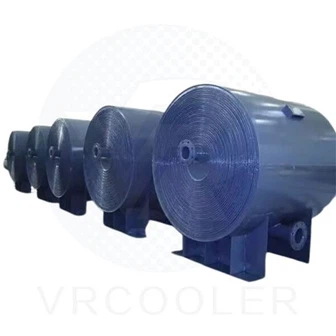
Boiler Energy Recovery Exchanger For Printing Plants
1, The pain points of heat wave cost in printing factory boilers urgently need to be solved
In the production process of printing factories, boilers undertake three core tasks: providing high-temperature hot air for the ovens of key equipment such as gravure printing machines and dry laminating machines, ensuring rapid ink drying and printing quality; Provide heating for the printing workshop and raw material warehouse, especially to maintain stable production environment temperature during low temperature seasons; Provide steam or hot water for auxiliary processes such as equipment cleaning and ink dilution.
However, most printing factories commonly suffer from significant heat wave costs during the use of boilers. According to industry research data, the waste heat from boiler flue gas accounts for more than 40% of the total waste heat emissions from printing plants. A medium-sized printing plant can generate up to 2000 kilowatt hours of boiler waste heat per hour. If not recovered, the annual energy loss will be huge. At the same time, direct discharge of high-temperature flue gas can also cause a series of hidden dangers: sulfur dioxide, nitrogen oxides, dust and other components in the flue gas can corrode the flue equipment, and direct discharge does not meet environmental emission standards; The drying room forms negative pressure due to high-temperature exhaust emissions, and a large amount of room temperature air is replenished, further increasing the energy consumption load of the boiler and forming a vicious cycle of "energy waste high cost".
2. Core Working Logic of Boiler Heat Recovery Heat Exchangers The core function of a boiler heat recovery heat exchanger is to "capture" and reuse low-grade heat energy from boiler flue gas through physical heat exchange principles, achieving a closed-loop energy cycle. Its working process mainly consists of three stages: First, high-temperature flue gas enters the heat exchanger body through the flue. The heat exchange elements inside the heat exchanger (such as heat pipes, finned tubes, plate heat exchangers, etc.) come into full contact with the flue gas, quickly absorbing heat from it. Second, the heat exchange medium (usually water, air, or thermal oil) circulates inside the heat exchanger, transferring the absorbed heat to the predetermined application scenario. Finally, the cooled flue gas is discharged through the flue after meeting emission standards, while the heated medium provides a drying heat source, heating hot water, or process steam for the printing plant, completing the efficient conversion and utilization of heat energy.
To meet the diverse energy needs of printing plants, the heat exchanger can adapt to various heat exchange modes: if a heat source is needed for printing drying, heated air can be directly delivered to the drying oven, replacing part of the purchased heat source; if heating or process water needs are required, hot water can be generated by heating cold water and connected to the workshop heating system or production water circuit. This flexible heat exchange mode allows it to perfectly match the diverse energy usage scenarios of printing plants.

3, Application value: Empowering sustainable development of printing factories with triple benefits
(1) Cost reduction and efficiency improvement: significantly reducing energy costs
Energy cost is one of the core expenses for the operation of printing plants, and the application of boiler heat recovery heat exchangers can directly reduce the fuel consumption of boilers (such as natural gas, diesel, coal, etc.). According to industry case studies, after installing heat exchangers, the overall energy consumption of printing factories can be reduced by 15% -25%, with boiler fuel consumption decreasing by up to 20% -30%. Taking a medium-sized printing factory that consumes 1 million cubic meters of natural gas annually as an example, it can save hundreds of thousands of yuan in fuel costs each year, and the investment payback period is usually only 1-2 years, with significant long-term benefits.
(2) Green environmental protection: in line with the trend of low-carbon development
The application of boiler heat recovery heat exchangers not only reduces the total amount of fuel combustion and emissions of pollutants such as carbon dioxide, sulfur dioxide, and nitrogen oxides, but also lowers the exhaust gas temperature below environmental emission standards and reduces dust emissions. At the same time, energy recycling reduces dependence on fossil fuels, which is in line with the national "dual carbon" strategy and the green and low-carbon development direction of the printing industry. It helps enterprises pass environmental certification and enhance their brand competitiveness in the industry.
(3) Optimize production: improve equipment operation stability
Direct discharge of high-temperature flue gas can easily lead to flue corrosion and accelerated equipment aging, while the cooling effect of heat exchangers can protect the boiler flue and subsequent exhaust system, extending the service life of equipment. In addition, the secondary utilization of thermal energy reduces the frequency of boiler start-up and shutdown, making boiler operation more stable, reducing the risk of equipment failure, ensuring the continuity of the printing plant's production process, and indirectly improving production efficiency.
4, Key points of selection and installation
When selecting boiler heat recovery heat exchangers, printing factories need to consider core parameters such as boiler capacity, exhaust temperature, and energy demand, and focus on three key factors: first, heat transfer efficiency. High efficiency heat exchange components such as heat pipe and finned tube should be prioritized to ensure the utilization rate of heat energy recovery; The second is the corrosion resistance of the material. The smoke from the printing factory may contain a small amount of corrosive components, so corrosion-resistant materials such as stainless steel and carbon steel coated with aluminum and zinc should be selected to extend the service life of the equipment; The third is adaptability, which requires customizing the heat exchanger model according to the boiler exhaust volume and energy consumption scenario scale, to avoid resource waste caused by "big horse pulling small car" or "small horse pulling big car".
During the installation process, attention should be paid to the seamless connection between the heat exchanger and the boiler exhaust system to ensure smooth flow of flue gas; The heat exchange medium pipeline needs to be insulated to reduce heat loss; At the same time, it is necessary to reserve maintenance space for later daily maintenance and cleaning.
5, Conclusion
In the increasingly fierce competition in the printing industry and the continuous improvement of environmental protection requirements, boiler heat recovery heat exchangers are no longer "optional equipment", but "essential equipment" for printing factories to achieve energy conservation, cost reduction, and green transformation. By efficiently recovering and reusing boiler waste heat, it has solved the pain points of high energy consumption in traditional printing production, while creating significant economic and environmental benefits for enterprises. In the future, with the continuous iteration of technology, boiler heat recovery heat exchangers will develop towards higher efficiency, intelligence, and adaptability to specific scenarios, becoming an important supporting force for the high-quality development of the printing industry.