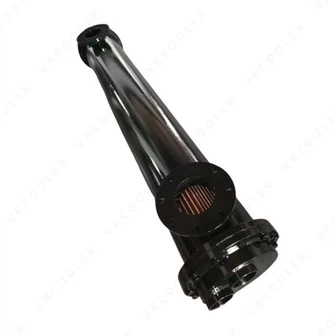
Bearing Oil Cooling And Lubrication
一, Core collaborative logic: mutual support between lubrication and cooling
1. Lubrication provides support for cooling
The viscosity and fluidity of lubricating oil directly determine the cooling efficiency:
Viscosity adaptation conditions (high viscosity ISO VG68-150 for low-speed heavy load, low viscosity ISO VG2-10 for high-speed light load, and ISO VG32-46 for medium speed medium load) can form a stable oil film of 1-3 μ m to isolate metal contact, while ensuring smooth flow and avoiding oil film rupture caused by insufficient viscosity or increased oil stirring loss and flow resistance due to high viscosity.
Adequate flow and coverage ensure that lubricating oil can continuously flow through the bearing contact area (rolling elements raceway, cage), effectively absorbing frictional heat and conducting heat, providing a "heat carrier" for subsequent cooling processes.
2. Cooling provides support for lubrication
Cooling stabilizes viscosity through temperature control, indirectly ensuring lubrication performance:
The operating temperature of the bearing should be controlled at 50-70 ℃ to maintain the viscosity of the lubricating oil in the range where a stable oil film can be formed, avoiding high temperatures causing a sudden drop in viscosity and thinning of the oil film, or low temperatures causing high viscosity and increased flow resistance.
The cooling system (such as oil coolers, water-cooled bearing seat spiral flow channels) takes away the heat carried by the lubricating oil, preventing oil oxidation and deterioration (prolonging service life), while avoiding excessive temperature difference between the inner and outer rings of the bearing, and maintaining stable structural clearance.
3. Collaborative goal: thermal balance and oil film stability
The core is to satisfy the dynamic thermal balance equation: Q_gen=Q_comol+Q_ambient (heat generation=heat carried away by cooling+environmental heat dissipation), while ensuring a stable oil film thickness of 1-3 μ m to avoid metal contact and excessive wear.
High speed operating conditions (speed>10000r/min): It is necessary to simultaneously reduce oil mixing loss and frictional heat, and achieve synergy through low viscosity oil, oil air lubrication (reducing oil mixing), and enhanced cooling (timely heat dissipation).
Heavy load condition: Priority should be given to ensuring the strength of the oil film, selecting high viscosity oil, and increasing the cooling flow rate to avoid viscosity decrease and oil film failure caused by frictional heat.
二, Collaborative Control Strategy: Dynamic Matching and Intelligent Adjustment
1. Dynamic matching driven by working conditions
High speed and high load operating conditions: viscosity reduction+strong cooling+high flow rate - low viscosity oil (ISO VG2-10) is selected to increase the flow rate of the cooling medium, increase the oil supply, reduce oil mixing losses, quickly remove frictional heat, and ensure that the oil film does not rupture.
Low speed heavy load condition: increased viscosity+stable cooling+moderate flow rate - choose high viscosity oil (ISO VG68-150), maintain moderate cooling flow rate, ensure oil film strength to support load, and avoid increasing flow resistance due to high viscosity.
Start stop/variable load conditions: gradual change parameters+shock prevention - avoid sudden oil temperature rise during startup and gradually increase flow rate; Adjust the cooling flow in advance when changing the load to prevent temperature fluctuation and oil film instability caused by sudden change of working conditions.

2. Intelligent closed-loop control
Real time collaborative regulation achieved through sensors, actuators, and controllers:
Monitoring: Real time data collection from temperature sensors (bearings, oil, coolant), flow sensors (oil, coolant), and pressure sensors (oil).
Adjustment: The PLC/controller adjusts the frequency of the oil pump (controls the oil flow rate) and the opening of the cooling pump/valve (controls the cooling flow rate) based on monitoring data, achieving a closed-loop linkage of "oil temperature flow rate cooling".
Protection: Set multi-level thresholds (warning, alarm, shutdown) to automatically trigger the start, load reduction, or shutdown of the backup pump when the temperature/flow is abnormal, to prevent bearing damage caused by collaborative failure.
3. Collaborative optimization of design and operation and maintenance
Design end: Optimize cooling channels (such as spiral channels and integrated cooling channels) to shorten the heat conduction path; Adopting a combination seal (labyrinth+fluororubber oil seal) to prevent lubricant leakage and coolant contamination.
Operation and maintenance end: Regularly check the oil quality (viscosity, acid value, moisture), change the oil according to the quality (2000-4000 hours for normal working conditions, shorten the cycle for high temperature and high humidity working conditions); Clean the filter to ensure the cleanliness of the oil; Calibrate sensors to ensure accurate parameter monitoring.
The synergy between bearing oil cooling and lubrication is essentially based on oil as the core carrier, finding a balance between "forming a stable oil film" and "efficient heat dissipation" through parameter matching, dynamic control, and design and operation optimization, and adapting to changes in load, speed, and other working conditions. The core points are: controlling oil temperature to maintain viscosity, adjusting flow rate to ensure coverage, strong cooling to remove heat, avoiding collaborative failure through closed-loop control and regular maintenance, and achieving long bearing life and low fault operation.