Autotransformer Cooling Systems: High-Voltage Substation Thermal Management By VRCOOLER
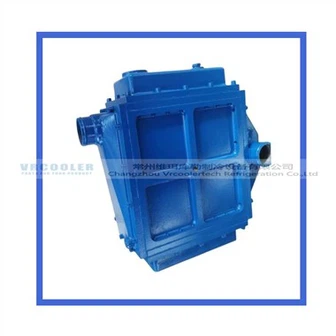
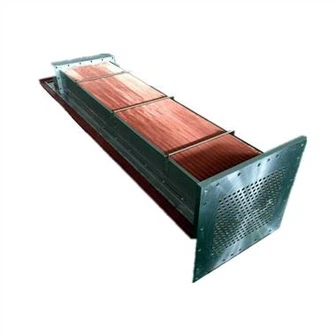
Autotransformers are the backbone of extra-high-voltage (EHV) and ultra-high-voltage (UHV) electrical transmission grids (e.g., 765 kV / 500 kV / 230 kV interconnections). Unlike conventional two-winding transformers, autotransformers share a single continuous winding (divided into series and common sections), creating complex, non-uniform internal current densities and localized thermal gradients. VRCOOLER engineers heavy-duty multi-bank pressed-steel radiators and directed-oil forced-air (ODAF) cooling packages with automated multi-stage fan staging, ensuring balanced oil distribution and protecting autotransformer insulation under volatile inter-grid power flows.

Thermodynamic Complexities Inside High-Voltage Autotransformers
Because electrical power flows through both conductive and inductive paths in an autotransformer, the internal thermal loading profile is uniquely asymmetric:
Extra-High-Voltage Grid (e.g. 500 kV Transmission Bus)
Series Winding Section (High Voltage / Lower Current)
(Intermediate Voltage Tap: 230 kV Grid Bus)
Common Winding Section (High Current Vector Difference)
(Ground Neutral / Tertiary Delta Tertiary Winding)
In the common winding, current is the vector difference between the low-voltage and high-voltage line currents (Icommon=ILV−IHVIcommon=ILV−IHV). During reverse power flow or reactive power compensation, the common winding can experience sudden current surges, generating intense localized hot spots. VRCOOLER cooling banks are engineered to absorb these thermal fluctuations seamlessly.
VRCOOLER Autotransformer Cooling Architecture
Depending on substation voltage class and space availability, VRCOOLER designs two primary cooling architectures for autotransformers:
Autotransformer Substation Cooling Architectures
Key Focus Areas: Onan / Onaf Radiator Banks • Ofaf / Odaf Cooler Packages
Typical Range: 100 – 400 MVA - vs - Typical Range: 300 – 1,500 MVA
Detachable Radiator Headers - vs - Skid-Mounted Air-Blast Units
Thermosiphon + Staged Fans - vs - Directed High-Flow Oil Pumps
Best For: Open Air Substation - vs - Best For: Urban & Space-
Yards with Low Aux. Power | Constrained EHV Substations
Technical Comparison: Cooling Configurations for Autotransformers
|
Feature |
ONAN / ONAF1 / ONAF2 System |
OFAF / ODAF Forced System (VRCOOLER) |
|---|---|---|
|
Typical Transmission Rating |
100 MVA to 400 MVA (Single / 3-Phase) |
300 MVA to 1,500+ MVA (Bulk Power Ties) |
|
Cooler Surface Element |
VRCOOLER Pressed Steel Panel Radiators |
VRCOOLER Finned-Tube Air-Blast Matrix |
|
Internal Oil Circulation |
Natural Thermosiphon Circulation |
Glandless Submerged Oil Circulation Pumps |
|
Staged Cooling Step |
e.g. 180 / 240 / 300 MVA Ratings |
e.g. 300 / 450 / 600 MVA Ratings |
|
Thermal Response Time |
Moderate (15–30 minutes) |
Rapid (< 5 minutes to suppress surges) |
|
Noise Level at Substation Perimeter |
Ultra-Low (< 55 dBA) |
Low to Moderate (< 65 dBA) |
|
Substation Footprint Required |
Large Perimeter Space |
Compact Footprint (40% to 50% Reduction) |
Engineering Innovations in VRCOOLER Autotransformer Radiators
1. High-Flow Header Geometry with Low Pressure Drop
To maximize natural thermosiphon velocity in tall autotransformer tanks, VRCOOLER utilizes deep-drawn 520mm / 380mm radiator panels with CNC-welded fluted channels. This ensures that oil returns to the bottom of the common winding at optimal velocities, preventing stagnant hot oil traps.
2. Multi-Group Smart Staged Cooling Control
VRCOOLER** provides intelligent substation cooling control panels (NEMA 4X / IP66) featuring:
Group 1 & Group 2 Fan Alternation: Automatically balances operating runtimes across all cooling fans.
Predictive Dynamic Overload Logic: Reads current transformer (CT) load signals and preemptively starts fans before winding temperatures reach high-alarm setpoints.
3. Severe Environment Surface Metallurgy
For coastal substations, industrial chemical belts, and desert transmission corridors, VRCOOLER applies Hot-Dip Galvanizing (ISO 1461 100 µm) or high-build multi-coat C5-M Marine Epoxy finishes, providing 30+ years of maintenance-free service.
Frequently Asked Questions (FAQ)
Q1: Why are autotransformers more susceptible to tertiary winding overheating?
A: Autotransformers frequently include a delta-connected tertiary winding for harmonic suppression and station service power. If unbalanced phase loads or third-harmonic currents circulate in the tertiary delta, localized heating spikes rapidly. VRCOOLER customizes radiator oil flow to ensure tertiary winding zones receive ample cooled oil.
Q2: What is the benefit of detachable radiator headers with butterfly valves?
A: In high-voltage substations, taking an entire autotransformer off-line for a single radiator leak disrupts grid power. VRCOOLER flanged butterfly valves allow isolation and replacement of any single radiator panel in less than 2 hours while the autotransformer remains energized and operational.
Q3: How do VRCOOLER cooling fans handle high wind gust conditions in open switchyards?
A: VRCOOLER axial cooling fans feature aerodynamically contoured bellmouths, heavy-duty finger guards, and cast aluminum aerofoil blades engineered to withstand 160 km/h wind gusts without motor stall or blade fatigue.
Secure Transmission Grid Stability with VRCOOLER Engineering
Transmission grid reliability relies on keeping extra-high-voltage autotransformers operating within safe thermal margins. Partner with VRCOOLER for custom-engineered autotransformer radiators, air-blast coolers, and smart control systems.
Explore VRCOOLER Substation Thermal Solutions: Visit www.vrcooler.com
Request a Substation Cooling Consultation: Email [email protected] for engineering sizing support.