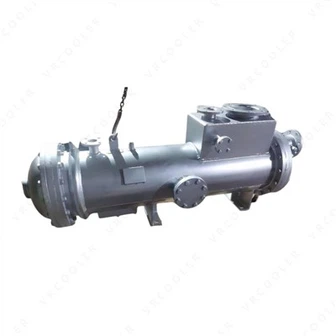
Application Of High And Low Temperature Dry Coolers in Antifreeze Of Power Plants in High-altitude Regions
一.The anti freezing pain points of power stations in high-altitude regions are complex and overlapping, and traditional anti freezing methods often have limitations. On the one hand, in the compressed air system of power plants, low temperatures can cause water vapor in the air to condense and freeze, blocking pipelines, valves, and pneumatic components, leading to failures in opening and closing equipment, short circuits in control systems, and even causing unit shutdowns in severe cases; On the other hand, the heat exchange equipment and gate sealing parts of the power station are easily affected by static ice pressure and ice pulling force, resulting in structural deformation, seal damage and other problems. Traditional electric ice melting, manual Shaved ice and other methods not only have high energy consumption and heavy maintenance, but also have potential safety hazards. In addition, in high-altitude regions, there is a large temperature difference between day and night, and temperature fluctuations are severe, which puts higher demands on the adaptability and stability of antifreeze equipment. There is an urgent need for a solution that can balance efficient antifreeze, energy conservation and consumption reduction, and intelligent control.
二.High and low temperature dry coolers have achieved a transformation from "passive de icing" to "active anti freezing" by accurately adapting to the climate characteristics of high-altitude regions, and their core advantages are reflected in multidimensional technological innovation. This device is based on the core principle of vapor compression refrigeration cycle, which uses refrigerant phase change to absorb heat and reduce the temperature of compressed air. It condenses water vapor into liquid water and separates it for discharge, reducing the water content in the air from the source and avoiding icing and blockage problems. For extreme low temperature environments, the equipment is optimized with a hot gas bypass valve that can automatically adjust according to load changes to avoid freezing of the refrigeration compressor. At the same time, insulation treatment is applied to the refrigerant system and the outer surface of the evaporator to reduce cooling loss and ensure stable operation even in extremely cold environments of -40 ℃.
In terms of adapting to high-altitude power plant scenarios, targeted upgrades have been made to the high and low temperature dry coolers, achieving a dual improvement in both anti freezing effect and energy-saving benefits. Compared with traditional antifreeze equipment, it adopts a design with a large evaporation area, which has higher heat transfer efficiency and more stable dew point control. It can stabilize the dew point of compressed air at 2-10 ℃, effectively preventing moisture from freezing and corroding the equipment. At the same time, the equipment integrates an intelligent temperature control and fault protection system, which monitors the environmental temperature and equipment operation status in real time. When the temperature is below the critical value, the anti freezing heating function is automatically activated. When the machine is stopped, the accumulated water can be automatically drained, fundamentally avoiding the risk of freezing damage and greatly reducing manual maintenance costs. In addition, some models that are suitable for high-altitude scenarios also incorporate technologies such as dynamic zoning control and full process intelligent control, which can flexibly adjust operating parameters according to the operating conditions of the power station. Compared with the traditional 24-hour operation mode, it saves more than 40% energy, achieving the coordinated development of safe antifreeze and green energy conservation.

三.Nowadays, high and low temperature dry coolers have been widely used in power plants in cold regions such as Inner Mongolia, Jilin, and Liaoning, becoming a "standard equipment" to ensure the safe operation of power plants in winter. At the Qingyuan Pumped Storage Power Station in Liaoning Province, high and low temperature dry coolers are combined with bubble anti icing technology to provide drying support for the compressed air system, ensuring stable start-up of the bubble anti icing device at extreme low temperatures, achieving ice free coverage around the inlet and outlet, and ensuring that the operation of the unit is not affected by freezing; In the Pamir Plateau solar energy storage power station in Tajikistan, high and low temperature dry coolers adapted to high-altitude and cold environments effectively solve the problem of compressed air system icing, helping the power station to provide stable power supply in extremely cold and high-altitude environments of -40 ℃, and providing reliable support for energy supply in remote and cold areas. These practices have fully proved that high and low temperature dry coolers can accurately solve the anti freezing pain points of power plants in high-altitude areas, improve equipment operation reliability, and reduce operation and maintenance costs.
With the deepening of China's energy strategy, the scale of power station construction in high-altitude regions continues to expand, and the requirements for antifreeze technology and equipment are also constantly increasing. The high and low temperature dry cooler, with its core advantages of extreme low temperature resistance, high efficiency, energy saving, and intelligent convenience, not only solves the technical bottleneck of anti freezing for power plants in high-altitude areas, but also conforms to the development concept of green and low-carbon. In the future, with the continuous iteration of technology, high and low temperature dry coolers will further optimize their adaptation performance, integrate more intelligent control technologies, and combine multiple anti freezing solutions to provide more solid technical support for the safe and stable operation of energy facilities such as power stations and pumped storage power stations in cold regions, helping to optimize energy layout and enhance energy security capabilities in China's cold regions.