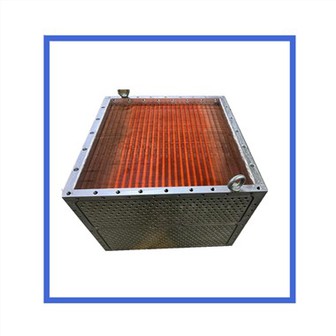
Air-to-Air Waste Heat Exchanger For 1 MW Gas Engines | VRCOOLER
For industrial facilities, greenhouses, agricultural drying plants, ceramic/brick kilns, and combined heat and power (CHP) installations powered by 1 MW stationary natural gas, biogas, or landfill gas engines (such as INNIO Jenbacher J320, Caterpillar CG132-16 / G3512, MWM TCG 2020 V12, MTU 16V4000, or Cummins QSV91), VRCOOLER custom-engineers and manufactures heavy-duty Air-to-Air Waste Heat Exchanger Systems (Exhaust-to-Air Recuperators). A standard 1 MW gas engine running at continuous baseload discharges approximately 4,500 to 6,000 kg/h4,500 to 6,000 kg/h of exhaust flue gas at +450°C to +530°C (+842°F to +986°F), representing 450 kWth to 650 kWth of recoverable high-temperature thermal energy. VRCOOLER Air-to-Air Waste Heat Recovery Systems transfer this exhaust heat directly into clean ambient process air (10,000 to 35,000 Nm3/h10,000 to 35,000 Nm3/h), heating fresh air from ambient (+15°C→+25°C) up to +80°C to +250°C(+176°F to +482°F) without requiring intermediate thermal oil loops, steam boilers, or water pumps. Built with high-temperature stainless steel (SS304H / SS316L / SS321), heavy-wall laser-welded tubular or compact plate-fin matrixes, automated 3-way flue gas bypass diverter dampers, and thermal expansion joints, our air-to-air exchangers guarantee ultra-low engine backpressure (<1.2 to 1.8 kPa) and thermal recovery efficiencies exceeding 80%−88%.

Critical Engineering Challenges Solved by VRCOOLER Air-to-Air Systems:
Direct Energy Transfer Without Intermediate Fluid Loops: Conventional CHP uses water/glycol or thermal oil loops with circulation pumps, expansion tanks, and secondary air coils. VRCOOLER's direct air-to-air design eliminates intermediate heat transfer losses, circulation pumps, freeze hazards, and fluid maintenance costs.
Strict Engine Backpressure Protection (<15−18 mbar): Exceeding OEM backpressure limits on a 1 MW gas engine causes knocking, reduced electrical efficiency, and turbocharger overheating. VRCOOLER custom-calculates aerodynamic flow channels to maintain total exhaust-side pressure drop below 1.2 to 1.8 kPa.
Zero Cross-Contamination & 100% Gas Sealing: Industrial drying (food, grain, pharmaceuticals, clean manufacturing) requires heated air completely free of exhaust fumes. VRCOOLER utilizes fully seal-welded tube-to-tubesheet joints or laser-welded plate matrixes, pressure-tested to ensure zero toxic flue gas leakage into clean process air.
High-Temperature Thermal Expansion Absorption: Switching a 1 MW engine on/off subjects the exchanger to rapid temperature swings from +20°C to +500°C. VRCOOLER incorporates floating tubesheet expansion joints and internal thermal expansion bellows to prevent weld fatigue and stress fractures.
At VRCOOLER, we manufacture two primary air-to-air heat exchanger configurations tailored to specific plant footprints, air volumes, and temperature targets:
Architecture A: Tubular Air-to-Air Heat Exchanger (Heavy-Duty Exhaust-in-Tube)
Straight-Through Gas Pass (Easy Mechanical Cleaning): Hot engine flue gas flows straight through internal stainless steel tubes, while clean process air makes multiple cross-flow passes over external finned or bare tubes.
Ideal for Biogas & High-Soot Exhaust: Straight-through tubes prevent soot and particulate deposition. Removable front and rear smoke transition hoods allow fast mechanical brush cleaning during scheduled engine service.
Heavy-Wall Stainless Steel Construction: High-temperature stainless steel tubes (SS304H, SS316L, or SS321) with wall thicknesses up to 2.0−2.5 mm for extreme durability against high thermal cycling.
Architecture B: Cross-Flow Plate / Plate-Fin Air-to-Air Heat Exchanger
Ultra-Compact Footprint & High Surface Area: Corrugated high-temperature stainless steel plates form alternating cross-flow channels for exhaust gas and clean air, maximizing thermal efficiency in compact generator container enclosures.
High Thermal Effectiveness (>85%): Enhanced corrugation wave profiles promote high micro-turbulence at low gas velocities, reducing overall exchanger dimensions and roof-load weight.
3. Integrated Emergency 3-Way Flue Gas Bypass Diverter Damper
Automated Process Temperature Regulation: Modulating high-temperature stainless steel 3-way damper with pneumatic or electric actuator adjusts flue gas flow to maintain target heated air temperature.
Failsafe Engine Protection: If process air blowers trip or plant heat demand drops to zero, the damper automatically vents 100%100% of exhaust gas directly through the bypass exhaust silencer without shutting down the 1 MW engine.
Major Industrial Applications for 1 MW Gas Engine Air-to-Air Systems
Agricultural & Food Grain Drying: Recovering 1 MW biogas engine exhaust to heat clean drying air for corn, wheat, wood chips, and animal feed without exhaust fume contamination.
Industrial Ceramic, Brick & Sludge Drying: Supplying high-temperature +150°C to +220°C heated air directly into continuous tunnel drying kilns and wastewater sludge dryers.
Burner Combustion Air Preheating: Preheating combustion air for nearby industrial furnaces, boilers, and incinerators, cutting direct natural gas burner fuel consumption by 8%−15%.
Greenhouse Climate Control & Large Facility Heating: Converting CHP engine waste heat into massive volumes of comfortable warm air (+45°C to +65°C) for large commercial greenhouses and logistics warehouses.
Key Advantages of Specifying VRCOOLER Air-to-Air Exchanger Systems
Zero Water / Thermal Oil Loop Complexity: Eliminates intermediate pumps, expansion vessels, glycols, water treatment chemicals, and leak-prone fluid piping.
Guaranteed Engine Warranty Protection: Engineered strictly within OEM engine backpressure allowances (<15−18 mbar) to prevent cylinder knocking and exhaust valve distress.
100% Contamination-Free Air Guarantee: Heavy-gauge seal-welded construction guarantees zero flue gas leakage into clean drying air streams.
Turnkey Modular Skid Delivery: Complete package supplied with integrated 3-way bypass damper, transition exhaust ducts, thermal insulation, expansion joints, and control instrumentation.
Frequently Asked Questions (FAQ)
Q1: How much heated air can a 1 MW gas engine produce?
A: A 1 MW natural gas or biogas engine (generating ∼5,000 kg/h of exhaust at +500°C) can heat approximately 15,000 to 20,000 Nm3/h of fresh air from +20°C up to +110°C to +120°C, or heat a smaller stream (8,000 Nm3/h) up to +200°C to +240°C.
Q2: Why is direct air-to-air heat recovery better than an exhaust-to-water CHP system for drying applications?
A: In drying processes that require hot air, an exhaust-to-water system requires an exhaust-water heat exchanger, circulation pumps, water piping, and a secondary water-to-air coil. A direct VRCOOLER Air-to-Air Exchanger eliminates the entire water circuit, saving 30%−40%30%−40% in equipment costs, eliminating electrical pump power consumption, avoiding freezing risks, and improving overall thermal efficiency.
Q3: How does the system handle engine load changes or zero process air demand?
A: The system includes an automated 3-way modulating bypass damper. If the process air fan stops or heat demand decreases, the damper automatically modulates to divert flue gas directly into the exhaust bypass silencer stack, allowing the 1 MW engine to continue generating electricity at 100% load without interruption.
Q4: What information is needed to design a 1 MW gas engine air-to-air heat exchanger?
A: Please provide the engine make and model (e.g. Jenbacher J320, CAT G3512), fuel type (natural gas or biogas), exhaust gas flow rate and temperature, available/required process air flow rate, ambient air inlet temperature, desired heated air target temperature, and maximum allowable engine backpressure.
Request a 1 MW Gas Engine Air-to-Air Heat Exchanger Proposal
Transform your 1 MW gas engine exhaust into valuable clean hot air, cut drying fuel costs, and maximize total plant efficiency with VRCOOLER.
Explore Gas Engine Waste Heat Systems: Visit www.vrcooler.com
Submit Your 1 MW Engine RFQ: Send your engine datasheet, exhaust parameters, and target process air flow/temperature requirements directly to our thermal engineering division at [email protected] for a rapid thermodynamic calculation, CAD layout, and quotation.