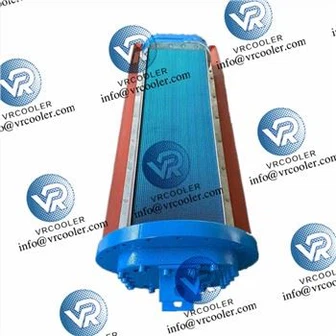
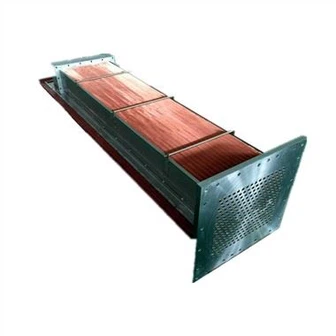
Air-Cooled Heat Exchanger (ACHE) For Engine Oil
Components
Heat Exchanger Core: The core consists of finned tubes that increase the surface area for heat transfer.
Fans: These are used to enhance air circulation over the heat exchanger, improving cooling efficiency.
Inlet and Outlet Ports: For engine oil input and output.
Frame and Supports: These provide structural integrity and mounting options for the unit.
Working Principle
Oil Flow: Hot engine oil enters the heat exchanger through the inlet port.
Heat Transfer: As the oil flows through the finned tubes, heat is transferred to the tubes and then to the air flowing over the fins.
Cooling: The cooled oil exits through the outlet port, returning to the engine at a lower temperature.
Air Circulation: The fans help to draw ambient air over the heat exchanger, enhancing the cooling process.
Advantages
No Additional Fluids: Unlike water-cooled systems, ACHEs do not require a cooling water source.
Compact Design: They can be designed to fit in tight spaces.
Low Maintenance: Generally requires less maintenance compared to other cooling systems.
Applications
Commonly used in industrial engines, and machinery where effective oil cooling is essential.